



Pescasseroli, in the heart of Italy’s Apennines, will host the IBA conference on bear conservation and human–bear coexistence. LifeGate will be the event’s media partner.
European bees are poisoned by a cocktail of 57 pesticides, according to a new study. 98% of these substances are regularly approved for use by the EU. And bees are dying off. European bees are exposed to at least 57 different types of weed killers. This shocking figure was revealed by research conducted in
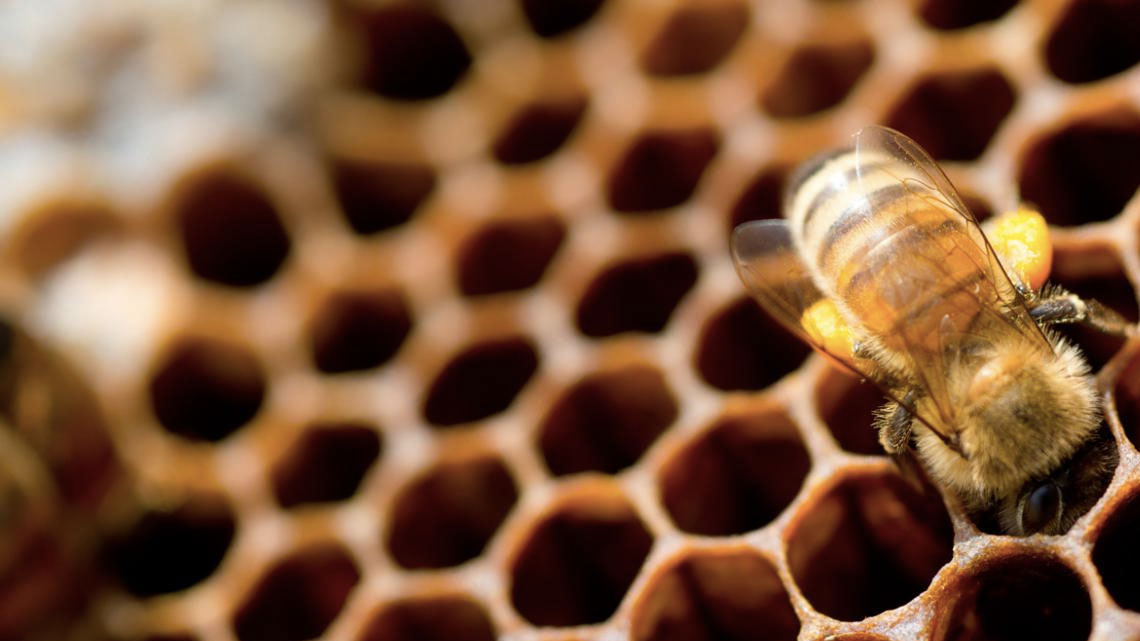
European bees are poisoned by a cocktail of 57 pesticides, according to a new study. 98% of these substances are regularly approved for use by the EU. And bees are dying off.
European bees are exposed to at least 57 different types of weed killers. This shocking figure was revealed by research conducted in Poland and published in the Journal of Chromatography, which has detected the toxic cocktail in poisoned honeybees by means of a method called Quechers for analysing 200 pesticides at the same time.
Researchers did their tests to investigate 70 honeybee poisoning incidents and discovered that bees weren’t killed by a single pesticide, but by a combination of them – a true deadly cocktail – as well as by prolonged exposure to them.
Scientists also found that 98% of the substances detected during the study is regularly authorised by the European Union. Researchers highlighted the seriousness of this global threat to honeybees: in the United States the population of these insects is rapidly declining because of the Colony Collapse Disorder, while in Europe the connection between the use of pesticides and mass bee die-offs led to a ban on neonicotinoids. However, the study carried out by the Polish Veterinary Research Institute underlines that banning a single family of pesticides may not be enough to save bees.
“Bees are considered critically important for the environment – said Tomasz Kiljanek, lead author of the study – that’s why we wanted to develop a test for a large number of pesticides currently approved for use in the European Union”.
“This is just the beginning of our research on the impact of pesticides on honeybee health. – said Kiljanek – Honeybee poisoning incidents are the tip of the iceberg. Even at very low levels, pesticides can weaken bees’ defense systems, allowing parasites or viruses to kill the colony”.
With so many pesticides in use, it’s difficult to understand which ones are seriously putting bees at risk. What is certain is that some combinations of pesticides (the cocktail effect) and a prolonged exposure to them poison honeybees and weaken their defenses against parasites and some diseases.
Siamo anche su WhatsApp. Segui il canale ufficiale LifeGate per restare aggiornata, aggiornato sulle ultime notizie e sulle nostre attività.

Quest'opera è distribuita con Licenza Creative Commons Attribuzione - Non commerciale - Non opere derivate 4.0 Internazionale.
Pescasseroli, in the heart of Italy’s Apennines, will host the IBA conference on bear conservation and human–bear coexistence. LifeGate will be the event’s media partner.
The inflation caused by extreme weather events is known as “climateflation”: prices for many food products are expected to rise sharply.
The toll is still provisional, but data collected across several European countries indicate that tens of thousands of people have died as a result of extreme heat.
Last February, Malaysia imposed a total ban on electronic waste imports. Yet toxic e-waste continues to arrive from the United States and other countries through illegal trafficking networks.
Although Earth Overshoot Day falls six days later than in 2025, this does not represent an improvement. The shift is the result of revised estimates of the oceans’ carbon absorption capacity, while humanity’s actual ecological footprint continues to grow.
Gigantic wildfires in France’s Gironde region and near Madrid, Spain, have devastated tens of thousands of hectares of vegetation.
Greece has launched a wildfire management system based on nanosatellites and artificial intelligence. A model that other countries are now looking to replicate.
According to analysts, the emergence of a “super” El Niño could trigger a global food price shock, adding to inflationary pressures already fuelled by the conflict with Iran.
Residents of Kanseche, Malawi, accuse ABF of contributing to the devastating 2022 floods through its subsidiary, Illovo Sugar.


