L’Unione europea non sta agendo in modo coerente rispetto a quanto necessario per l’adattamento ai cambiamenti climatici. E gli stanziamenti previsti sono insufficienti per garantire sicurezza alla popolazione. A spiegarlo è il Consiglio scientifico europeo sui cambiamenti climatici (Esabcc), il cui presidente Ottmar Edenhofer ha criticato con forza le politiche comunitarie, parlando di “mancanza di coerenza, mancanza di coordinamento e mancanza di fondi”.
The European Union is not acting consistently with what is required for climate change adaptation. Moreover, the funds allocated are insufficient to guarantee public safety. This is the warning issued by the European Scientific Advisory Board on Climate Change (Esabcc), whose chair, Ottmar Edenhofer, strongly criticised EU policies, speaking of a “lack of coherence, lack of coordination and lack of funding.”
A “share” of climate impacts is now unavoidable
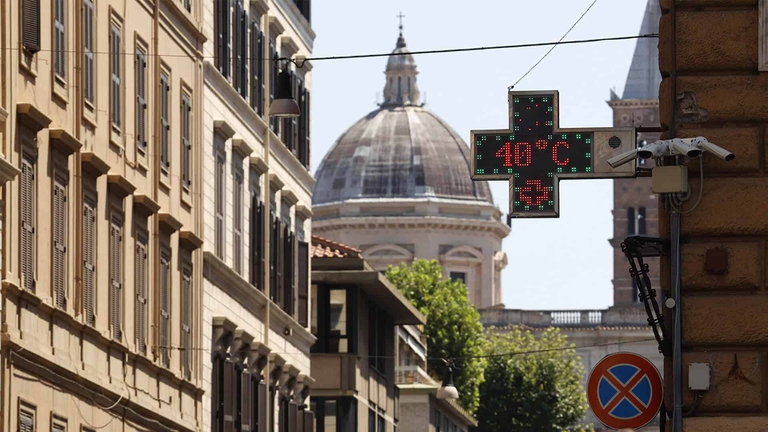
The EU advisory body sounded the alarm based on data released by the World Meteorological Organization, according to which warming across Europe is occurring faster than the global average. Europe’s average temperature is already 2.5 degrees Celsius above pre-industrial levels. This implies an increase in both the frequency and intensity of extreme events such as heatwaves, droughts and storms capable of causing severe flooding.
A “share” of climate change impacts is now unavoidable. Even if we were to act drastically and immediately on mitigation — reducing greenhouse gas emissions — the level of global warming already reached makes certain consequences inevitable.
45 billion euros a year in damages from extreme events over the past decade
Further highlighting the inadequacy of current EU adaptation policies is a report published on February 4 by the European Environment Agency (EEA) and Eurofound, titled “Overheated and underprepared: Europeans’ experience of living with climate change.” The report states that damages caused by extreme weather events over the past decade have averaged around 45 billion euros per year — five times more than in the 1980s.
🆕 Europeans are very concerned about #extremeheat and other #climatechange impacts according to the results of a Europe-wide survey by the EEA & @eurofound 🔎Many citizens were also underprepared to deal with the impacts in their own homes.
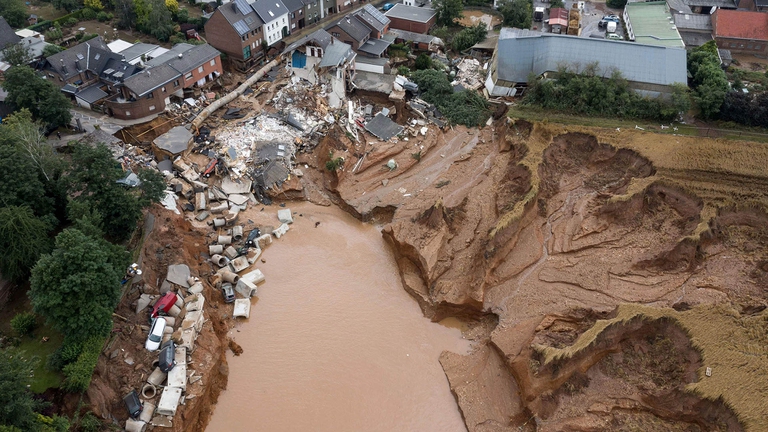
Edenhofer cited the 2024 floods that hit Valencia, killing 229 people, as well as floods in Belgium, Ireland and Italy. In his view, the lack of early warning systems — one of the classic tools of adaptation policy — contributed to the severity of these disasters.
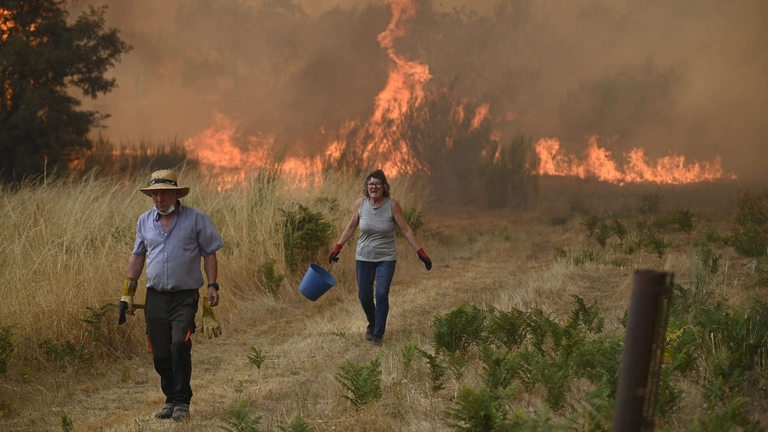
Similarly, mega-fires burned 3 per cent of Portugal’s territory in 2025, while hailstorms cause billions of euros in damages across the continent every year.
Europe needs coordination and funding for climate adaptation
Nel rapporto si sottolinea però anche la necessità di un maggiore coordinamento istituzionale, così come quella di informare adeguatamente i cittadini sui rischi. Una proposta avanzata dall’Esabcc, in questo senso, punta a “rendere obbligatorie e armonizzare le valutazioni sui rischi climatici” affinché si possa creare un quadro di riferimento unico per tutti i paesi.
The report also stresses the need for stronger institutional coordination and better public information on climate risks. In this regard, ESABCC has proposed making climate risk assessments mandatory and harmonised across the EU, creating a common reference framework for all member states.
What Europe is witnessing may represent only the tip of the iceberg. Even if current climate policies are fully implemented, the continent could face an average temperature increase of 3.9 degrees Celsius by 2100.
Over the past 44 years alone, EEA and Eurofound note, total losses have reached 822 billion euros. According to another study by the University of Mannheim and the European Central Bank, annual losses could rise to €126 billion as early as 2029.
Without adaptation, Europe could lose 7 per cent of its GDP
Even a global warming scenario exceeding “just” 1.5 degrees Celsius could result in losses equivalent to 7 per cent of Europe’s current GDP. If this figure seems high, it is worth recalling that the catastrophic floods that struck Slovenia in 2023 cost the country 11 per cent of its GDP.
An analysis conducted by the Euro-Mediterranean Center on Climate Change (Cmcc) for the European Commission estimates that €70 billion per year will be needed until 2050 to implement the necessary climate adaptation measures. These investments are essential to safeguard infrastructure in transport, agriculture and energy.
Pescasseroli, in the heart of Italy’s Apennines, will host the IBA conference on bear conservation and human–bear coexistence. LifeGate will be the event’s media partner.
The toll is still provisional, but data collected across several European countries indicate that tens of thousands of people have died as a result of extreme heat.
Last February, Malaysia imposed a total ban on electronic waste imports. Yet toxic e-waste continues to arrive from the United States and other countries through illegal trafficking networks.
Although Earth Overshoot Day falls six days later than in 2025, this does not represent an improvement. The shift is the result of revised estimates of the oceans’ carbon absorption capacity, while humanity’s actual ecological footprint continues to grow.
Greece has launched a wildfire management system based on nanosatellites and artificial intelligence. A model that other countries are now looking to replicate.
According to analysts, the emergence of a “super” El Niño could trigger a global food price shock, adding to inflationary pressures already fuelled by the conflict with Iran.