There are 7 Italian locations among the European Best Destinations 2026
From Verona to Taormina, from Bosa to Ravello: a small guide for a sustainable slow tourism.
There’s Verona and Burano, then south to Campania for Procida and the Amalfi Coast, and finally to the larger islands: Cefalù or Taormina in Sicily, or inland Sardinia to Bosa — perhaps the most hidden gem of the journey. These are the seven Italian destinations, out of a total of twenty, included among the Best European Destinations 2026, the annual selection that guides millions of European travellers in choosing the continent’s most compelling places to visit. While other countries feature major capitals like Paris or Madrid, Italy’s selected destinations tell a different story: the awarded cities and villages are not the usual mass-tourism hotspots, but places where it is still possible to travel slowly, authentically, and with a light footprint on the land.
The Seven Wonders of Italy 🇮🇹
Ready to grab your plane tickets?
European Best Destinations 2026 just released its list of the most desired spots
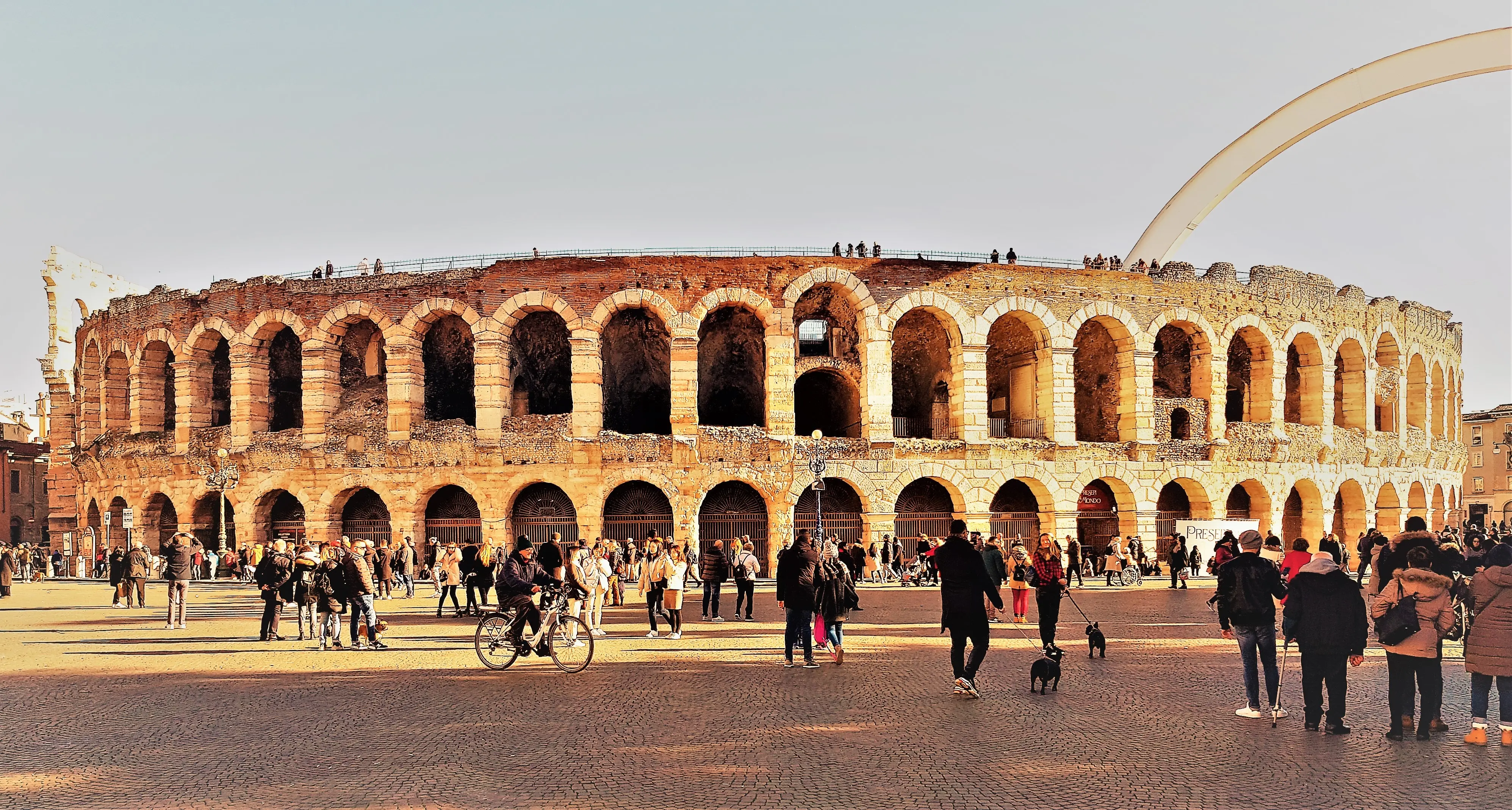
The largest Italian city in the Best European Destinations awards — and the only provincial capital — is Verona. It captivates with its marble facades, warm light and quiet courtyards. The Arena remains the beating heart of the city, especially during its open-air opera nights in summer. Yet it is Verona’s everyday fabric that makes the difference: Amarone wine cellars, a culinary tradition revitalised by a new generation of chefs, boutique hotels set in historic palaces. Verona is explored on foot, slowly — and that, in itself, is a form of respect.
Venice needs no introduction, for better or worse. Just a short vaporetto ride away, Burano is the lagoon’s natural antidote to overtourism. Brightly painted houses, fishermen mending their nets, family-run trattorias serving fresh fish: the island feels like a reminder of what tourism should be — and perhaps what Venice once was. Arrive by boat, walk everywhere, eat local, buy handmade lace instead of mass-produced souvenirs. According to the Best European Destinations awards, Burano is best experienced off-season, when mass tourism gives way to its true colours.
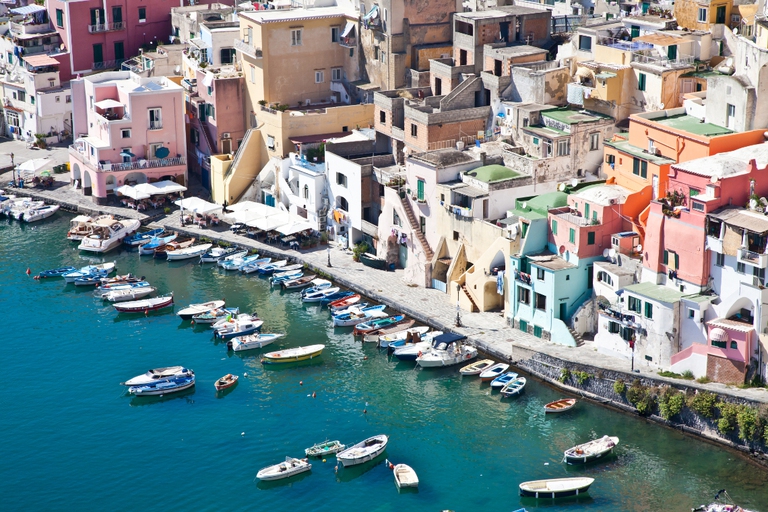
Becoming Italy’s Capital of Culture often transforms a place, sometimes irreversibly. Procida, overlooking the Gulf of Naples, has largely managed to preserve its character, resisting overdevelopment.Marina Corricella, with its stacked houses in shades of pink, yellow and peach, is one of Italy’s most photographed waterfronts. Yet the island retains an authentically local soul. The coves of Chiaia and Pozzo Vecchio, lemon-based cuisine, rabbit alla procidana, the naturally slower rhythm of life: Procida proves that it is possible to become famous without losing your identity.
Procida has pastel colors that reflects on the sea. Photo courtesy of Perseomedusa per IngImage
Ravello, the Amalfi Coast without the crowds
Still in Campania but back on the mainland, we head south along the Amalfi Coast — always a must-see, yet among Europe’s most congested destinations. And yet Ravello, perched high above the sea and known for its music festival, offers all the coast’s beauty from a privileged vantage point, allowing visitors to escape the chaos even in peak season. The gardens of Villa Cimbrone and Villa Rufolo, open-air concerts, panoramic walking trails: Ravello invites pause, contemplation and slow travel. Choosing Ravello over Positano is already a countercultural act — and the territory is grateful for it.
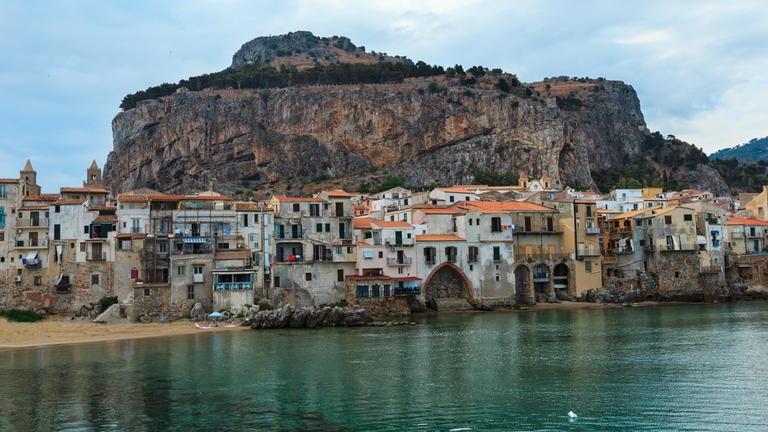
Sicily emerges from the Best European Destinations awards as Italy’s most compelling region for 2026, with two entries. The first is Cefalù, with its Norman cathedral, the Rocca promontory offering fairy-tale views, golden sandy beaches, and a cuisine that is itself reason enough to travel — pistachios, swordfish, and the great classics: arancini and cannoli.
More elite and internationally renowned is Taormina, with its Ancient Theatre carved into the rock and views of Mount Etna. The city has long attracted travellers — Goethe, D.H. Lawrence and Truman Capote among them — yet it still offers genuine experiences: a morning granita, a hike on the volcano, a summer concert in the Greek theatre. The editors of Best European Destinations 2026 offer an important tip: choose the low season. The light is different, prices are more reasonable, and outside summer Taormina “slims down,” becoming far more accessible in terms of visitor numbers.
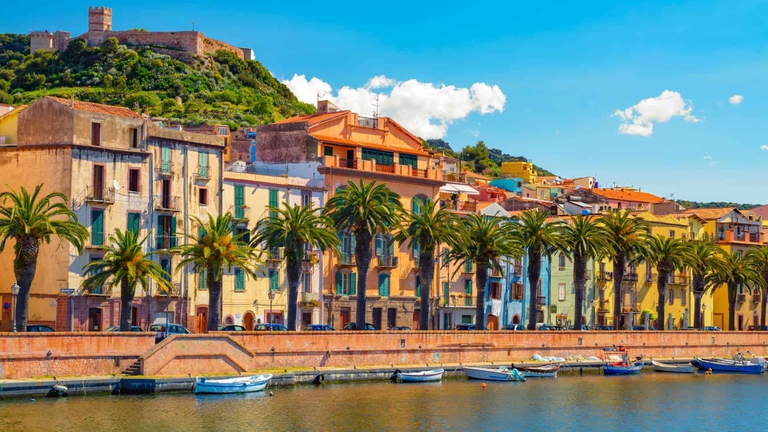
Finally, we arrive in Sardinia with one of the most surprising destinations. Bosa is not directly on the sea but overlooks the Temo River, in Sardinia’s coastal hinterland. Pastel-coloured houses climb the hillside, especially in the Sa Costa district with its narrow alleys and artisan workshops. Local Malvasia wine is best enjoyed sitting in the sun. And of course, nearby Bosa Marina offers clean waters and unhurried rhythms. This is the kind of destination that rewards those who venture off the beaten track — and precisely for that reason preserves its identity while embracing responsible tourism.
Pescasseroli, in the heart of Italy’s Apennines, will host the IBA conference on bear conservation and human–bear coexistence. LifeGate will be the event’s media partner.
The toll is still provisional, but data collected across several European countries indicate that tens of thousands of people have died as a result of extreme heat.
Last February, Malaysia imposed a total ban on electronic waste imports. Yet toxic e-waste continues to arrive from the United States and other countries through illegal trafficking networks.
Although Earth Overshoot Day falls six days later than in 2025, this does not represent an improvement. The shift is the result of revised estimates of the oceans’ carbon absorption capacity, while humanity’s actual ecological footprint continues to grow.
Greece has launched a wildfire management system based on nanosatellites and artificial intelligence. A model that other countries are now looking to replicate.
According to analysts, the emergence of a “super” El Niño could trigger a global food price shock, adding to inflationary pressures already fuelled by the conflict with Iran.