


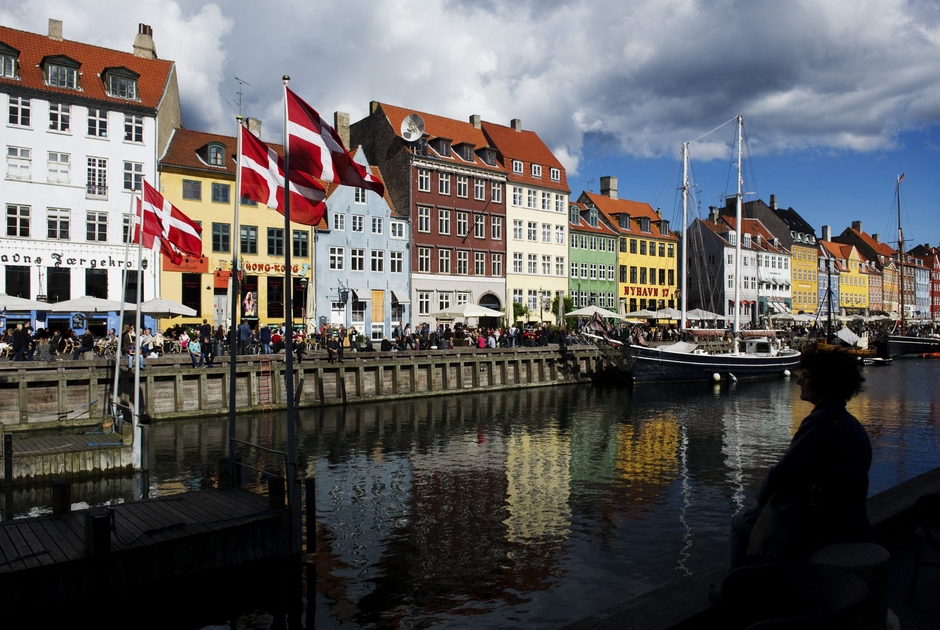
Copenhagen ranks first in the 2026 Global Liveability Index, followed by Vienna and Melbourne. Among the cities recording the greatest improvement in quality of life is New York.
We have a new newsletter on the future of mobility and sustainable tourism. Every journey can really change the world.
Let’s go! Welcome aboard, travellers. Here, between a bus stop and a quiet electric route, a cycle path and a slow walk through nature, you’ll discover that travel always holds surprises. Itineraria is LifeGate’s newsletter for those who believe that the way we move also shapes the world we live in. Its name evokes discovery, bringing together the ecological transition of transport with ideas for treks, walking routes and inspiring itineraries, practical tips for enjoying a stay focused on sustainable and responsible tourism, and travel suggestions that respect nature and the environment.
Whether you are digital nomads, tireless commuters or dreamers with a suitcase always ready, Itineraria is travel seen through the lens of mobility — the “where” that never forgets the “how” we travel and explore. Because mobility has endless new forms, virtuous and sustainable: electric and silent, slow when needed, innovative without losing touch with the tradition of historic routes and ancient paths.
In short, it is the kind of mobility that the World Business Council for Sustainable Development has described like this: “Enabling people to move freely, communicate and build relationships, without ever losing sight of the human and environmental dimension, today and in the future.” Because, as Marcel Proust said long before electric cars and cycle lanes were invented, “the real voyage of discovery consists not in seeking new landscapes, but in having new eyes.” And never has this felt more true than today.
Every two weeks, always on a Friday — the perfect time, the perfect day to plan a weekend escape, to relax on the sofa and think about your next journey — here’s what you can expect:
After all, Italians are a people of sailors, poets, saints — and commuters. It’s time to add “conscious travellers” to the list.
Let’s go!
To subscribe to the Itineraria newsletter, all it takes is one click.
Siamo anche su WhatsApp. Segui il canale ufficiale LifeGate per restare aggiornata, aggiornato sulle ultime notizie e sulle nostre attività.

Quest'opera è distribuita con Licenza Creative Commons Attribuzione - Non commerciale - Non opere derivate 4.0 Internazionale.
Copenhagen ranks first in the 2026 Global Liveability Index, followed by Vienna and Melbourne. Among the cities recording the greatest improvement in quality of life is New York.
Its oceanic microclimate, fertile soils, and the alternation of rain and sunshine make Normandy the ideal place for flax cultivation. A journey through the region offers a close-up look at the European flax supply chain, from cultivation to fibre processing.
The European Commission has clarified that passengers are entitled to refunds for cancelled flights even in the face of high fuel prices. Airlines are also prohibited from adding retroactive charges to tickets already purchased.
On major online marketplaces, inquiries about electric cars have increased due to rising gasoline and diesel prices caused by the war in Iran. The question is whether this interest will last.
In the heart of the United Kingdom, there is a production site that has become the European laboratory of a virtuous idea: turning end-of-life vehicles into resources for the future.
The European Commission has announced that from 2035 it will no longer be mandatory to sell only electric cars. What could the consequences be?
The automotive sector is facing a profound transformation that goes beyond electrification, requiring new skills and technologies across the value chain, according to a study by the Politecnico di Milano for Geely Italy.
Milan has announced one of Europe’s most ambitious mobility schemes, known as Strade Aperte (open roads). Its goal is to reduce cars in phase 2 of the lockdown by increasing bike lanes and pedestrian areas.
Formula 1, the world’s most important auto racing championship, has decided to turn the page and aim for carbon neutrality with the support of its teams, drivers and the whole racing circus.


