



Residents of Kanseche, Malawi, accuse ABF of contributing to the devastating 2022 floods through its subsidiary, Illovo Sugar.
The European Commission has clarified that passengers are entitled to refunds for cancelled flights even in the face of high fuel prices. Airlines are also prohibited from adding retroactive charges to tickets already purchased.
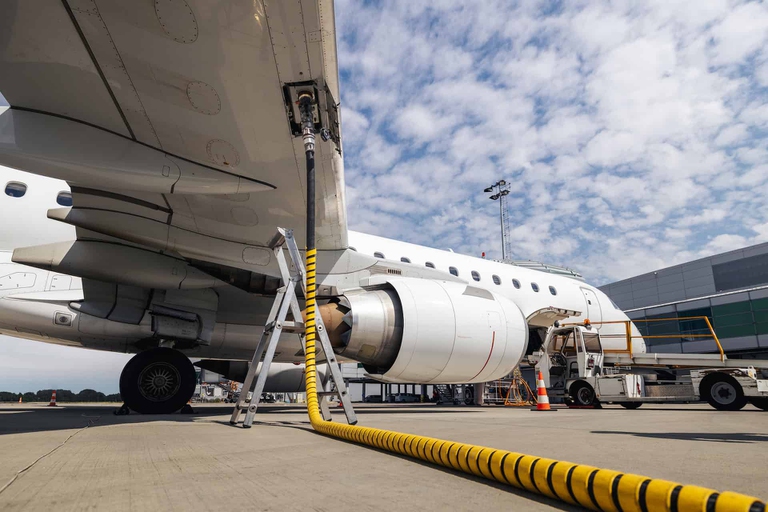
With 13,000 flights already cancelled on routes considered less profitable for airlines, on May 8 the European Commission adopted guidelines for the European Union’s transport and tourism sectors to address the ongoing disruptions in fuel supply and the closure of certain air and maritime routes linked to the crisis in the Middle East. In particular, the guidelines focus on the aviation sector — fuel supply obligations, fuel surcharges, airport slots, public service obligations and air passenger rights — addressing the impact of a potential jet fuel shortage should the conflict continue.
Passengers affected by flight cancellations continue to benefit from their rights. They are entitled to reimbursement, rerouting or return transport, airport assistance and compensation for last-minute cancellations. Airlines may be exempt from paying financial compensation only if they can prove that the cancellation was caused by extraordinary circumstances, such as a local fuel shortage. High fuel prices, however, according to the European Commission, must not be considered extraordinary circumstances.
To ensure transparency in air ticket pricing, the Air Services Regulation requires airlines to display final ticket prices upfront. The aim is to prevent passengers from facing unexpected additional costs. Therefore, airlines are not allowed to retroactively charge extra costs such as fuel surcharges. For package holidays, the Package Travel Directive may allow tour operators to increase prices retroactively, if this is provided for in the contract and only under specific circumstances.
To help avoid the closure of certain routes, airlines may be exempted from the 90 per cent fuel uplift rule, which requires EU and non-EU airlines to refuel at EU airports for at least 90 per cent of the annual fuel needed for flights departing from those airports. The exemption applies when safety regulations require airlines to carry additional fuel from the departure airport — something that could otherwise prevent the airline from operating the next flight if fuel availability at the destination airport within the EU is insufficient. As for airport slots, airlines may be exempted, without penalties, from the usual obligations regarding take-off and landing slots due to fuel supply problems at airports.
Siamo anche su WhatsApp. Segui il canale ufficiale LifeGate per restare aggiornata, aggiornato sulle ultime notizie e sulle nostre attività.

Quest'opera è distribuita con Licenza Creative Commons Attribuzione - Non commerciale - Non opere derivate 4.0 Internazionale.
Residents of Kanseche, Malawi, accuse ABF of contributing to the devastating 2022 floods through its subsidiary, Illovo Sugar.
France, Spain, Portugal and Greece are fighting wildfires, some of which are still out of control.
Copenhagen ranks first in the 2026 Global Liveability Index, followed by Vienna and Melbourne. Among the cities recording the greatest improvement in quality of life is New York.
Its oceanic microclimate, fertile soils, and the alternation of rain and sunshine make Normandy the ideal place for flax cultivation. A journey through the region offers a close-up look at the European flax supply chain, from cultivation to fibre processing.
Since the ceasefire began in mid-April, the Israeli military has killed at least 331 people in Lebanon. It is now intensifying both its air and ground attacks.
On major online marketplaces, inquiries about electric cars have increased due to rising gasoline and diesel prices caused by the war in Iran. The question is whether this interest will last.
Israeli raids on Lebanon are the heaviest in weeks, hitting both the capital Beirut and the south of the country. Iran has threatened retaliation.
In the heart of the United Kingdom, there is a production site that has become the European laboratory of a virtuous idea: turning end-of-life vehicles into resources for the future.
Israeli bombings in Lebanon have already caused over 900 deaths and one million displaced people, with growing concerns of genocide.