




Copenhagen ranks first in the 2026 Global Liveability Index, followed by Vienna and Melbourne. Among the cities recording the greatest improvement in quality of life is New York.
The automotive sector is facing a profound transformation that goes beyond electrification, requiring new skills and technologies across the value chain, according to a study by the Politecnico di Milano for Geely Italy.
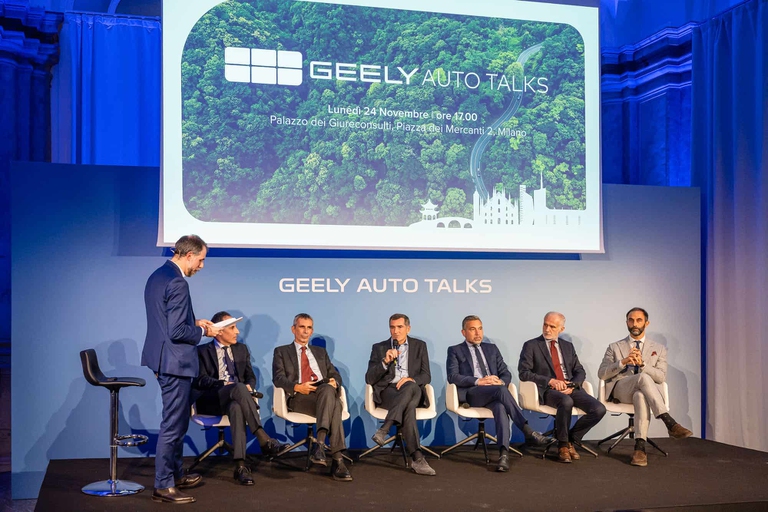
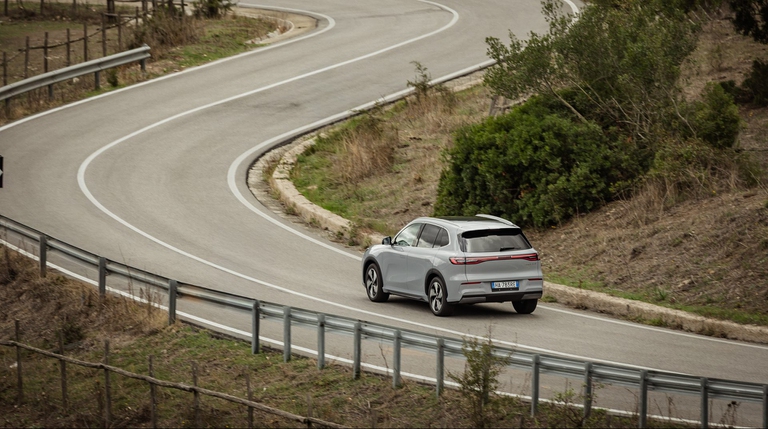
The opportunity for discussion came with the first Geely Auto Talks, a dialogue platform promoted by Geely Italy, the Chinese brand that made its Italian debut last July with two models designed for the local market and already available—the fully electric Geely EX5 and the hybrid Starray EM-i. The initiative is intended to bring together institutions, companies, the media, and academia.
This first event marked the launch of what is meant to become a permanent platform for dialogue between Italy and China—an initiative created to take stock of the future of the automotive industry, industrial policies, and emerging technologies, while also exploring the impact of AI, namely the role of artificial intelligence and advanced driver assistance systems (Adas) in terms of safety and user experience.
Possible answers came from data presented by the Connected Vehicle & Mobility Observatory of the Politecnico di Milano, based on a survey of 5,600 residents in 11 countries (Brazil, China, Germany, France, Hungary, Italy, Japan, Poland, Spain, the United States, and the United Kingdom), along with in-depth interviews with automotive industry opinion leaders conducted between late 2024 and early 2025. The findings were presented in November by Geely Italy. Here is a summary of the key insights.
The picture outlined by the Politecnico di Milano report is clear: 56 per cent of automotive companies report a shortage of specific skills, while 48 per cent highlight the need to introduce entirely new ones. This is not just about strengthening existing capabilities, but about building professional profiles that did not exist until a few years ago. These include software engineers, data scientists, battery and energy storage specialists, and charging infrastructure experts—already among the most sought-after roles in the automotive industry—alongside Adas and autonomous driving experts.
What the sector is experiencing is “a moment of transformation in which technology is not an end in itself, but a tool to improve quality of life, increase safety, and support the transition toward a sustainable future. An approach that places people and their needs at the centre of development,” explained Marco Santucci, Ceo of Geely Italy. He added: “We firmly believe in Italy’s potential as a strategic hub for innovation and the mobility of the future.”
The automotive industry ranks just behind the tech sector in terms of maturity in adopting artificial intelligence applications. According to the Connected Vehicle & Mobility Observatory, 30 per cent of companies in the sector already have a dedicated team and a specific budget for AI projects.
The most advanced applications are linked to ADAS and autonomous driving, areas that are highly regulated due to associated risks. However, it is in consumer services that AI shows the highest level of adoption: 29 per cent of applications are already operational, with a particular focus on data-driven decision-making (43 per cent) and communication with the driver (30 per cent).
Consider how the integration of AI into voice assistants is transforming the travel experience. In many latest-generation vehicles, drivers can now engage in natural conversations with onboard systems—from navigation and infotainment to smartphone integration—receive personalised route suggestions in real time, and get guidance on how to optimise driving based on traffic, road conditions, and charging stations, especially for electric vehicles. The car is increasingly becoming the centre of a connected digital ecosystem, fully integrated into everyday life.
The figures in the report speak for themselves. In 2024, the adoption of ADAS such as automatic emergency braking, adaptive cruise control, and lane-keeping assistance led to a 12 per cent reduction in accident rates and a 13 per cent reduction in injury severity. The savings in social costs are estimated at €1.89 billion for systems installed between 2010 and 2024. Devices sold in 2024 alone generated more than €1 billion in net savings.
As for Italians’ relationship with safety, it appears positive: Italian buyers are willing to pay an average of €1,629 more for a vehicle equipped with ADAS features, a sign of growing awareness of the value of active safety.
How are companies responding to this revolution? By investing in training. 58 per cent of surveyed organisations focus on upskilling and reskilling programmes, while 20 per cent rely on structured internal training. The most common initiatives involve digital skills (39.1 per cent) and professional workshops (36.6 per cent). However, there is still limited evidence of dedicated pathways focused specifically on AI applied to vehicles, autonomous driving, and advanced automotive technologies. In short, the sector is changing rapidly. But according to the Politecnico di Milano analysis, the speed of this transformation may not be sufficient to bridge the gap between today’s automotive industry and that of the future.
What is needed? Bold choices, targeted investments, and a strategic vision capable of looking beyond the immediate horizon. Because while the car of tomorrow—ideally ever more electrified, efficient, and sustainable—is already being built today, skills and technologies are evolving at a pace we are still learning to manage. What Geely Italy calls for is a “technological Renaissance”: a new cultural and technological path for the automotive industry, one that combines quality, safety for people, beauty, and innovation, and creates lasting value over time.
Siamo anche su WhatsApp. Segui il canale ufficiale LifeGate per restare aggiornata, aggiornato sulle ultime notizie e sulle nostre attività.

Quest'opera è distribuita con Licenza Creative Commons Attribuzione - Non commerciale - Non opere derivate 4.0 Internazionale.
Copenhagen ranks first in the 2026 Global Liveability Index, followed by Vienna and Melbourne. Among the cities recording the greatest improvement in quality of life is New York.
Its oceanic microclimate, fertile soils, and the alternation of rain and sunshine make Normandy the ideal place for flax cultivation. A journey through the region offers a close-up look at the European flax supply chain, from cultivation to fibre processing.
The European Commission has clarified that passengers are entitled to refunds for cancelled flights even in the face of high fuel prices. Airlines are also prohibited from adding retroactive charges to tickets already purchased.
On major online marketplaces, inquiries about electric cars have increased due to rising gasoline and diesel prices caused by the war in Iran. The question is whether this interest will last.
In the heart of the United Kingdom, there is a production site that has become the European laboratory of a virtuous idea: turning end-of-life vehicles into resources for the future.
We have a new newsletter on the future of mobility and sustainable tourism. Every journey can really change the world.
The European Commission has announced that from 2035 it will no longer be mandatory to sell only electric cars. What could the consequences be?
Milan has announced one of Europe’s most ambitious mobility schemes, known as Strade Aperte (open roads). Its goal is to reduce cars in phase 2 of the lockdown by increasing bike lanes and pedestrian areas.
Formula 1, the world’s most important auto racing championship, has decided to turn the page and aim for carbon neutrality with the support of its teams, drivers and the whole racing circus.


