

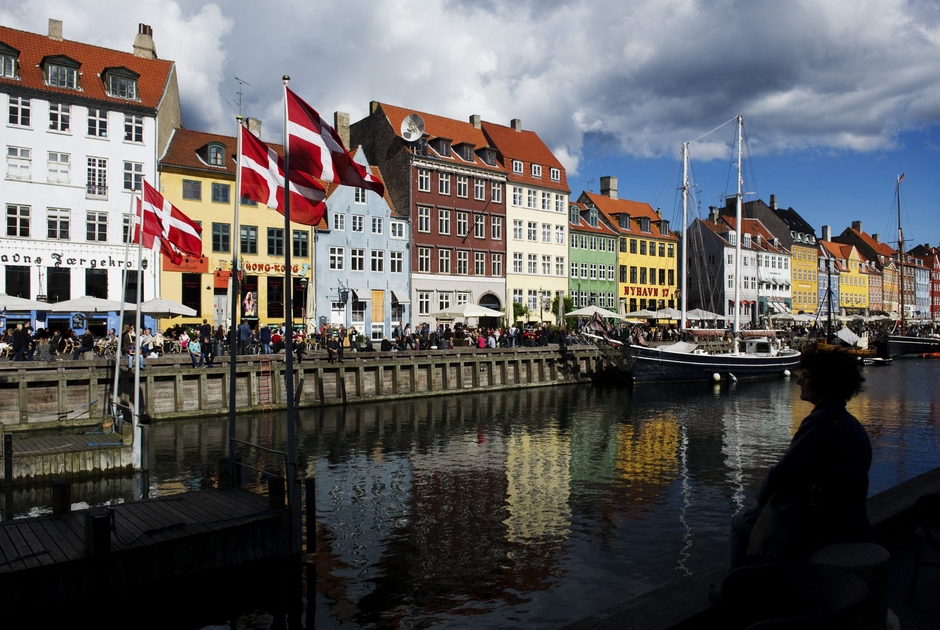
Copenhagen ranks first in the 2026 Global Liveability Index, followed by Vienna and Melbourne. Among the cities recording the greatest improvement in quality of life is New York.
The European Commission has announced that from 2035 it will no longer be mandatory to sell only electric cars. What could the consequences be?
It had been in the air for some time. And in the end, after weeks of delays, cross-pressures and delicate political negotiations, it happened. The EU has postponed the ban on internal combustion engines scheduled for 2035. And Italy, together with Germany, is among the main countries that supported the delay.
The truth is that Europe’s transition to sustainable mobility now risks losing momentum. By revising the original plans that called for a total ban on the sale of new petrol and diesel cars from 2035, the European Commission has effectively yielded to pressure from part of the automotive industry—particularly the German sector, but also the Italian one.
Under the newly proposed rules, from 2035 onwards 90 per cent of new cars sold will have to be zero-emission vehicles, while the remaining 10 per cent may include cars with traditional internal combustion engines, plug-in hybrids, range extenders (electric cars with a small engine that recharges the battery), mild hybrids, alongside electric and hydrogen vehicles.
The decision comes in response to concerns raised by the European Automobile Manufacturers’ Association (Acea), which argues that current demand for electric vehicles is too low and that, without changes to the regulations, manufacturers could face fines worth billions of euros.
“Flexibility for manufacturers is urgent,” said Sigrid de Vries, director general of ACEA. “2035 is approaching fast and market demand for electric cars is insufficient to avoid the risk of multi-billion-euro penalties. Time will be needed to build charging infrastructure and introduce adequate tax incentives.”
The European Commission foresees that manufacturers will use low-carbon steel produced in the EU to partially offset the environmental impact. It also expects increased use of biofuels and e-fuels—synthetic fuels produced through CO₂ capture, a process that is not always economically or energetically sustainable—to balance the additional emissions generated by the internal combustion vehicles that will remain on the market.
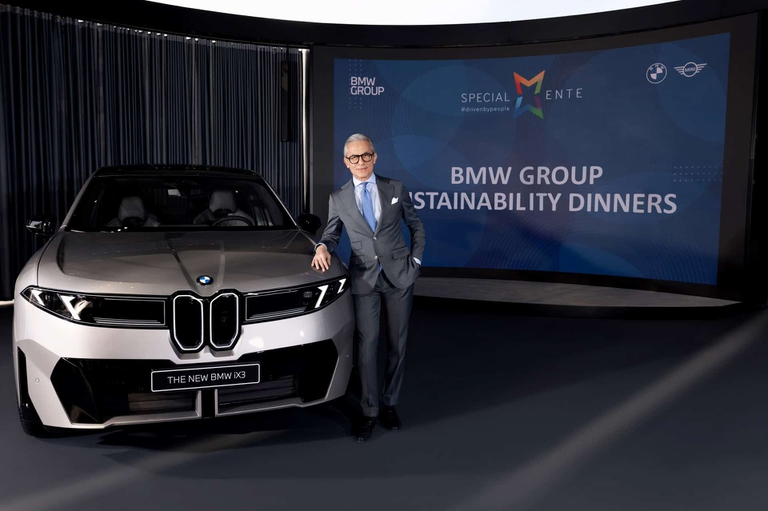
Some see the EU’s decision to revise its 2030 and 2035 targets as a “more pragmatic and less dogmatic” approach, as explained by Massimiliano Di Silvestre, president and Ceo of Bmw Italy, just hours after the Brussels announcement: “It is an extremely important step, one that we at BMW Group have been calling for for years, inspired by the principle of technological neutrality, which represents the first serious and substantial way of tackling emissions reduction in a concrete and effective manner.”
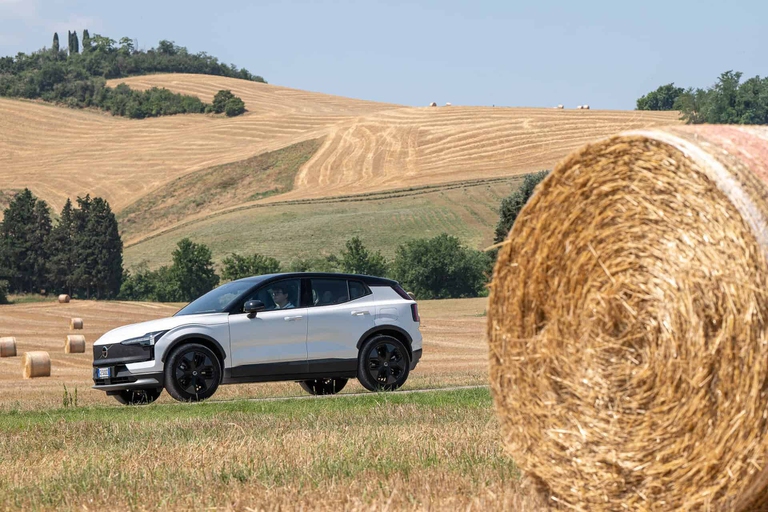
However, not all manufacturers welcomed the move. As reported by the BBC, Volvo expressed concern, stressing that it has “built a fully electric vehicle lineup in less than ten years” and is ready for a full transition. “Weakening long-term commitments for short-term gains risks undermining Europe’s competitiveness for years to come,” the Swedish carmaker warned. This position was reiterated by Michele Crisci, president and Ceo of Volvo Car Italy, during the company’s year-end press meeting: “Volvo remains committed to electric mobility, to decarbonising corporate fleets as a strategic tool for Europe’s competitiveness, and to supporting the market for second-hand zero-emission vehicles coming from company fleets for private buyers.” This commitment is confirmed by the launch in 2026 of three new electric Volvo models—EX90, ES90 and EX60—while the company continues to invest in plug-in hybrids, described by Crisci as “valuable for ‘bridging’ customers toward future electric mobility,” referring to the new generation of extended-range hybrid models XC60 and XC70.
By contrast, Volkswagen—Germany being among the strongest supporters of revising the emissions regulation—welcomed the proposal, calling it “economically sound overall” and highlighting the importance of supporting compact electric vehicles and greater flexibility on CO₂ targets.
At the heart of the issue is the revision of the regulation on car CO₂ emissions, with the abandonment of the 100 per cent reduction target for 2035 in favour of a 90 per cent target, effectively reopening the door to internal combustion engines beyond that date. This position is expected to include climate-neutral fuels and hydrogen as well.
If not properly managed, this approach to technological neutrality risks undermining the car industry’s ecological transition and exposing Europe to international competition—particularly from China. Moreover, the push toward zero-emission vehicle production is already generating new jobs, investments and innovation, as will be discussed later. Slowing or interrupting this path could make Europe less competitive in global markets.
Regulatory stability—clear, coherent and consistent policies—can give companies the confidence they need to invest in charging infrastructure and attract strategic investment. Any weakening of targets, on the other hand, risks sending a damaging signal to investors, manufacturers and supply-chain partners, many of whom have already made major investments in the electric transition precisely because they relied on policy consistency.
To understand the current situation, it helps to take a step back. In 2023, the European Union decided that by 2035 car manufacturers would have to reduce emissions by 100 per cent, effectively banning internal combustion engines. With the decision of 16 October 2025, the emissions reduction target was lowered to 90 per cent, opening the remaining 10 per cent to hybrids and internal combustion engines—more polluting solutions that would therefore have to be offset through the use of green steel and alternative fuels.
To understand what might be lost—or gained—we asked what Italian industries stand to gain from the electric car sector. The answers were already provided by a report from Motus-E and Ca’ Foscari University of Venice on the employment impacts of the automotive sector’s transformation.
By 2030:
What would Italian cities gain from greater adoption of electric vehicles?
To be clear, the revision of the 2035 legislative package proposed by the Commission must still be discussed, negotiated and approved by the European Parliament and the Council of the EU. The legislative process is therefore still ongoing. One thing, however, is certain: electric cars remain not only the enabling technology for autonomous driving—the real future of mobility—but also a major opportunity.
An opportunity to create more jobs and new skills, to reduce production and recycling costs for industry, and to make cities—currently among Europe’s most polluted—quieter and cleaner. Drivers could pay less for energy and even feed electricity back into urban grids through smart systems. So the question remains: was Europe’s decision a missed opportunity—or not?
Siamo anche su WhatsApp. Segui il canale ufficiale LifeGate per restare aggiornata, aggiornato sulle ultime notizie e sulle nostre attività.

Quest'opera è distribuita con Licenza Creative Commons Attribuzione - Non commerciale - Non opere derivate 4.0 Internazionale.
Copenhagen ranks first in the 2026 Global Liveability Index, followed by Vienna and Melbourne. Among the cities recording the greatest improvement in quality of life is New York.
Its oceanic microclimate, fertile soils, and the alternation of rain and sunshine make Normandy the ideal place for flax cultivation. A journey through the region offers a close-up look at the European flax supply chain, from cultivation to fibre processing.
Formula 1, the world’s most important auto racing championship, has decided to turn the page and aim for carbon neutrality with the support of its teams, drivers and the whole racing circus.
The European Commission has clarified that passengers are entitled to refunds for cancelled flights even in the face of high fuel prices. Airlines are also prohibited from adding retroactive charges to tickets already purchased.
On major online marketplaces, inquiries about electric cars have increased due to rising gasoline and diesel prices caused by the war in Iran. The question is whether this interest will last.
In the heart of the United Kingdom, there is a production site that has become the European laboratory of a virtuous idea: turning end-of-life vehicles into resources for the future.
We have a new newsletter on the future of mobility and sustainable tourism. Every journey can really change the world.
The automotive sector is facing a profound transformation that goes beyond electrification, requiring new skills and technologies across the value chain, according to a study by the Politecnico di Milano for Geely Italy.
Milan has announced one of Europe’s most ambitious mobility schemes, known as Strade Aperte (open roads). Its goal is to reduce cars in phase 2 of the lockdown by increasing bike lanes and pedestrian areas.