



Elon Musk is one of the most influential and pragmatic figures of our time. He is changing transportation and energy forever. Here’s the biography of the man who wants to take us to Mars.
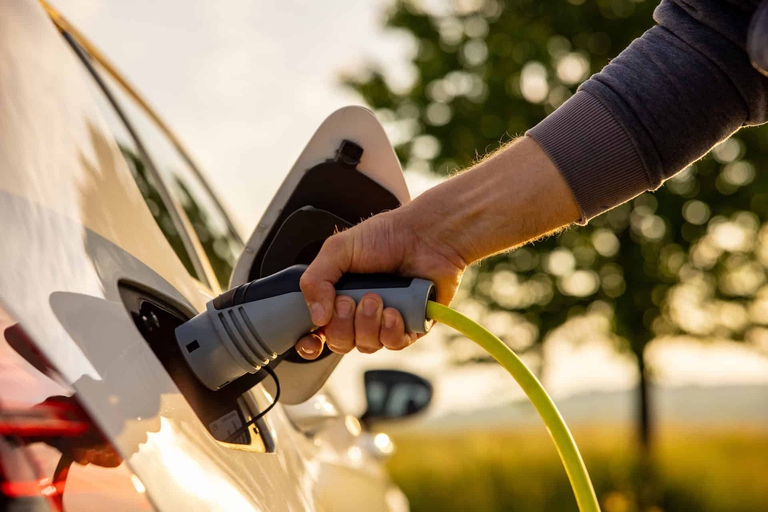
On major online marketplaces, inquiries about electric cars have increased due to rising gasoline and diesel prices caused by the war in Iran. The question is whether this interest will last.
With the war in Iran and rising fuel costs, interest in electric cars is growing exponentially: a Guardian article reports that online marketplaces in the United Kingdom, Germany, France, and Spain have seen a sharp increase in inquiries about electric vehicles since the conflict began in February.
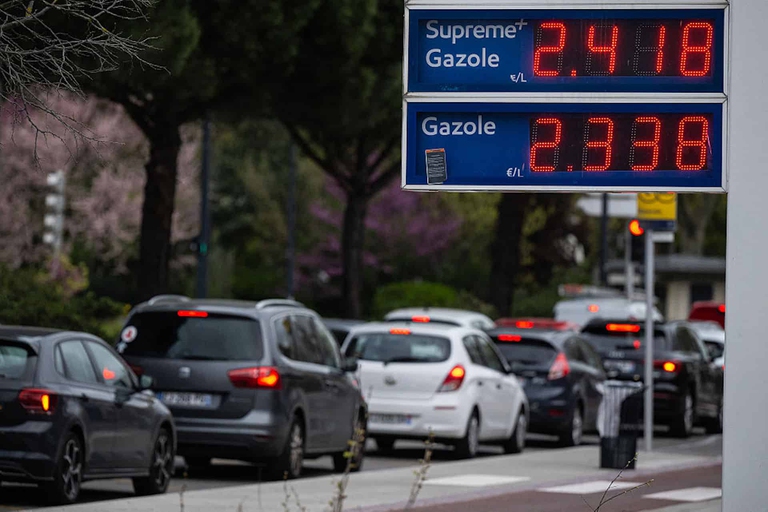
The attack launched by the United States against Iran on February 28 caused turmoil in global commodity markets, as Iran blocked the Strait of Hormuz, a key route for oil and gas exports. This led to a rapid rise in gasoline and diesel prices, highlighting the greater cost-effectiveness of electricity.
Ajay Bhatia, CEO of Mobile.de, Germany’s largest online car marketplace, stated that the new and used car market saw a more than 50 percent increase in inquiries about electric cars in March compared to February. Inquiries about gasoline and diesel cars declined during the same period, while those for hybrids—which combine an engine with a smaller battery—rose by 4 percent.
Demand for electric vehicles in the German market, which is deeply rooted in the internal combustion engine sector, has increased compared to last year, thanks in part to the additional purchase incentives offered by the Berlin government, but the real push came from the price of diesel reaching 2.50 euros per liter in Germany: “What the German energy transition failed to achieve,” said Bhatia, “has happened through economic reality.”
“We’ve been seeing a shift away from internal combustion engines for some time,” said Iain Read, content director at Carwow, a platform that connects buyers and dealers in the UK, Spain, and Germany, which recorded a 20–30 percent increase in inquiries about electric cars across all three markets between February and March – “With the war, however, we’ve seen this trend accelerate. Consumers are concerned about the cost of living and want to keep their fixed expenses down.”
“Drivers are very sensitive to energy prices and are looking for alternatives,” said Guillaume-Henri Blanchet, deputy general manager of La Centrale, one of France’s largest automotive classifieds portals “We immediately noticed a shift among drivers toward searching for electric cars (a 160 percent increase between early March and early April), as well as greater interest in used vehicles.”
The AutoScout24 portal recorded a roughly 40 percent increase in demand for electric cars in Germany, Austria, and Italy, while demand for gasoline and diesel cars remained stable or declined.
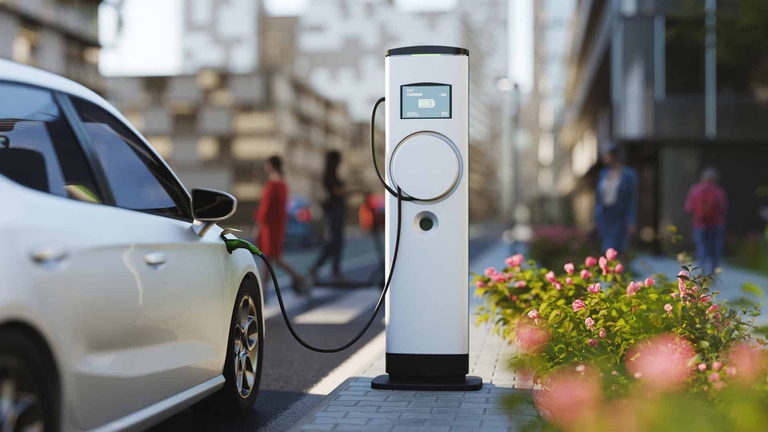
Now, the question for the automotive industry is whether this surge in interest will be permanent. “In my view, this is a spike that will subside, but it won’t disappear entirely,” said Bhatia of Mobile.de, who believes that demand for electric cars will stabilize at a higher level than before, thanks in part to improvements in charging infrastructure and lower prices for battery-electric vehicles.
According to Ian Plummer, Autotrader’s UK client manager, there is still work to be done to ensure that consumers are convinced electric cars can fit into their lifestyles, as previous spikes in fuel prices have not led to a sustained increase in electric car purchases. “This crisis will leave scars on consumers,” said Blanchet of La Centrale, adding that people will be more willing to consider a higher upfront cost if the cost of fueling the car is lower in the long term.
Even before the outbreak of the war, Norway had set a record in the electric vehicle market: in 2025, battery-electric vehicles accounted for 95.9 percent of new car sales in the country. In March 2026, 17,400 new battery-electric vehicles were registered: with the share of BEVs consistently above 95 percent, it once again approached the total number of registrations (98.4 percent), cementing the Scandinavian country’s status as a model for the transition..
Siamo anche su WhatsApp. Segui il canale ufficiale LifeGate per restare aggiornata, aggiornato sulle ultime notizie e sulle nostre attività.

Quest'opera è distribuita con Licenza Creative Commons Attribuzione - Non commerciale - Non opere derivate 4.0 Internazionale.
Elon Musk is one of the most influential and pragmatic figures of our time. He is changing transportation and energy forever. Here’s the biography of the man who wants to take us to Mars.
Just as fires often give way to new growth, after the Dieselgate scandal, which saw Volkswagen cheating on US emission rules, the German car manufacturer radically changed course, beginning to focus on sustainable mobility. The German car company aims to propose thirty zero-emission models and produce at least one million battery electric vehicles by 2025. An ambitious mission
Germany made the first step towards banning petrol and diesel-fuelled vehicles. If the federal resolution is passed into law, starting from 2030 only electric cars will be allowed on the country’s streets.
The prototype was developed by two Palestinian 23-year-old students, who self-funded. The car reaches a speed of up to 30 km/h.
Printed and assembled in a few hours, and then it’s ready to carry up to 12 passengers. The first prototypes of this bus are being tested in the streets of Washington, D.C.
Charge points in the country exceeded petrol stations last year. Japanese plug-in drivers are no more afflicted by range anxiety, so electric vehicles are taking off. And now Japan bets on hydrogen cars.
When it was (re)born in 2014, the Koreans intended for it to become the anti-Mini. Square, weird, original. For it to stand out. Then the Kia Soul’s journey changed. After the petrol and diesel versions (which are still on the market), the electric conversion is here. The Soul Eco Electric easily rid itself of fossil fuels,
This is the first step of the Dutch Government to ban selling diesel and petrol cars in the country. Is the era of the internal combustion engine over?
The Detroit Auto Show started with the exhibition of 40 new cars. FCA reveals its new crossover, Chrysler Pacifica, Audi its new line of A4 vehicles, BMW shows racing cars like the M2 Coupé and the X4 M40i, while Volkswagen presents its new hybrid car Tiguan. The first cars of this year’s edition of the


