




Pescasseroli, in the heart of Italy’s Apennines, will host the IBA conference on bear conservation and human–bear coexistence. LifeGate will be the event’s media partner.
A journey of discovery to Nepal, a year after the earthquake. Mattia Vettorello – aka Frostscape – and his new “slow paced” expedition has started.
After taking a million steps in Iceland and creating the photographic book Materia instabile (Unstable matter), young explorer Mattia Vettorello aka Frostscape from Conegliano, a municipality in the province of Treviso (northern Italy), has embarked on a new journey to Nepal. Exactly a year after the 7.8 magnitude earthquake that devastated the small Asian country and brought its inhabitants to their knees. A few days after the opening of Milan’s Universal Exhibition many people gave their contribution to finishing the Pavilion of Nepal in time because local workers joined their families in their country.
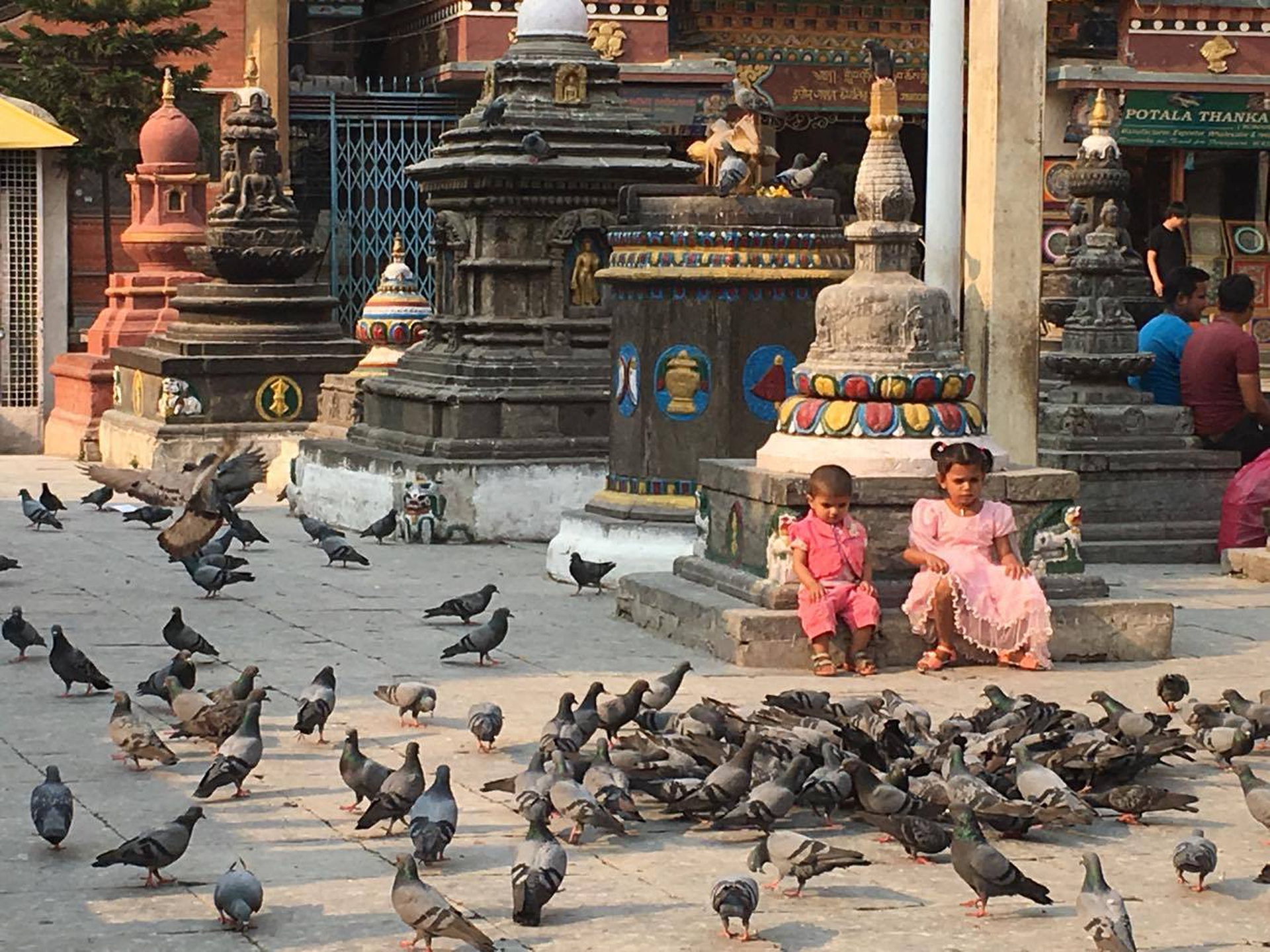
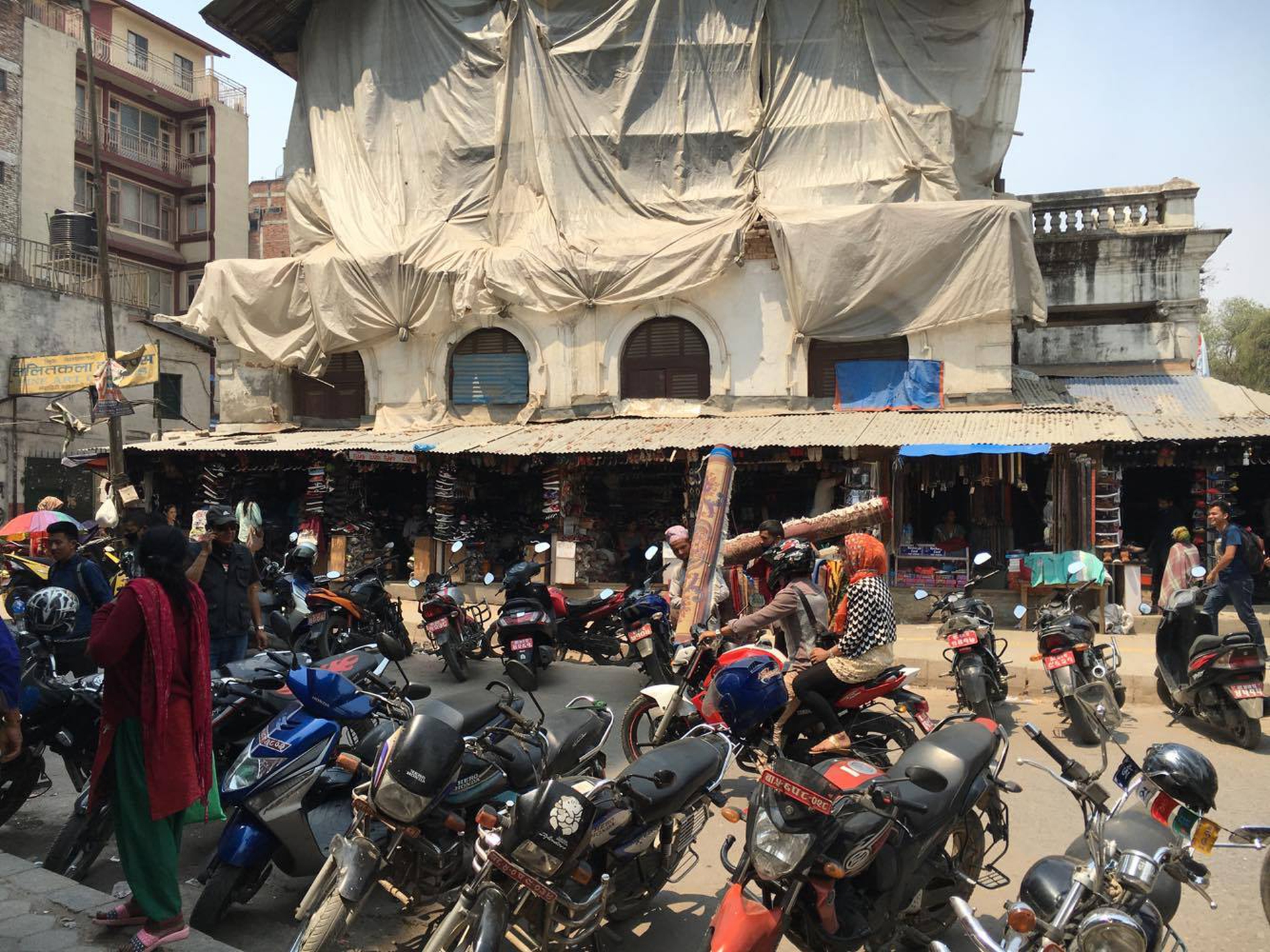
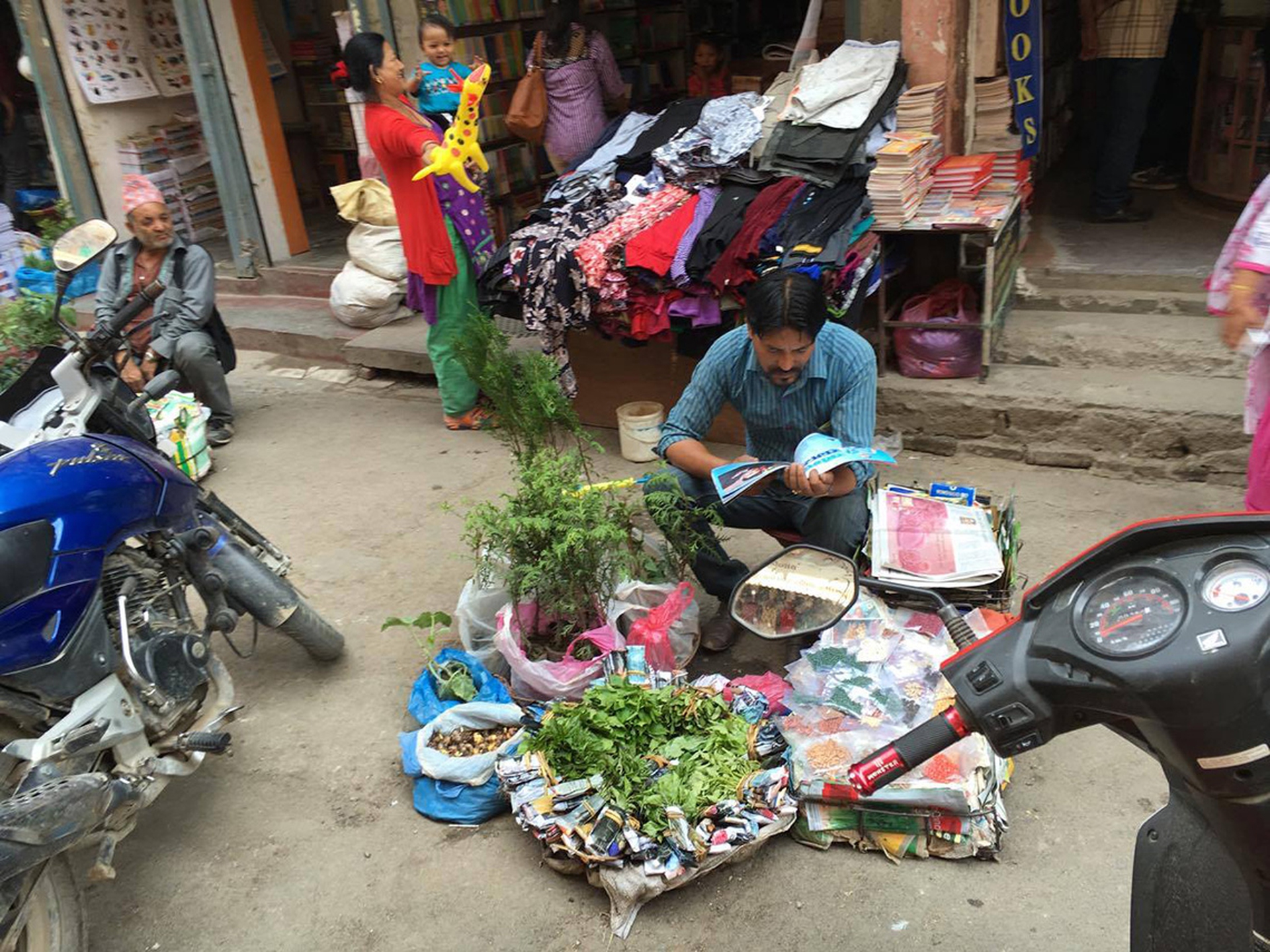
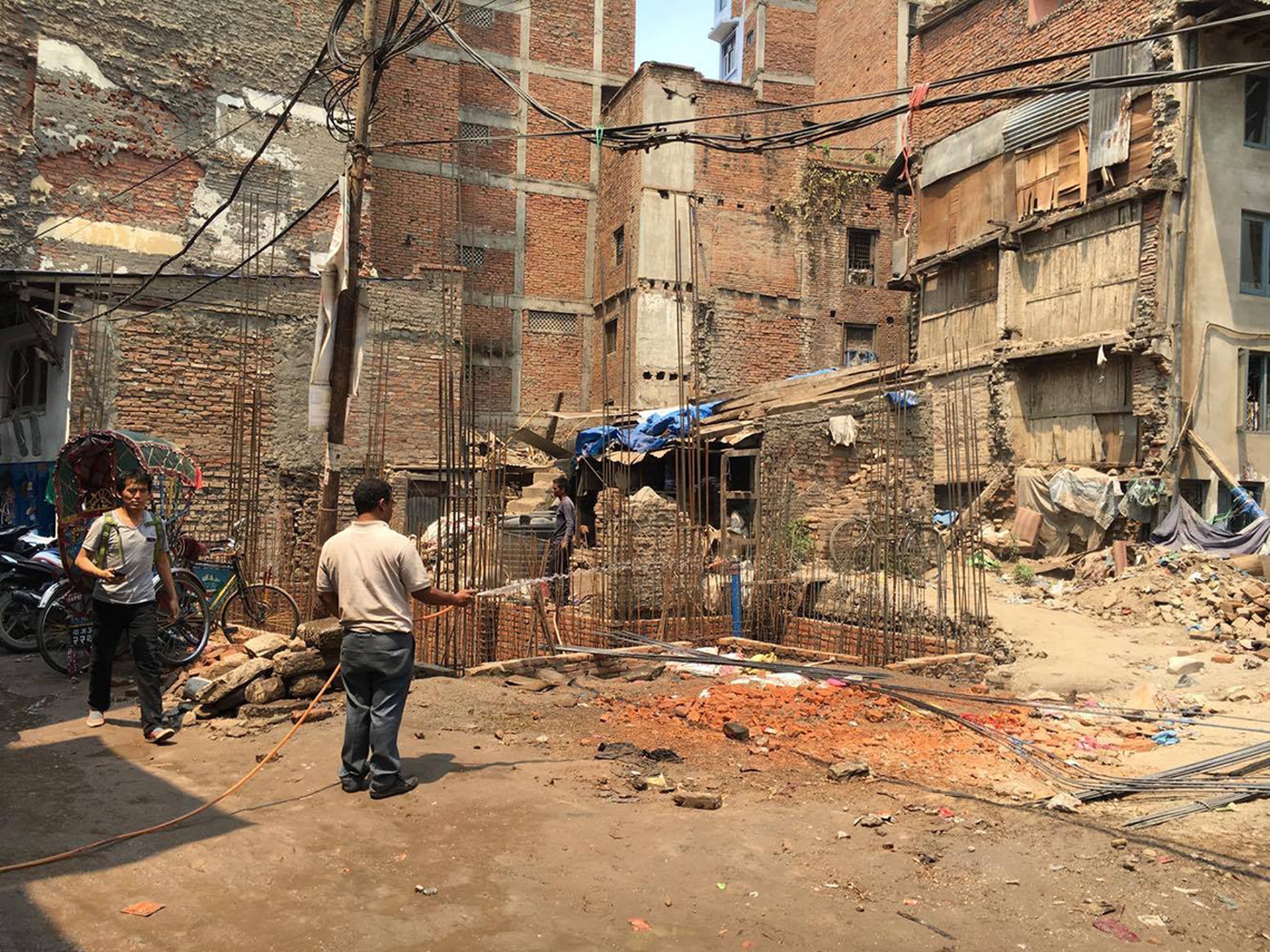
Vettorello’s trip started from the capital, Kathmandu, on 25 April. “Kathmandu is active. You can see the house ruins but people united to start a new life. They know it will be difficult to return to their everyday lives because the wound is still open”, Vettorello said after he spent a few days in the city that has still access to electricity few hours a day.
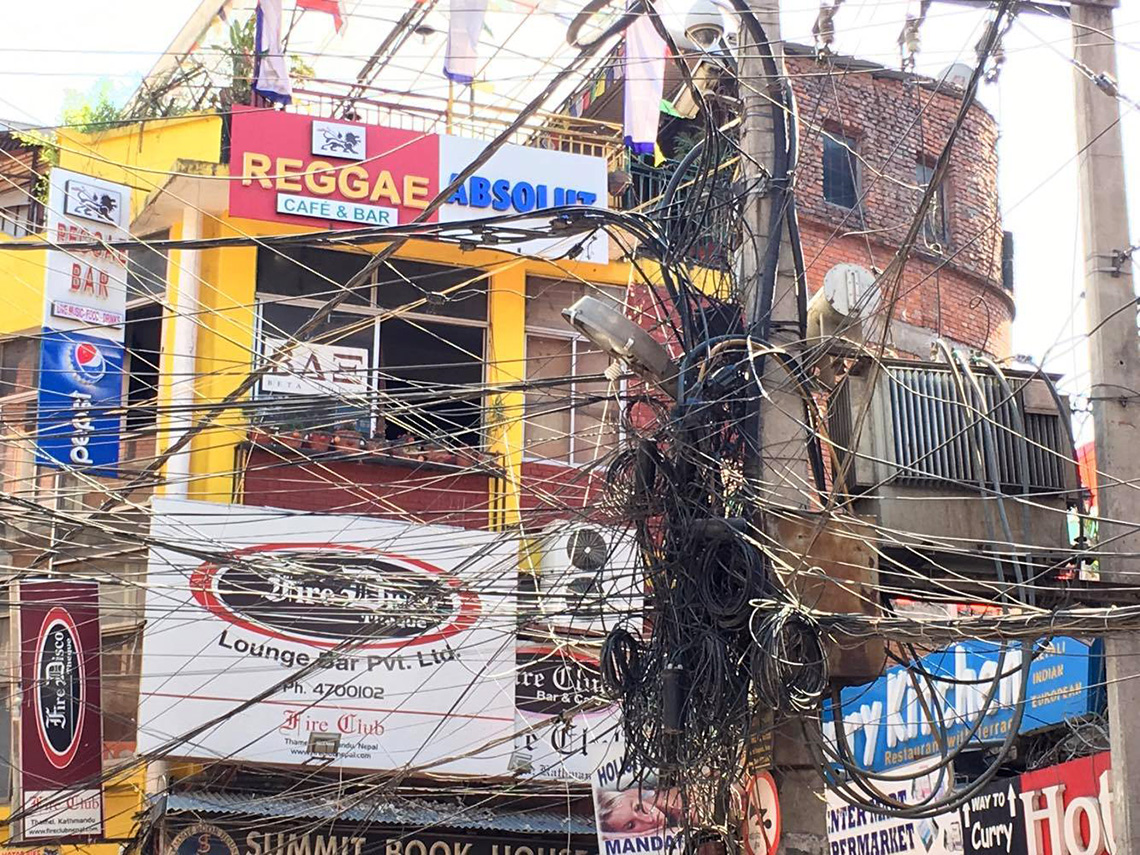
“The scent of incense sticks lit by shopkeepers at the sidewalk kerb wakes you up every day and for this reason it is so pleasant to walk these streets”, Vettorello adds. “One thing that has always impressed me is the mass of cables flying over our heads. These poles full of cables look like a big nest”.
The new expedition of the project Frostscape has no “otherworldly” goals, no records to set and no unexplored places to discover. Vettorello, on the contrary, chose a country in need to rediscover the anthropological aspect of trips, explorations and research. He walked at a slow pace to plunge into other cultures and challenge stereotypes. Carrying just essential things.
The only required stop will be Rajban, a village in southern Nepal where Vettorello will help building a school financed by the social and sports project Finale for Nepal. The rest will be decided according to his experiences. The road, time, people, stories. Everything will be traced and decided, day by day, step by step.
Siamo anche su WhatsApp. Segui il canale ufficiale LifeGate per restare aggiornata, aggiornato sulle ultime notizie e sulle nostre attività.

Quest'opera è distribuita con Licenza Creative Commons Attribuzione - Non commerciale - Non opere derivate 4.0 Internazionale.
Pescasseroli, in the heart of Italy’s Apennines, will host the IBA conference on bear conservation and human–bear coexistence. LifeGate will be the event’s media partner.
The inflation caused by extreme weather events is known as “climateflation”: prices for many food products are expected to rise sharply.
The toll is still provisional, but data collected across several European countries indicate that tens of thousands of people have died as a result of extreme heat.
Last February, Malaysia imposed a total ban on electronic waste imports. Yet toxic e-waste continues to arrive from the United States and other countries through illegal trafficking networks.
Although Earth Overshoot Day falls six days later than in 2025, this does not represent an improvement. The shift is the result of revised estimates of the oceans’ carbon absorption capacity, while humanity’s actual ecological footprint continues to grow.
Gigantic wildfires in France’s Gironde region and near Madrid, Spain, have devastated tens of thousands of hectares of vegetation.
Greece has launched a wildfire management system based on nanosatellites and artificial intelligence. A model that other countries are now looking to replicate.
According to analysts, the emergence of a “super” El Niño could trigger a global food price shock, adding to inflationary pressures already fuelled by the conflict with Iran.
Residents of Kanseche, Malawi, accuse ABF of contributing to the devastating 2022 floods through its subsidiary, Illovo Sugar.


