




Pescasseroli, in the heart of Italy’s Apennines, will host the IBA conference on bear conservation and human–bear coexistence. LifeGate will be the event’s media partner.
Controversial African land deals by Blue Carbon face skepticism regarding their environmental impact and doubts about the company’s track record, raising concerns about potential divergence from authentic environmental initiatives.
Vast expanses of African forests, exceeding the landmass of Italy, are being involved in significant carbon offsetting transactions. These large-scale deals are being orchestrated by Blue Carbon, a seven-year-old United Arab Emirates (UAE) firm chaired by Sheikh Ahmed Dalmook al-Maktoum, a lesser-known member of Dubai’s ruling royal family. The agreements cover up to twenty percent of the land in Zambia, Kenya, Tanzania, Liberia among others. However, the said transactions have sparked strong opposition from environmental rights groups, who are concerned about a potential “scramble for Africa” and the exploitation of the continent’s natural resources.
Despite Sheikh Ahmed’s lack of prior experience in nature conservation projects, he has been at the forefront of pursuing these deals. In October 2023, Blue Carbon secured its most controversial deal yet, total area of 24.5 million hectares of forest in Africa. According to environmental groups, the Kenyan government approved the agreements without consulting the local communities whose land will be used for carbon offsetting purposes. Details of the agreement, including the financial terms, have been kept undisclosed, further fueling the controversy.
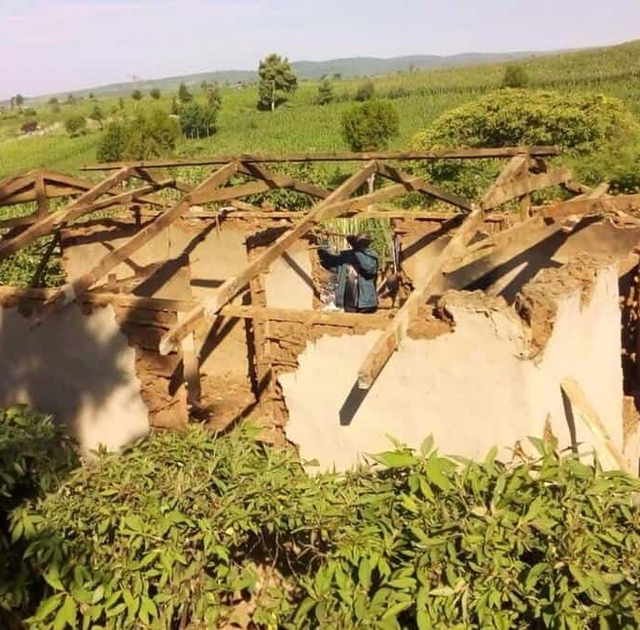
Meanwhile, the Ogiek community has dragged the Kenyan government to court over allegations of illegal eviction of hunter-gatherers from their ancestral lands to facilitate carbon offsetting schemes, according to human rights lawyers. Hundreds of Ogiek community members are currently facing eviction from the Mau Forest. Ogiek leader Mr. Daniel Kobei has accused armed forest rangers of using axes and hammers to demolish houses and burning down homes. Kobei condemned these actions as brutal and heartless, criticizing the government for prioritizing profit over humanity.
In defense of the evictions, the Kenyan government argued that these operations are necessary to protect the environment. But Dr. Justin Kenrick from the Forest People’s Programme emphasized the centrality of carbon credits and offsetting in driving these actions.
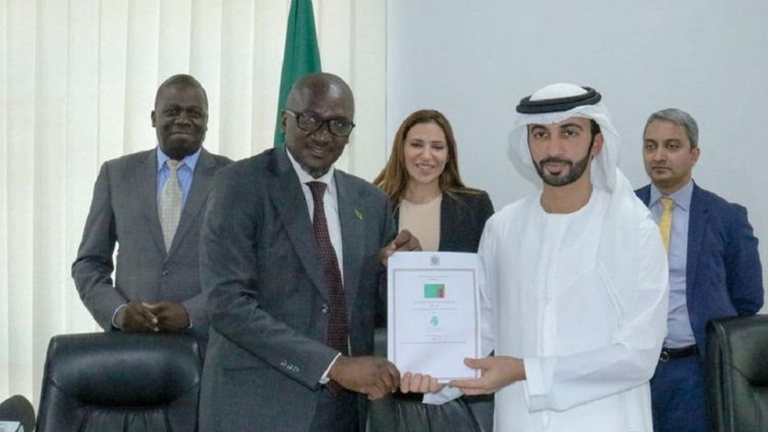
In February last year, Blue Carbon and Zambia’s Ministry of Green Economy and Environment signed a controversial Memorandum of Understanding (MoU). The so called agreement, which focuses on carbon removal efforts in the forest sector, is alleged to aligned with Article 6 of the 2015 Paris Agreement. However, climate change activists have criticized the deal as questionable; pointing out that it lacks details about the specific strategies Blue Carbon intends to implement on the 8 million hectares of Zambian forest land.
On the other hand, Alexandra Benjamin, a forest governance campaigner focusing on Liberia and Ghana with the NGO Fern, has raised concerns about Blue Carbon’s acquisition of vast African land, stating that it jeopardizes the very lands millions of vulnerable communities depend on for their livelihoods. During the previous Cop28, Benjamin urged negotiators to label carbon deals as “land grabs” and stresses the necessity for free prior and informed consent from forest communities before any agreement is finalized.
In Liberia, NGOs question the potential agreement’s implications for community land rights and access to forests crucial for livelihoods. David Obura, founding director of Cordio East Africa and head of IPBES, warns of the risks of exclusivity and the potential for denying access and rights to local communities.
Benard Kioko Ndaka, a conservationist at Global green economy Kenya, has strongly criticizes the Blue Carbon land deals with African states, describing them as “new colonialism for African land.” He contained that the host communities in many African states were not consulted prior to their government signing the said deals, likening the developments to a new scramble for Africa, reminiscent of the 19th-century imperial takeover of vast African territories by European powers.
“Just imagine, a private Dubai firm, masquerading as a climate emergency combatant, stands poised to gain control over extensive sub-Saharan African regions. I think this control would enable the company to sell carbon credits to major polluters in exchange for managing the forests on that land. But I think they are also eyeing African mineral resources.” he said in an interview with LifeGate.
Ndaka believes that the carbon trading system creates the possibility for major polluting countries such as the USA, UK, Saudi Arabia, China among others to buy emission removals or reductions from developing nations as offsets to fulfill their emission targets.
Mr. Malcolm Fabiyi, a passionate advocate for clean biotech and an expert in climate solutions, raises crucial queries, questioning the potential pricing of carbon credits in Africa. He emphasizes the need for fairness, equity, and justice, highlighting the significant disparity between current forestry carbon prices and the economic value of alternative land uses.
Mr. Fabiyi underscores the importance of developers paying a fair price for African forestry projects to avoid perpetuating historical inequalities and potential negative consequences akin to a colonial misadventure.
Thus, Blue Carbon’s African land deals, pushed by Sheikh Ahmed Dalmook al-Maktoum, face severe criticism for potential environmental exploitation. Striking agreements with African states for substantial forest tracts, these transactions, spanning up to twenty per cent of countries like Zambia, Zimbabwe, Tanzania, and Liberia, is understandable why it has triggered concerns of a modern scramble for African land presumably this is modern colonialism sadly our African leaders remain docile. If no intervention is put in place to halt these actions, Africa’s rich biodiversity, community rights, and climate change mitigation, echoing worries of a risky diversion from genuine environmental efforts.
Siamo anche su WhatsApp. Segui il canale ufficiale LifeGate per restare aggiornata, aggiornato sulle ultime notizie e sulle nostre attività.

Quest'opera è distribuita con Licenza Creative Commons Attribuzione - Non commerciale - Non opere derivate 4.0 Internazionale.
Pescasseroli, in the heart of Italy’s Apennines, will host the IBA conference on bear conservation and human–bear coexistence. LifeGate will be the event’s media partner.
The inflation caused by extreme weather events is known as “climateflation”: prices for many food products are expected to rise sharply.
The toll is still provisional, but data collected across several European countries indicate that tens of thousands of people have died as a result of extreme heat.
Last February, Malaysia imposed a total ban on electronic waste imports. Yet toxic e-waste continues to arrive from the United States and other countries through illegal trafficking networks.
Although Earth Overshoot Day falls six days later than in 2025, this does not represent an improvement. The shift is the result of revised estimates of the oceans’ carbon absorption capacity, while humanity’s actual ecological footprint continues to grow.
Gigantic wildfires in France’s Gironde region and near Madrid, Spain, have devastated tens of thousands of hectares of vegetation.
Greece has launched a wildfire management system based on nanosatellites and artificial intelligence. A model that other countries are now looking to replicate.
According to analysts, the emergence of a “super” El Niño could trigger a global food price shock, adding to inflationary pressures already fuelled by the conflict with Iran.
Residents of Kanseche, Malawi, accuse ABF of contributing to the devastating 2022 floods through its subsidiary, Illovo Sugar.


