


Pescasseroli, in the heart of Italy’s Apennines, will host the IBA conference on bear conservation and human–bear coexistence. LifeGate will be the event’s media partner.
Dietro il commercio illegale del lori lento, incentivato dal successo mediatico, si celano incredibili crudeltà, spesso ignorate.
You’ve most certainly seen viral videos of a small and funny animal with big eyes and anthropomorphic hands. It is the slow loris, a small nocturnal primate making up the genus Nycticebus and found in Southeast Asia.
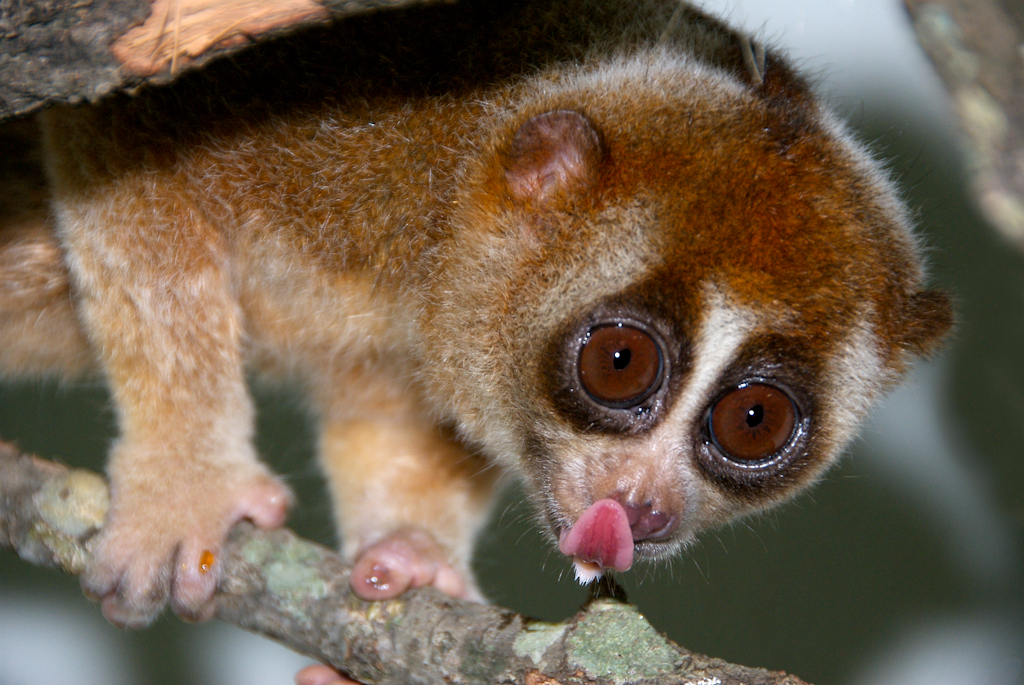
Slow lorises give a sense of tenderness and, in fact, are increasingly wanted as pets, despite they’re protected by the Convention on International Trade in Endangered Species of Wild Fauna and Flora (CITES), which controls protected species’ international trafficking. All the existing slow lorises are classified as vulnerable or endangered by the IUCN Red List.
Taking a wild animal out of its habitat and segregating it to limited space is a torture. These small animals hide a secret: they are the only existing poisonous primates. Slow lorises’ venom can cause the death in small mammals and anaphylactic shock and death in people.
In order to make them inoffensive, traffickers take their teeth out with makeshift means, often causing slow lorises’ death due to infections. All the slow lorises in the black market come from the wild, as it is quite impossible to raise them in captivity.
To capture a baby slow loris, poachers kill the mother and sometimes the entire familiar group trying to protect it. This means that the purchase of one single animal can cause the death of several individuals. Moreover, captivity significantly reduces slow lorises’ longevity, mostly due to their food needs, which are difficult to be fulfilled.
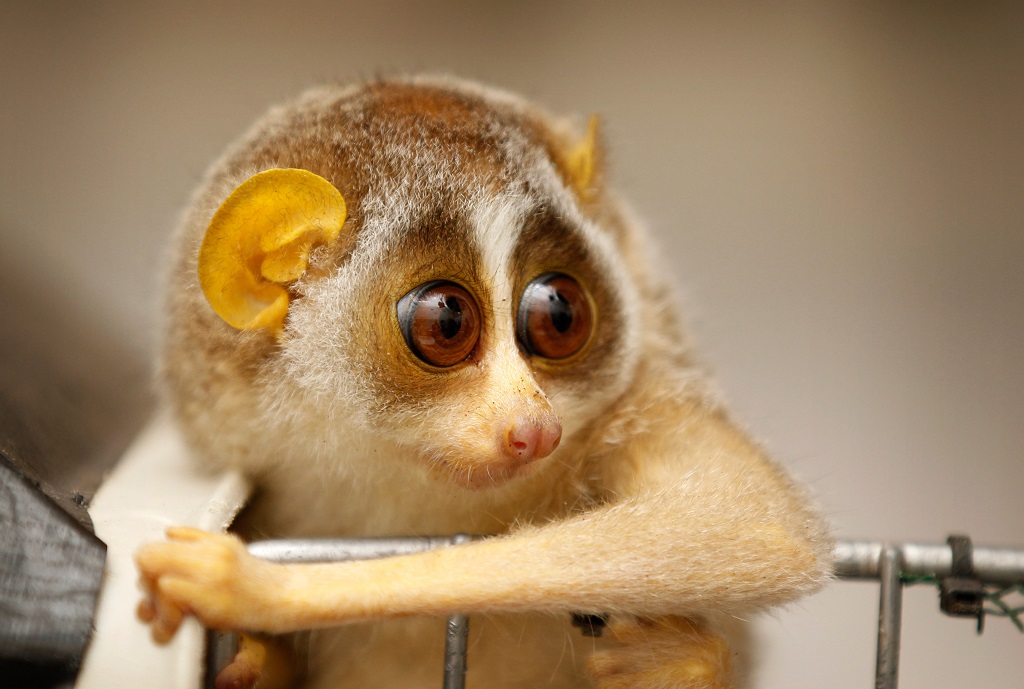
Particularly, a video became a hit on the web, showing a women tickling a slow loris that, keeping its fore arms up, seems enjoying it. But this is all wrong. The slow loris is keeping its arms up because it is terrified, and it is trying to protect itself from what it considers an aggression. In fact, the poisonous toxin is produced by a gland near its elbows. Through this gesture, the animal tries to reach the glands to poison its “owner”. This demonstrates the huge sufferance slow lorises have to endure when kept as pets.
Youtube videos significantly contributed to enhance the illegal market, which is decimating thousands of species all over the world, including slow lorises.
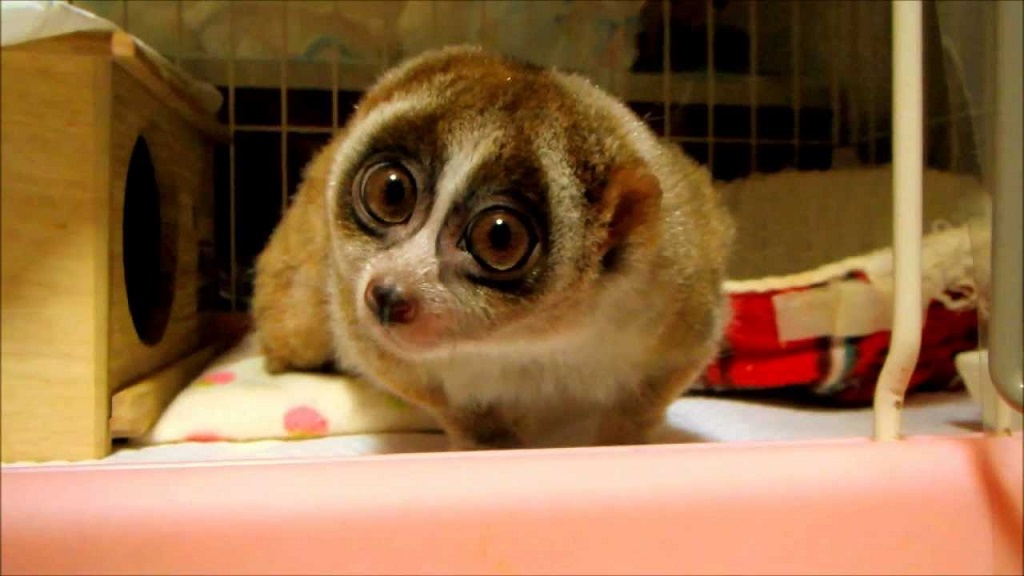
We can do our bit to fight this cruel market. We can start by avoiding to share videos featuring such animals kept in captivity and signalling them to administrators. If you want to see a smiling slow loris don’t tickle it, leave it in the wild.
Siamo anche su WhatsApp. Segui il canale ufficiale LifeGate per restare aggiornata, aggiornato sulle ultime notizie e sulle nostre attività.

Quest'opera è distribuita con Licenza Creative Commons Attribuzione - Non commerciale - Non opere derivate 4.0 Internazionale.
Pescasseroli, in the heart of Italy’s Apennines, will host the IBA conference on bear conservation and human–bear coexistence. LifeGate will be the event’s media partner.
The inflation caused by extreme weather events is known as “climateflation”: prices for many food products are expected to rise sharply.
The toll is still provisional, but data collected across several European countries indicate that tens of thousands of people have died as a result of extreme heat.
Last February, Malaysia imposed a total ban on electronic waste imports. Yet toxic e-waste continues to arrive from the United States and other countries through illegal trafficking networks.
Although Earth Overshoot Day falls six days later than in 2025, this does not represent an improvement. The shift is the result of revised estimates of the oceans’ carbon absorption capacity, while humanity’s actual ecological footprint continues to grow.
Gigantic wildfires in France’s Gironde region and near Madrid, Spain, have devastated tens of thousands of hectares of vegetation.
Greece has launched a wildfire management system based on nanosatellites and artificial intelligence. A model that other countries are now looking to replicate.
According to analysts, the emergence of a “super” El Niño could trigger a global food price shock, adding to inflationary pressures already fuelled by the conflict with Iran.
Residents of Kanseche, Malawi, accuse ABF of contributing to the devastating 2022 floods through its subsidiary, Illovo Sugar.


