


Pescasseroli, in the heart of Italy’s Apennines, will host the IBA conference on bear conservation and human–bear coexistence. LifeGate will be the event’s media partner.
With the plundering of most of the world’s land-based mineral deposits, the new frontier for the global mining industry is seabed mining. Almost every government with rights over marine areas are currently clambering to enable this destructive practice, still in its experimental phase, to take place in their waters and the scale of what is
With the plundering of most of the world’s land-based mineral deposits, the new frontier for the global mining industry is seabed mining. Almost every government with rights over marine areas are currently clambering to enable this destructive practice, still in its experimental phase, to take place in their waters and the scale of what is proposed in International Waters is alarming.
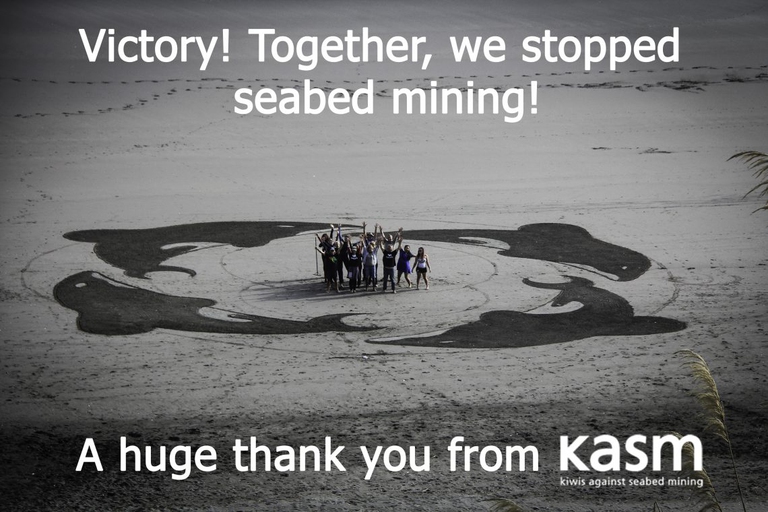
To the dismay of those powering the momentum behind seabed mining, there is a small group of ocean-loving people who are fighting them every step of the way – and winning. Kiwis Against Seabed Mining (KASM) fought the first two applications for open-cast mining of the seafloor in New Zealand and the developed world. Both were denied by the New Zealand Environmental Protection Authority in 2014. This embarrassed the country’s government, cost mining companies tens of millions of dollars and sent tsunami-sized shock waves through the emerging international seabed mining industry.
KASM is a volunteer-run community organisation that was formed in 2005 after members from the local indigenous Maori community alerted others of seabed mining proposals off the coast of Raglan, on the North Island’s west coast. The town is famous for its world-class surf and as well as its social and environmental activism.
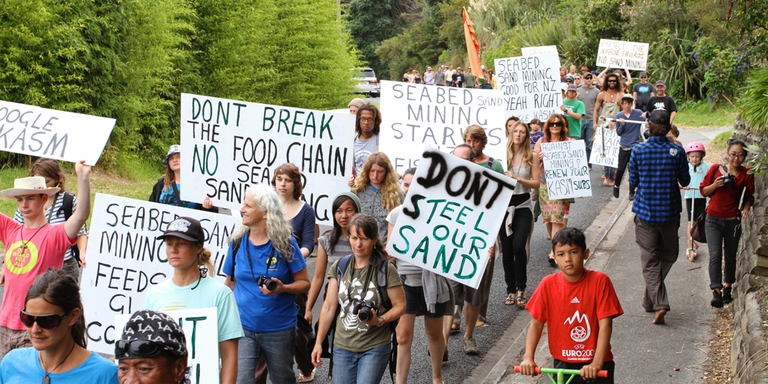
With seabed mining proposals stretching nearly 1000 kilometres of coastline, KASM rallied coastal communities to stand together in an unbroken chain of protection for their marine environment. A Community of Concern was formed. When the first application was made to mine the seabed for iron ore, which would have sucked up 50 million tonnes of the seabed every year for twenty years, record numbers of people stood up and opposed it.
On a shoestring budget KASM cobbled together an excellent legal and scientific team who fought for the oceans and against all odds won the hearing process. A global precedent was set. A bright light was shone on the highly destructive nature of the untested, money-making scheme.
Shortly after, the second application in the developed world was submitted in New Zealand once again, off the east coast of the South Island. The company was targeting phosphate to be used for fertilizer. This time KASM joined Greenpeace and the Deep Sea Conservation Coalition, forming another legal and scientific team. The fishing industry and the South Island Maori tribe, Ngai Tahu also fought the application.
Again the New Zealand EPA found that the company couldn’t prove that their proposal wouldn’t cause serious and irreversible damage to the marine environment. The application was denied.
Two applications, two refusals: the global seabed mining industry took a serious blow. These were followed by another denial, this time by Mexican authorities earlier this year for a proposed phosphate mine off the coast of Baja California.
This all leads to a very big question: is seabed mining so inherently destructive that it simply can not take place in this day and age, a time when humanity is recognising that we can no longer “wreck” the environment for profit and that we, collectively, need to be working to repair the damage from our past actions? The answer could well be determined in the next few months, KASM is once again fighting for the safeguard of the west coast of New Zealand’s North Island. The same company that was denied two years ago has re-submitted the same proposal.
The process has just begun and KASM is calling for public submissions and seeking donations to help pay for legal and scientific expertise. If you feel strongly about maintaining healthy oceans for future generations, become an Ocean Lover. Make a submission here, be another brick in the wall and help KASM stop this destructive train from reaching our oceans.
Siamo anche su WhatsApp. Segui il canale ufficiale LifeGate per restare aggiornata, aggiornato sulle ultime notizie e sulle nostre attività.

Quest'opera è distribuita con Licenza Creative Commons Attribuzione - Non commerciale - Non opere derivate 4.0 Internazionale.
Pescasseroli, in the heart of Italy’s Apennines, will host the IBA conference on bear conservation and human–bear coexistence. LifeGate will be the event’s media partner.
The inflation caused by extreme weather events is known as “climateflation”: prices for many food products are expected to rise sharply.
If you were a diver, a surfer, a sailor, or maybe a fisherman, or someone who buys fresh fish at a local market. If you were a person who spends summer days at the beach with your family, or goes for sunset walks along the coastal walkway and enjoys dining al fresco overlooking the sea.
The toll is still provisional, but data collected across several European countries indicate that tens of thousands of people have died as a result of extreme heat.
Last February, Malaysia imposed a total ban on electronic waste imports. Yet toxic e-waste continues to arrive from the United States and other countries through illegal trafficking networks.
Although Earth Overshoot Day falls six days later than in 2025, this does not represent an improvement. The shift is the result of revised estimates of the oceans’ carbon absorption capacity, while humanity’s actual ecological footprint continues to grow.
Gigantic wildfires in France’s Gironde region and near Madrid, Spain, have devastated tens of thousands of hectares of vegetation.
Greece has launched a wildfire management system based on nanosatellites and artificial intelligence. A model that other countries are now looking to replicate.
According to analysts, the emergence of a “super” El Niño could trigger a global food price shock, adding to inflationary pressures already fuelled by the conflict with Iran.


