



A report by the NGO network Climate Action Network proposes a series of concrete changes to revitalise the UN Climate Change Conferences.
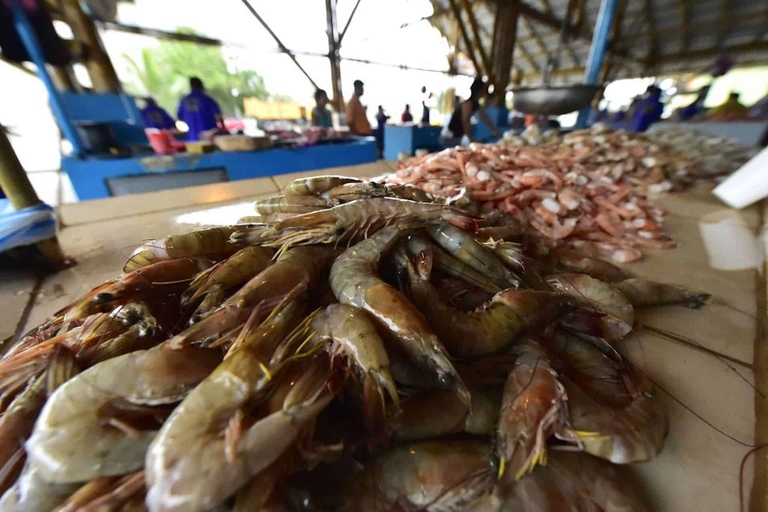
Ecuador’s shrimp exports continue to grow, but the country’s mangrove ecosystems are paying the highest price.
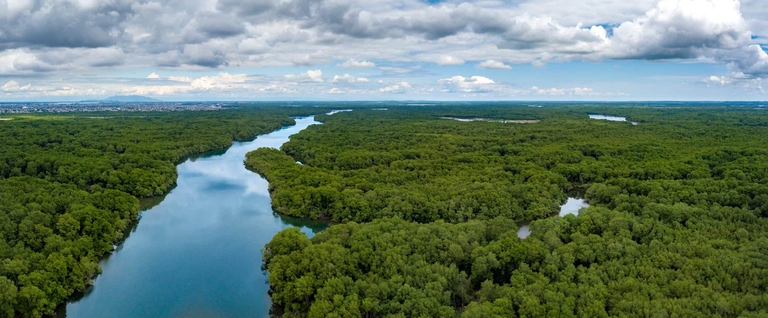
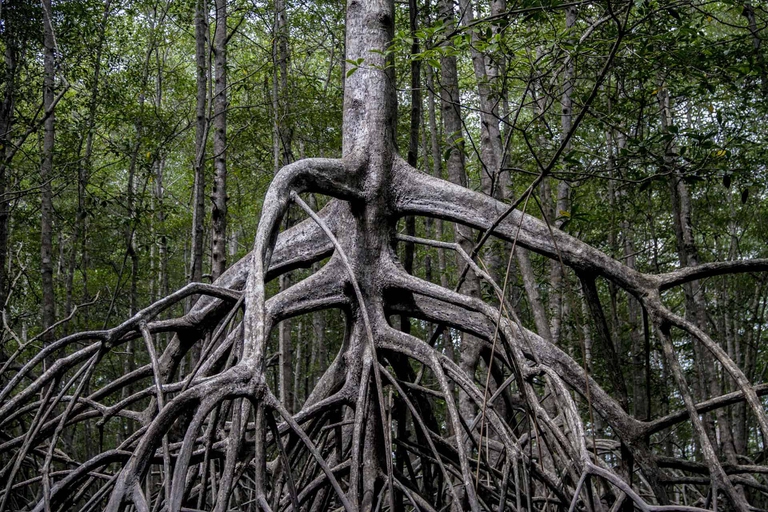
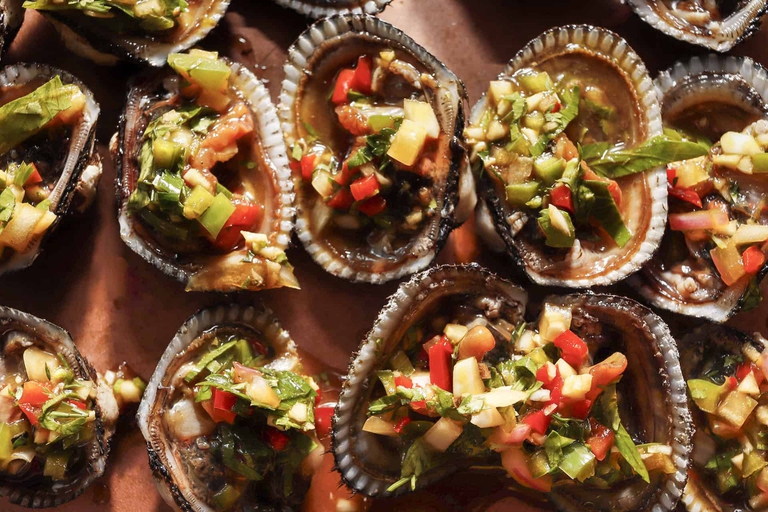
In Ecuador, shrimp farms built to supply international markets are replacing mangrove forests, destroying biodiversity and threatening the livelihoods of local communities. In these coastal forests, people traditionally harvest conchas negras—edible black shellfish with a distinctive flavour—from the muddy soils of the mangroves.
This is the story told in a Guardian report featuring interviews with fishers, activists, researchers and former shrimp industry workers.
Over the past decade, Ecuador‘s shrimp production has nearly quadrupled, overtaking oil as the country’s leading export. Almost all production is destined for China, the United States and Europe, with exports increasing fivefold following the removal of trade tariffs. The industry’s expansion has pushed shrimp farms ever deeper into landscapes already scarred by deforestation. Between 1969 and 1999, Ecuador lost up to 43 per cent of its mangrove forests, and today shrimp farms cover an area around one and a half times larger than the country’s remaining mangroves.
Although mangrove deforestation is now illegal and the shrimp industry claims that new forest conversion has fallen to almost zero despite soaring production, local residents and scientists say the destruction has continued. According to their accounts, mangrove ecosystems are still being cleared under the pretext of pruning vegetation, digging canals, or constructing and repairing embankments.
Data from Trase, a global non-profit initiative promoting supply chain transparency, show that 427 hectares of mangroves were converted into shrimp farms between 2014 and 2018, mainly in Guayas Province, the country’s main shrimp-producing region.
Another study, based on remote sensing imagery, documented the loss of 2,900 hectares during the following four years, with almost half of the deforestation occurring inside protected areas. In January 2024, a naval operation reportedly identified a 10-hectare illegally cleared area within Manglares Don Goyo, in the inner Gulf of Guayaquil, a wetland recognised as internationally important under the Ramsar Convention.
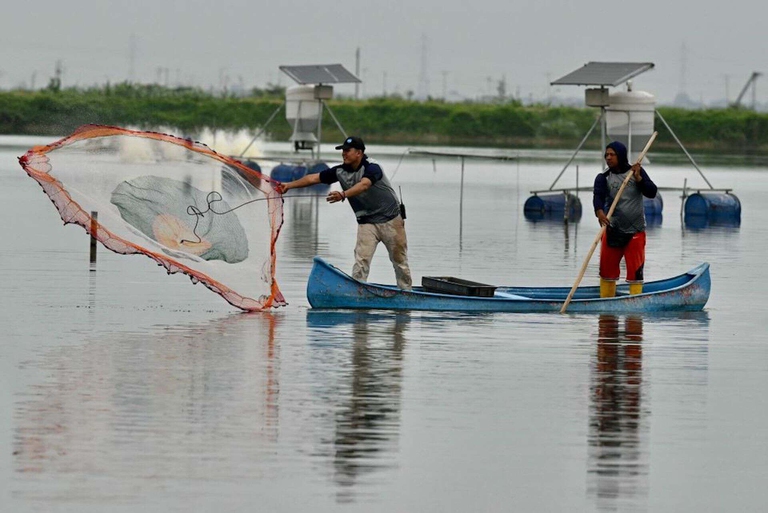
Shrimp farms illegally discharge polluted water © Getty Images
The impacts extend well beyond the loss of trees. The canals and embankments built for shrimp farms disrupt the tidal flows that keep mangrove soils moist and oxygenated. As a result, the mud can dry out and harden, salinity levels may change, and mangrove trees gradually die. Shrimp farms also discharge wastewater into nearby estuaries, contributing to pollution and causing fish and crab die-offs.
Although Ecuadorian law prohibits the discharge of untreated waste—which may contain organic matter and nutrients from feed, faeces and fertilisers—a 2023 study found that mangrove ecosystems surrounding shrimp farms in Esmeraldas contained ammonium and phosphorus concentrations around two and a half times higher than those found in healthy mangrove waters. An assessment by Seafood Watch estimated that more than half of shrimp farm waste is released into the environment.
According to local communities, there is currently little political will to strengthen enforcement or reduce these environmental impacts because the shrimp industry plays a major role in Ecuador’s economy. Those who speak out often go unheard or even face intimidation and extortion. Some mangrove restoration projects funded by the shrimp industry do exist, but critics warn that many risk becoming little more than greenwashing initiatives.
Meanwhile, several local communities have launched their own restoration efforts. Residents have planted mangrove seedlings in areas once used for shellfish harvesting. Some young trees have been washed away by the tides or eaten by snails, while others have taken root. Where the mangroves have survived, the mud has begun to soften once again—and with time, the communities hope that wild conchas negras will eventually return.
Siamo anche su WhatsApp. Segui il canale ufficiale LifeGate per restare aggiornata, aggiornato sulle ultime notizie e sulle nostre attività.

Quest'opera è distribuita con Licenza Creative Commons Attribuzione - Non commerciale - Non opere derivate 4.0 Internazionale.
A report by the NGO network Climate Action Network proposes a series of concrete changes to revitalise the UN Climate Change Conferences.
Pescasseroli, in the heart of Italy’s Apennines, will host the IBA conference on bear conservation and human–bear coexistence. LifeGate will be the event’s media partner.
The inflation caused by extreme weather events is known as “climateflation”: prices for many food products are expected to rise sharply.
The toll is still provisional, but data collected across several European countries indicate that tens of thousands of people have died as a result of extreme heat.
Last February, Malaysia imposed a total ban on electronic waste imports. Yet toxic e-waste continues to arrive from the United States and other countries through illegal trafficking networks.
New scientific evidence suggests a link between calorie-free artificial sweeteners and impaired blood sugar regulation.
Although Earth Overshoot Day falls six days later than in 2025, this does not represent an improvement. The shift is the result of revised estimates of the oceans’ carbon absorption capacity, while humanity’s actual ecological footprint continues to grow.
Gigantic wildfires in France’s Gironde region and near Madrid, Spain, have devastated tens of thousands of hectares of vegetation.
Greece has launched a wildfire management system based on nanosatellites and artificial intelligence. A model that other countries are now looking to replicate.


