



Pescasseroli, in the heart of Italy’s Apennines, will host the IBA conference on bear conservation and human–bear coexistence. LifeGate will be the event’s media partner.
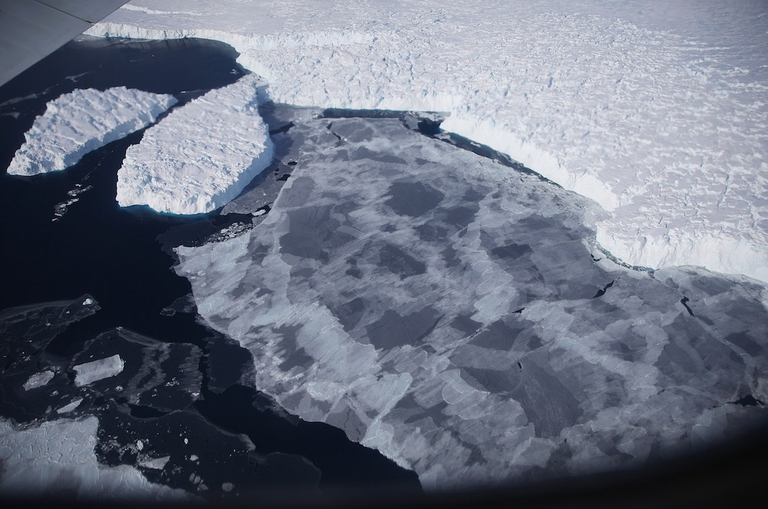
A huge iceberg measuring 5,000 square kilometres, roughly the side of the US state of Delaware, is set to break off the Antarctic Peninsula. When this happens, the ice shelf Larsen C – a floating platform of ice formed by the flow of land-based glaciers or ice sheets into the ocean – located in West Antarctica will
A huge iceberg measuring 5,000 square kilometres, roughly the side of the US state of Delaware, is set to break off the Antarctic Peninsula. When this happens, the ice shelf Larsen C – a floating platform of ice formed by the flow of land-based glaciers or ice sheets into the ocean – located in West Antarctica will loose more than 10 per cent of its extension, effectively changing the map of the world as we know it.
Scientists from Project MIDAS, a UK-based Antarctic research project monitoring the effects of climate change in the area, revealed that the long-running rift in the shelf grew suddenly during the second half of December 2016. Today, only a mere 20 kilometres of ice is keeping the iceberg from floating free in the Southern Ocean: though global warming could be the cause, scientists say they don’t as of yet have evidence supporting this.
Researchers have warned that the loss of such a vast amount of ice may make Larsen C’s configuration more unstable. Previous research and experience shows that, following the break-off, Larsen C may eventually face the same destiny as its neighbours Larsen A, which collapsed in 1995, and most importantly Larsen B, which disintegrated in 2002 following a similar rift-calving episode.
“The calving of this large iceberg could be the first step of the collapse of the Larsen C ice shelf, which would result in the disintegration of a huge area of ice into a number of icebergs and smaller fragments,” glaciologist David Vaughan, Director at the British Antarctic Survey, said in a statement.
Whilst scientists are unsure about the likelihood, or speed, of the shelf’s disintegration, they warn the episode will certainly make the shelf less stable. “In the ensuing months to years we would expect further calving events, and maybe an eventual collapse – but it’s a very hard thing to predict, and our models say it will be less stable; not that it will immediately collapse,” Adrian Luckman, lead professor at Project MIDAS, told BBC News.
Being part of an ice shelf, the breaking of the iceberg wouldn’t directly cause sea levels to rise. However, scientists fear that an ice-shelf reduction of such proportion may accelerate the flow of glaciers from land towards the ocean. Should all the ice held back by Larsen C flow into the ocean, this could raise sea levels up to 10 centimetres.
A crack in Antarctica’s Larsen C Ice Shelf might create an iceberg as big as Delaware. https://t.co/oTGfu83DsS
— NASA Goddard (@NASAGoddard) December 9, 2016
Reassuringly, scientists confirm that for now this remains only a very remote possibility that could present itself in the far-away future. According to a study by Nature Climate Change, the ‘holding-back’ effect of Larsen C is only a passive one, therefore its calving wouldn’t affect ice flow from the land.
Siamo anche su WhatsApp. Segui il canale ufficiale LifeGate per restare aggiornata, aggiornato sulle ultime notizie e sulle nostre attività.

Quest'opera è distribuita con Licenza Creative Commons Attribuzione - Non commerciale - Non opere derivate 4.0 Internazionale.
Pescasseroli, in the heart of Italy’s Apennines, will host the IBA conference on bear conservation and human–bear coexistence. LifeGate will be the event’s media partner.
The inflation caused by extreme weather events is known as “climateflation”: prices for many food products are expected to rise sharply.
Antarctica, otherwise known as the sixth continent, recorded an increase of 70% in the rate of shrinking over the last decade (1994-2003). The thickness of ice shelves in the South Pole is thinner and thinner, and it could even halve within 200 years. The research containing the data was published by Science magazine,
The toll is still provisional, but data collected across several European countries indicate that tens of thousands of people have died as a result of extreme heat.
Last February, Malaysia imposed a total ban on electronic waste imports. Yet toxic e-waste continues to arrive from the United States and other countries through illegal trafficking networks.
Although Earth Overshoot Day falls six days later than in 2025, this does not represent an improvement. The shift is the result of revised estimates of the oceans’ carbon absorption capacity, while humanity’s actual ecological footprint continues to grow.
Gigantic wildfires in France’s Gironde region and near Madrid, Spain, have devastated tens of thousands of hectares of vegetation.
Greece has launched a wildfire management system based on nanosatellites and artificial intelligence. A model that other countries are now looking to replicate.
According to analysts, the emergence of a “super” El Niño could trigger a global food price shock, adding to inflationary pressures already fuelled by the conflict with Iran.


