



Pescasseroli, in the heart of Italy’s Apennines, will host the IBA conference on bear conservation and human–bear coexistence. LifeGate will be the event’s media partner.
In Canada il riscaldamento del clima sta acuendo i conflitti tra le volpi artiche e le volpi rosse i cui areali si stanno sovrapponendo.
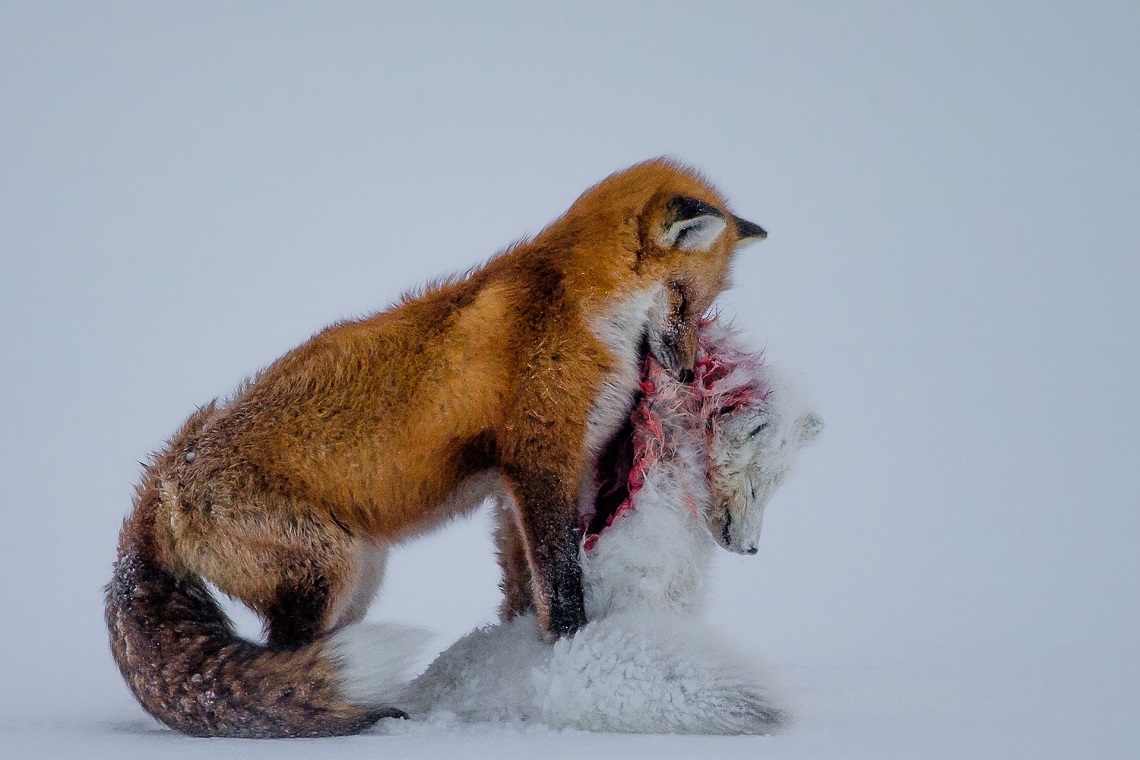
A red fox (Vulpes vulpes) holding the corpse of an arctic fox (Alopex lagopus) in its mouth. This is the picture that was honoured the 2015 Wildlife Photographer of the Year, the most famous nature photography award, established by the Natural History Museum of London.
The picture, entitled “A tale of two foxes”, has been shot by the Canadian surgeon Don Gutoski in the Wapusk National Park, Canada. Gutoski’s picture defeated other 42,000 photos, and alongside its undeniable beauty it conceals an important message: climate change is having significant impacts on wildlife.
The Arctic region is one of the areas affected the most by climate change, since milder winters alter the biodiversity living in it. This phenomenon particularly affects the Arctic fox, one of this habitat’s major terrestrial predators, which is considered a valid indicator of the conservation status of the Arctic tundra.
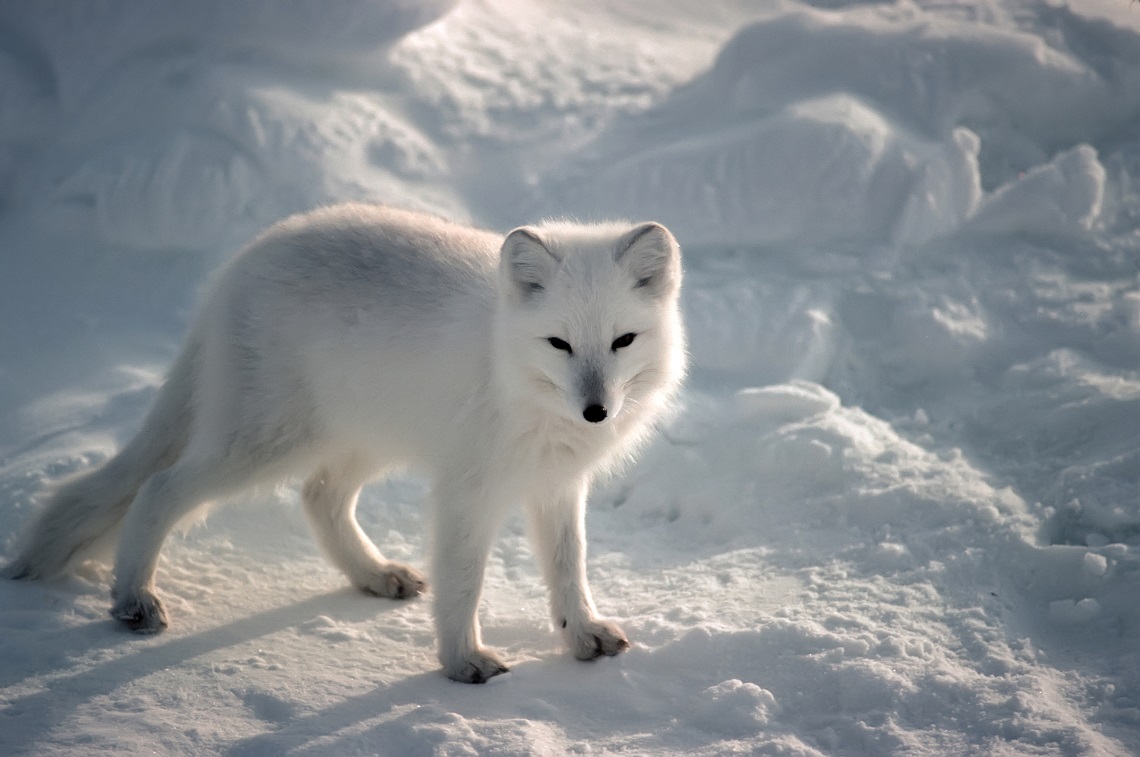
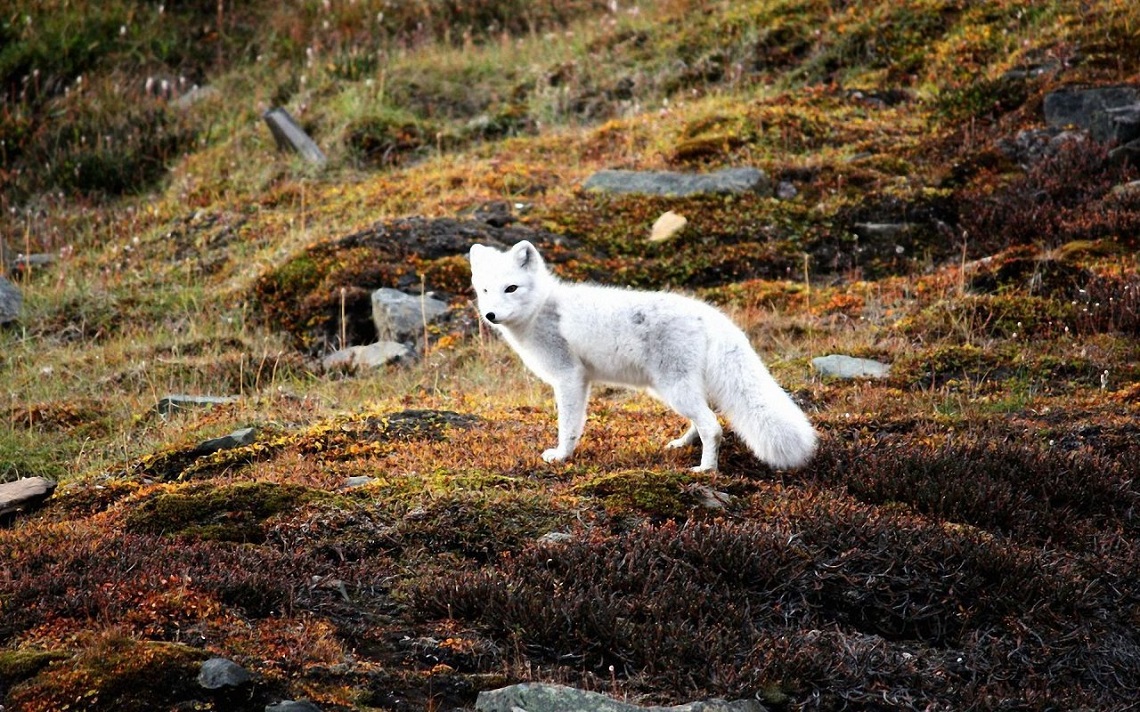
This species, famous for its winter white fur, is slightly larger than the domestic cat and is extremely specialised. According to a study carried out by the IUCN (International Union for Conservation of Nature), global warming represents a threat to arctic foxes because of at least 3 factors.
Firstly, the habitat loss. Rising temperatures will lead the boreal forest, environment not suitable to arctic fox, to slowly substitute tundra. In fact, scientists have registered a “colonisation” of this habitat by plant species coming from south.
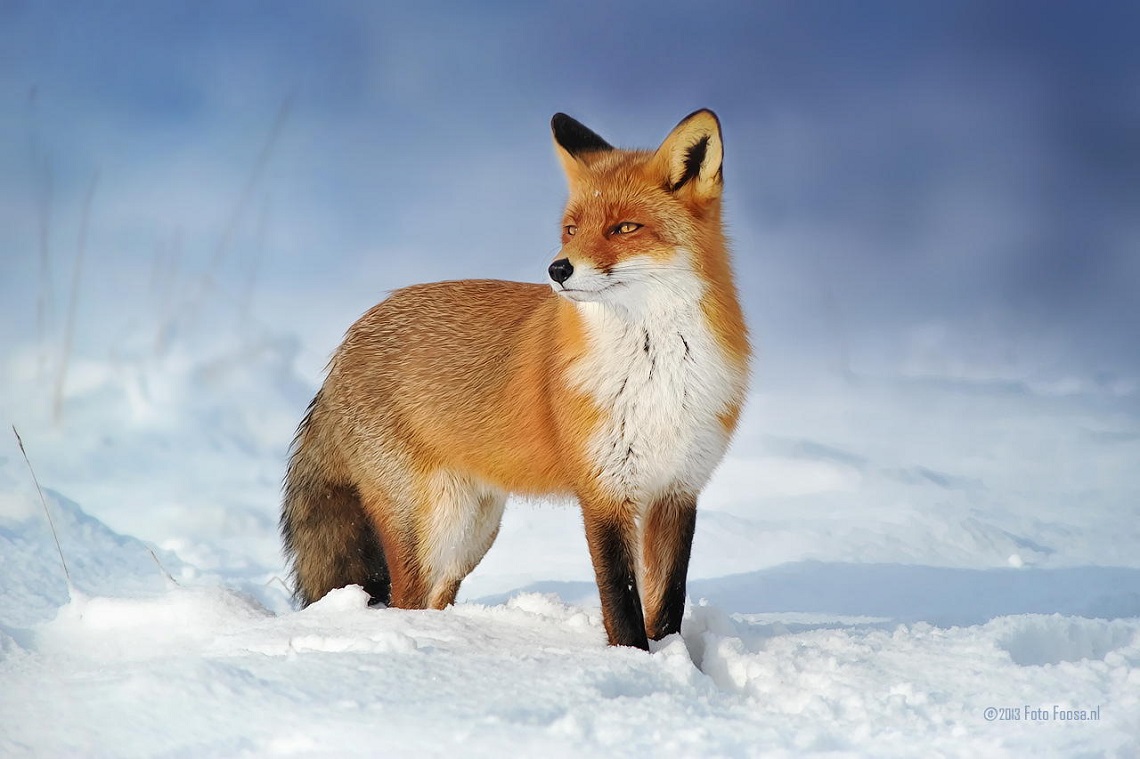
Another threat, as shown in Gutoski’s picture, is the increasing competition with red foxes. In Northern Canada, red foxes, which are larger, more aggressive and adapt better compared to their arctic cousins, are relentlessly increasing. Red foxes are more effective predators; in fact, many cases of predation of arctic foxes are are being registered.
In the past, the division of the two ranges was more marked; arctic fox didn’t adventure south due to the presence of red foxes, which didn’t go north due to habitats’ low productivity. Climate change in the tundra started altering this balance, and invasions are likely to increase.
Arctic foxes mainly feed on lemmings and water voles and, according to the IUCN, milder, shorter winters are causing a decline in these rodents’ population, which reproduction cycles are altered.
Another example of how Arctic ice melting is threatening the survival of different species is the crossbreeding between polar bears and grizzly bears, noticed for the first time in Canada in 2006.
Currently, the Arctic fox is listed in the IUCN Red List as “Least Concern”, i.e. species that are not threatened with extinction in the short or medium run, despite populations in Norway, Finland, and Sweden are listed as “Critically Endangered”. The future of these snow white canids is looking to be sad, and red foxes are not to be blamed.
Siamo anche su WhatsApp. Segui il canale ufficiale LifeGate per restare aggiornata, aggiornato sulle ultime notizie e sulle nostre attività.

Quest'opera è distribuita con Licenza Creative Commons Attribuzione - Non commerciale - Non opere derivate 4.0 Internazionale.
Pescasseroli, in the heart of Italy’s Apennines, will host the IBA conference on bear conservation and human–bear coexistence. LifeGate will be the event’s media partner.
The inflation caused by extreme weather events is known as “climateflation”: prices for many food products are expected to rise sharply.
The toll is still provisional, but data collected across several European countries indicate that tens of thousands of people have died as a result of extreme heat.
Last February, Malaysia imposed a total ban on electronic waste imports. Yet toxic e-waste continues to arrive from the United States and other countries through illegal trafficking networks.
Although Earth Overshoot Day falls six days later than in 2025, this does not represent an improvement. The shift is the result of revised estimates of the oceans’ carbon absorption capacity, while humanity’s actual ecological footprint continues to grow.
Gigantic wildfires in France’s Gironde region and near Madrid, Spain, have devastated tens of thousands of hectares of vegetation.
Greece has launched a wildfire management system based on nanosatellites and artificial intelligence. A model that other countries are now looking to replicate.
According to analysts, the emergence of a “super” El Niño could trigger a global food price shock, adding to inflationary pressures already fuelled by the conflict with Iran.
Residents of Kanseche, Malawi, accuse ABF of contributing to the devastating 2022 floods through its subsidiary, Illovo Sugar.


