




A report by the NGO network Climate Action Network proposes a series of concrete changes to revitalise the UN Climate Change Conferences.
“Bayer recently met with executives of Monsanto to privately discuss a negotiated acquisition”. Bayer’s statement has upset an entire industry, if not the entire European continent. Europe is faced with particular pressures as two core issues could determine what we’re going to cultivate and eat in the near future: the renewal of the license of the
“Bayer recently met with executives of Monsanto to privately discuss a negotiated acquisition”. Bayer’s statement has upset an entire industry, if not the entire European continent. Europe is faced with particular pressures as two core issues could determine what we’re going to cultivate and eat in the near future: the renewal of the license of the herbicide glyphosate and the negotiations on the Transatlantic Trade and Investment Partnership (TTIP).
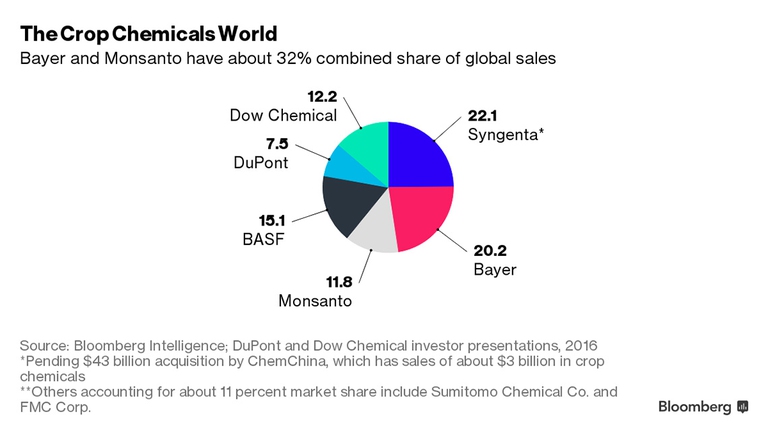
German drug and chemicals-maker Bayer declared it made a takeover bid for US company Monsanto, the leader in the production of pesticides, herbicides, and genetically modified seeds resistant to the phytopharmaceuticals it produces. Big fish eat little fish. Indeed, Monsanto tried to acquire its Swiss rival, Syngenta, unsuccessfully last year and now it could face the consequences. The merger of the two giants – considered to be “poisonous” by environmentalists – would give life to the biggest producer of seeds and agrochemicals in the world, with a turnover worth 67 billion dollars a year. By doing so, Bayer would increase its turnover from agriculture by 22 to 40 per cent.
Bayer’s announcement coincided with the second deferment of the renewal of the authorisation for glyphosate, one of the most widely applied pesticides worldwide, by the Standing Committee on Plants, Animals, Food and Feed (PAFF). The 28 member countries didn’t agree on the issue and a vote wouldn’t have led to majority. For example, Germany, home to Bayer, would have abstained. Moreover, note that Monsanto detained the patent of Roundup, which contains glyphosate, until 2001.
The merger between Bayer and Monsanto, besides being potentially linked to the issue of glyphosate in the EU, seems to be linked to negotiations on TTIP, the agreement that could weaken democratic decision-making processes for the benefit of multinationals, as reported by German weekly news magazine Der Spiegel. Particularly, the treaty would lower quality and security standards currently “protecting” the environment and Europeans’ health. The agreement would be reached by eliminating existing regulatory differences between the European Union and the United States, for the benefit of the latter, where standards are lower.
“From the antitrust side, I don’t think there’ll be many issues,” said Lutz Krafft, a senior adviser at consulting firm ChemAdvice GmbH who once worked at Bayer. According to Bloomberg, this “could intensify global scrutiny of the handful of companies striking megadeals that would consolidate the crop-chemicals industry”.
Siamo anche su WhatsApp. Segui il canale ufficiale LifeGate per restare aggiornata, aggiornato sulle ultime notizie e sulle nostre attività.

Quest'opera è distribuita con Licenza Creative Commons Attribuzione - Non commerciale - Non opere derivate 4.0 Internazionale.
A report by the NGO network Climate Action Network proposes a series of concrete changes to revitalise the UN Climate Change Conferences.
Pescasseroli, in the heart of Italy’s Apennines, will host the IBA conference on bear conservation and human–bear coexistence. LifeGate will be the event’s media partner.
The inflation caused by extreme weather events is known as “climateflation”: prices for many food products are expected to rise sharply.
The toll is still provisional, but data collected across several European countries indicate that tens of thousands of people have died as a result of extreme heat.
Last February, Malaysia imposed a total ban on electronic waste imports. Yet toxic e-waste continues to arrive from the United States and other countries through illegal trafficking networks.
Although Earth Overshoot Day falls six days later than in 2025, this does not represent an improvement. The shift is the result of revised estimates of the oceans’ carbon absorption capacity, while humanity’s actual ecological footprint continues to grow.
Gigantic wildfires in France’s Gironde region and near Madrid, Spain, have devastated tens of thousands of hectares of vegetation.
Greece has launched a wildfire management system based on nanosatellites and artificial intelligence. A model that other countries are now looking to replicate.
According to analysts, the emergence of a “super” El Niño could trigger a global food price shock, adding to inflationary pressures already fuelled by the conflict with Iran.


