



A report by the NGO network Climate Action Network proposes a series of concrete changes to revitalise the UN Climate Change Conferences.
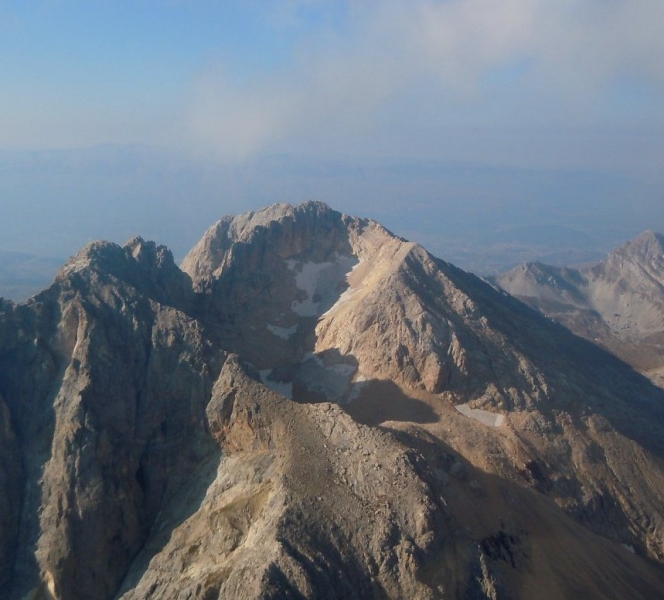
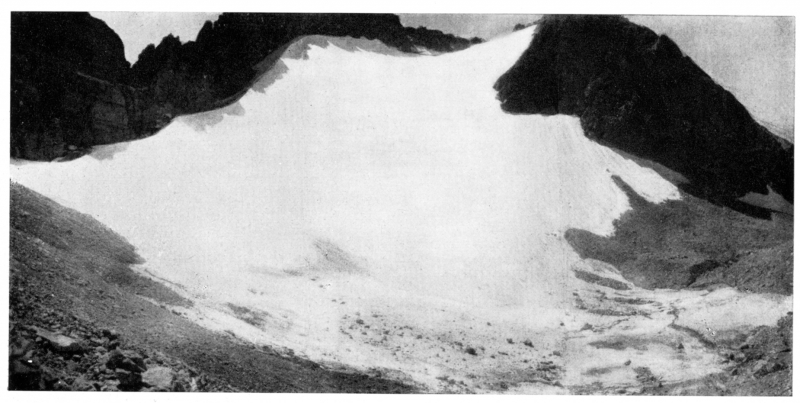
The only glacier of the Apennine Mountains, the Calderone, will disappear if current melting rates are not curbed. Over the past 50 years, the European southernmost glacier lost 33 per cent of its extension, shrinking from a surface of 0.07 square kilometres in the early 1990s to only 0.04 square kilometres. The problem has been highlighted
The only glacier of the Apennine Mountains, the Calderone, will disappear if current melting rates are not curbed. Over the past 50 years, the European southernmost glacier lost 33 per cent of its extension, shrinking from a surface of 0.07 square kilometres in the early 1990s to only 0.04 square kilometres.
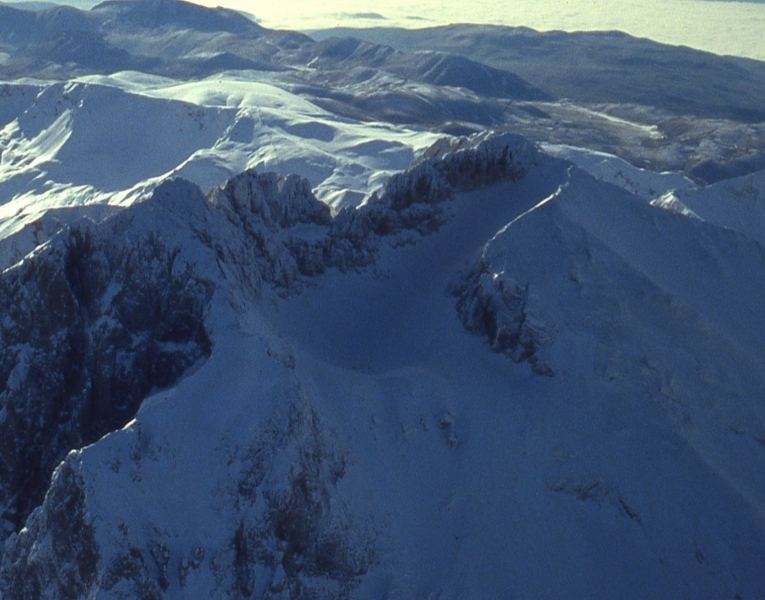
The problem has been highlighted by the latest Italian Glacier Inventory, edited by Claudio Smiraglia and Guglielmina Diolaiuti of the Department of Earth Sciences of the University of Milan, on behalf of the Italian Glaciological Committee. The glacier is located in the Abruzzo region, central Italy, close to Corno Grande and the Gran Sasso d’Italia. It has endured the passing of time and global warming, also thanks to rocks and debris protecting it from sun rays.
But this won’t be enough, especially if autumns will be characterised by “Indian summers”, i.e. a period of unseasonably warm weather that sometimes occurs in autumn in the Northern Hemisphere. This phenomenon extends melting phases, reducing ice accumulation periods.
The Calderone glacier fragmented and in 2000 was divided into two smaller glaciers. A condition that, according to the study’s authors, is a sad example essential to warn about other glaciers in the Italian peninsula, such as Alps.
“Future scenarios are negative. The two small glaciers can endure for long, since there are partly protected by rocky debris covering them. However, it’s very unlikely the glacier to recover, unless a significant but improbable trend reversal will take place,” said Smiraglia.
Who knows if future generations will be able to walk on a glacier or they will just see it in old photos, and will be told that there used to be an expression saying that peaks are sprinkled with sugar on the top.
Siamo anche su WhatsApp. Segui il canale ufficiale LifeGate per restare aggiornata, aggiornato sulle ultime notizie e sulle nostre attività.

Quest'opera è distribuita con Licenza Creative Commons Attribuzione - Non commerciale - Non opere derivate 4.0 Internazionale.
A report by the NGO network Climate Action Network proposes a series of concrete changes to revitalise the UN Climate Change Conferences.
Pescasseroli, in the heart of Italy’s Apennines, will host the IBA conference on bear conservation and human–bear coexistence. LifeGate will be the event’s media partner.
The inflation caused by extreme weather events is known as “climateflation”: prices for many food products are expected to rise sharply.
The toll is still provisional, but data collected across several European countries indicate that tens of thousands of people have died as a result of extreme heat.
Last February, Malaysia imposed a total ban on electronic waste imports. Yet toxic e-waste continues to arrive from the United States and other countries through illegal trafficking networks.
Although Earth Overshoot Day falls six days later than in 2025, this does not represent an improvement. The shift is the result of revised estimates of the oceans’ carbon absorption capacity, while humanity’s actual ecological footprint continues to grow.
Gigantic wildfires in France’s Gironde region and near Madrid, Spain, have devastated tens of thousands of hectares of vegetation.
Greece has launched a wildfire management system based on nanosatellites and artificial intelligence. A model that other countries are now looking to replicate.
According to analysts, the emergence of a “super” El Niño could trigger a global food price shock, adding to inflationary pressures already fuelled by the conflict with Iran.


