



A report by the NGO network Climate Action Network proposes a series of concrete changes to revitalise the UN Climate Change Conferences.
Monsanto has said yes. After 5 months of negotiations and hesitations, the US company has accepted Bayer’s offer of 66 billion dollars, debt included. So, the value of each share is now 128 dollars, up from Bayer’s previous offer of 127.50 dollars a share. In addition, the German pharmaceutical company has pledged to pay a
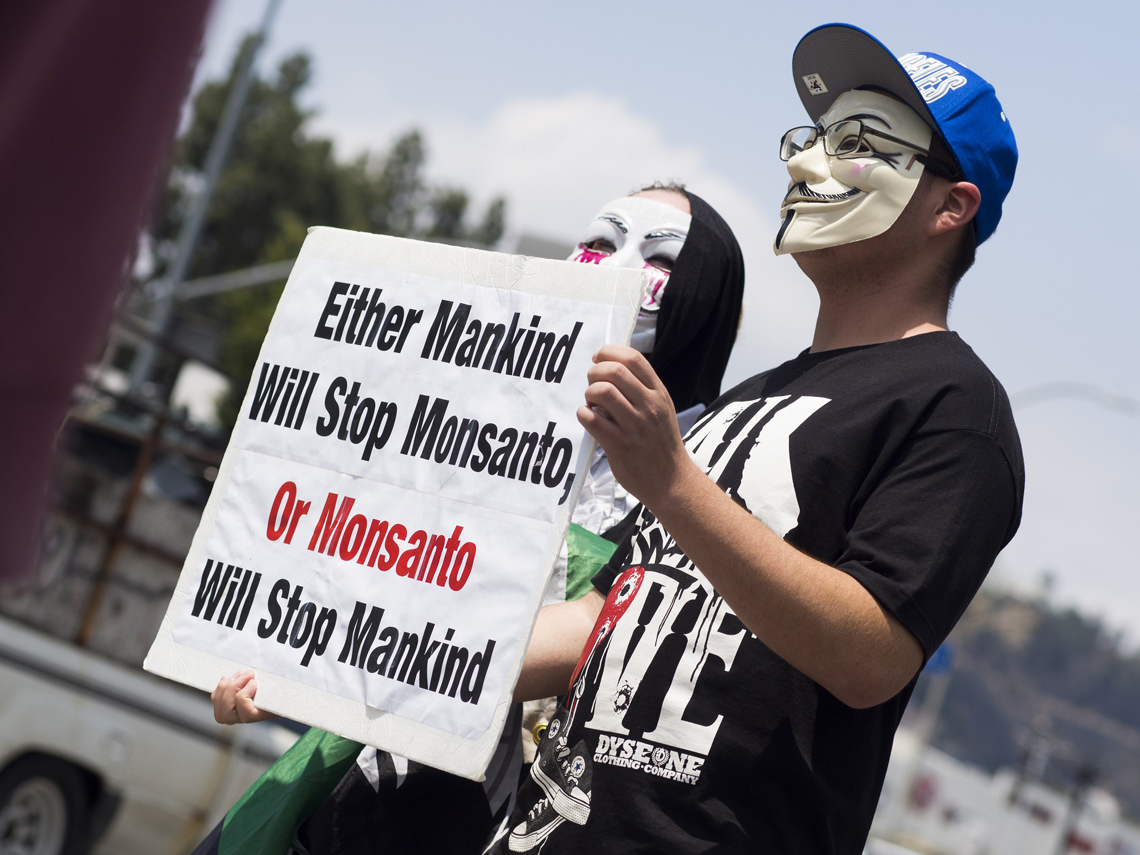
Monsanto has said yes. After 5 months of negotiations and hesitations, the US company has accepted Bayer’s offer of 66 billion dollars, debt included. So, the value of each share is now 128 dollars, up from Bayer’s previous offer of 127.50 dollars a share. In addition, the German pharmaceutical company has pledged to pay a 2-billion-dollar commission in case antitrust authorities block the huge operation. On 14 September, as reads the announcement published on Bayer’s website, Bayer and Monsanto announced that they signed a definitive merger agreement, which is expected to be closed by the end of 2017.
It all started in May, when Bayer offered 62 billion dollars (122 dollars a share) in an all-cash transaction, unsuccessfully. In July, the German company offered 64 billion dollars (125 dollars a share), but Monsanto said no, once again. However, the pharmaceutical giant didn’t stop and its latest offer has been successful. To Monsanto’s shareholders, 128 dollars per share represent a 44-percent premium compared to Monsanto’s share price on May 9, the day before it made its first proposal. Bayer has declared that it wants to finance the operation with a combination of debt and equity. What’s left now is the approval of Monsanto’s shareholders and antitrust authorities.
The hurdle represented by the antitrust authorities is anything but insignificant. Over the last few months experts have warned that a giant like “Bayersanto” could upset the world of agriculture. The agrochemical industry, which is worth 85 billion euros, is already controlled by a handful of players. And it is destined to become ever more oligopolistic, considering the ongoing negotiations for the mergers of Syngenta-Chemchina and Dow Chemical-DuPont. The merger between Bayer and Monsanto will give life to the world’s number one giant that will control 24 per cent of the market of pesticides and 29 per cent of that of seeds.
The future is still unclear, but some consequences are easy to be imagined, from the increase in prices (for both producers and consumers) and a decrease in the offer (and, as a result, biodiversity). Moreover, Bayer is likely to have already put its eyes on the world of GMOs, with the aim of “wiping out” the name of Monsanto, which has long been associated with GMOs, as an effective marketing choice.
Siamo anche su WhatsApp. Segui il canale ufficiale LifeGate per restare aggiornata, aggiornato sulle ultime notizie e sulle nostre attività.

Quest'opera è distribuita con Licenza Creative Commons Attribuzione - Non commerciale - Non opere derivate 4.0 Internazionale.
A report by the NGO network Climate Action Network proposes a series of concrete changes to revitalise the UN Climate Change Conferences.
Pescasseroli, in the heart of Italy’s Apennines, will host the IBA conference on bear conservation and human–bear coexistence. LifeGate will be the event’s media partner.
Corporations are putting our lives and our environment at risk through a growing and improper influence over institutions, whose responsibility should be, instead, protecting people and the planet. The visible consequences have made it imperative to expose their devious tactics and their steadfast and corrupt lobbying, recently revealed in the Poison Papers (a compilation of over
The inflation caused by extreme weather events is known as “climateflation”: prices for many food products are expected to rise sharply.
The toll is still provisional, but data collected across several European countries indicate that tens of thousands of people have died as a result of extreme heat.
Last February, Malaysia imposed a total ban on electronic waste imports. Yet toxic e-waste continues to arrive from the United States and other countries through illegal trafficking networks.
Although Earth Overshoot Day falls six days later than in 2025, this does not represent an improvement. The shift is the result of revised estimates of the oceans’ carbon absorption capacity, while humanity’s actual ecological footprint continues to grow.
Gigantic wildfires in France’s Gironde region and near Madrid, Spain, have devastated tens of thousands of hectares of vegetation.
Greece has launched a wildfire management system based on nanosatellites and artificial intelligence. A model that other countries are now looking to replicate.


