



A report by the NGO network Climate Action Network proposes a series of concrete changes to revitalise the UN Climate Change Conferences.
The oldest and thickest sea ice in the Arctic has broken up for the first time on record. The event has been caused by the unusual heat wave that hit the area this summer.
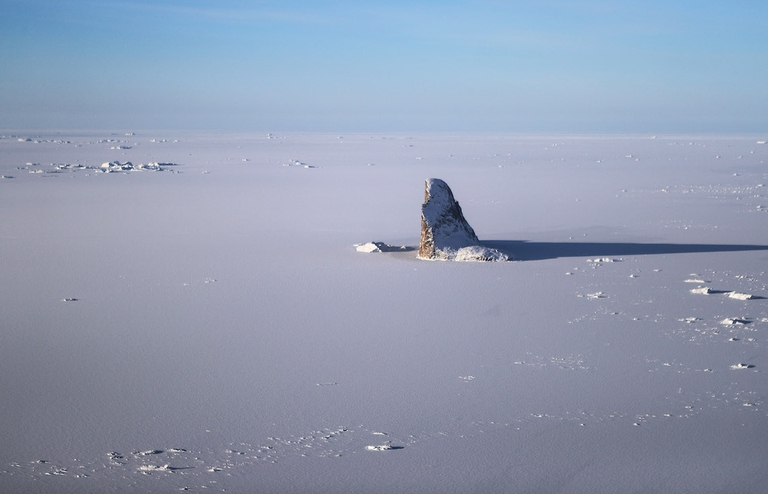
In northern Greenland, the thickest and oldest sea ice has started to break up. It’s the first time on record in an area that has always remained compacted throughout the seasons, even in the warmer summer months.
Polarstern enters uncharted #Arctic waters in what once was thick perennial sea ice. Follow progress at https://t.co/BXplVLWjDj @AWI_Media pic.twitter.com/Kueb5QxDTr
— Mark Drinkwater (@kryosat) 22 agosto 2018
UK newspaper The Guardian has reported the news, underlying that it represents a scary event. According to scientists, the phenomenon has been caused by an unprecedented heat wave that has hit the northern hemisphere and that was driven by climate change. Between February and August, numerous abnormal temperature peaks have been registered in the Arctic regions. This would have made sea ice more fragile.
The finishing blow has been probably given by warm winds that blew in the area. “Almost all of the ice to the north of Greenland is quite shattered and broken up and therefore more mobile,” Ruth Mottram of the Danish Meteorological Institute told the Guardian. “Open water off the north coast of Greenland is unusual,” she warns.
Experts tweeted a series of animated graphs that clearly show the ongoing phenomenon: warmer seas (in blue) enter in between Greenland coasts and the sea ice (yellow/orange).
A small animation from @DTUSpace
showing our combined #Sentinel1 and #AMSR2 images and our @CMEMS_EU #Sentinel1 1-day ice drift vectors. All from https://t.co/KMsYanQEs4 pic.twitter.com/6ctc0JzgpQ— Leif Toudal (@elmltp) 13 agosto 2018
This area is (was) called “the last ice area” because it is considered resistant to the effects of a warmer climate, at least up to now. The ice in this area is particularly thick thanks to a current coming from Siberia. But now the situation could even get worse because the fracture could make penetrate warmer waters, accelerating the process, as Thomas Lavergne, a scientist at the Norwegian Meteorological Institute, explained. “The thick old sea ice will have been pushed away from the coast, to an area where it will melt more easily”.
Siamo anche su WhatsApp. Segui il canale ufficiale LifeGate per restare aggiornata, aggiornato sulle ultime notizie e sulle nostre attività.

Quest'opera è distribuita con Licenza Creative Commons Attribuzione - Non commerciale - Non opere derivate 4.0 Internazionale.
A report by the NGO network Climate Action Network proposes a series of concrete changes to revitalise the UN Climate Change Conferences.
Pescasseroli, in the heart of Italy’s Apennines, will host the IBA conference on bear conservation and human–bear coexistence. LifeGate will be the event’s media partner.
The inflation caused by extreme weather events is known as “climateflation”: prices for many food products are expected to rise sharply.
The toll is still provisional, but data collected across several European countries indicate that tens of thousands of people have died as a result of extreme heat.
Last February, Malaysia imposed a total ban on electronic waste imports. Yet toxic e-waste continues to arrive from the United States and other countries through illegal trafficking networks.
Although Earth Overshoot Day falls six days later than in 2025, this does not represent an improvement. The shift is the result of revised estimates of the oceans’ carbon absorption capacity, while humanity’s actual ecological footprint continues to grow.
Gigantic wildfires in France’s Gironde region and near Madrid, Spain, have devastated tens of thousands of hectares of vegetation.
Greece has launched a wildfire management system based on nanosatellites and artificial intelligence. A model that other countries are now looking to replicate.
According to analysts, the emergence of a “super” El Niño could trigger a global food price shock, adding to inflationary pressures already fuelled by the conflict with Iran.


