



Gigantic wildfires in France’s Gironde region and near Madrid, Spain, have devastated tens of thousands of hectares of vegetation.
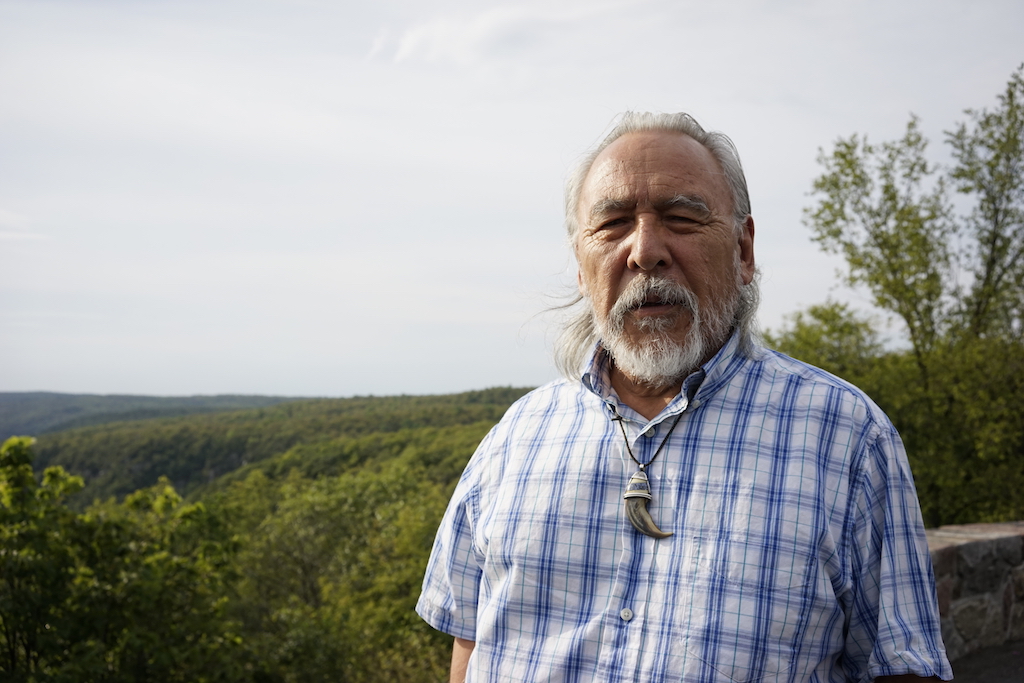
When it comes to land travel the Eskimo people, also known as Inuit, have a good understanding of what distances mean as their land stretched over 13 time zones – yet according to their Elders, the greatest distance in one’s existence remains from one’s mind to one’s heart. “It is really true,” says Angaangaq Angakkorsuaq, an indigenous Eskimo-Kalaallit
When it comes to land travel the Eskimo people, also known as Inuit, have a good understanding of what distances mean as their land stretched over 13 time zones – yet according to their Elders, the greatest distance in one’s existence remains from one’s mind to one’s heart. “It is really true,” says Angaangaq Angakkorsuaq, an indigenous Eskimo-Kalaallit shaman, healer and storyteller from Greenland: “Unless you conquer that distance, you’ll never learn to soar like an eagle and realise your own immensity within”.
Read more: Why we need more silence in our lives, the benefits of a silent meditation retreat
“Hardly anyone knows who they are unless they travel that distance,” he explains. “We want to impress others so we say, I’m a big writer, a doctor and so on, without realising who we truly are. So that’s the greatest distance you’ll ever travel, from your mind to your heart, which is your spirit”.
“When you soar like an eagle you begin to understand how immense you are and your significance in this world, and others will see it too”. Why an eagle? An eagle can’t lift itself if its wings aren’t equally strong: the physical wings represent spiritual uplifting.
“There is so much to learn outside in nature that you don’t learn in schools,” says Angaangaq. “I can read your energy because I held you just for a moment and I smelled you, so I know where you are emotionally”. Believing that we have an incredible capacity within ourselves, Angaangaq shares a powerful insight: “When you come home to yourself, you begin to realise that the world we live in is stunningly beautiful”.
He believes that the outside world is already beautiful but within it is even more so. To see this, however, you have to realise yourself first. “I worked hard to recognise myself with that immensity I carry, to learn to be home within myself to understand beauty. It doesn’t mean that I don’t experience bad things or I don’t become sad; we all go through these moments in life. What matters is to recognise that capacity within us”.
Angaangaq taken students on vision quests in order to find answers to powerful questions such as, “what can I do in this world with the skills I have?”. As a shaman, he wants to guide people to see the stunning beauty in the world and learn how to use it.
Everyone talks about climate change but nobody talks about its spiritual significance. “According to the old people, a third of the population on Earth will vanish,” says Angaangaq, “they say many people will die, some will barely survive, and few will have a life”. His message is very powerful as it is not just about Mother Earth, who is ever-changing, it is about human lives – and we have never been so many.
“The ice is a living thing, you can see it in my grandmother’s village. In the summer it breaks and explodes and when water gushes out you can’t hear anything but that. Sometimes when there’s a storm the waves are so strong that they can spew chunks of ice several kilometres away. Ice that weighs a tonne,” he says. The difference now is not only in our numbers but in what we have done to the Earth: “We’ve raped Mother Earth, taken all her resources and we’re still doing it without considering the impact it can have on our personal life”.
Angaangaq also believes that whilst we often talk about animals as inferior creatures we don’t realise that they have a much greater capacity of adaption than us. For example, we can only live in a temperature range of 100 degrees Celsius, whereas that range is as high as 200 degrees for polar bears. “We can’t adapt to hot weather, they can. Isn’t that so interesting?” Angaangaq ponders.
“It’s my responsibility as a native person to not kill without talking to the animal first, without getting permission”. Angaangaq shares a story: “In spring time we go out to the ocean to fish dolphin. We knock on the boat, they hear the movement and come to us. My uncle would talk to them, like you and I would talk. He would say that time had come for a ceremony and ask if one of them was ready to give life force. The dolphins would look at each other, come up and down, talk a lot, then go down and disappear except one. That is the one they’d chosen among themselves. My uncle would open the dolphin’s mouth, put some water in it and say thank you for the dolphin’s spirit”.
“The changes are so bad that we can no longer save the world, we can no longer stop the melting of the big ice,” confides Angaangaq. “The only thing I can think of now is to somehow find the strength and capacity within myself to become the hope. Not because I’m better than anyone else but because as a grandfather I hope that my grand children will have a life worth enjoying, with beauty everywhere, where you kill animals without forgetting to say thank you, where you grow what you eat, and I want to find other people willing to change their lives to be that hope”.
“Right now the government doesn’t talk about this, nor do the activists. You’re just one name out of several billion but, really, you have a beautiful spirit and you’re worth knowing and doing something for! The land will sink, this is a fact, what will they do with you when the ocean comes? As my father used to say, we know so much but comprehend so little”.
Thus what is needed today is a different kind of thinking and being. This is significant for our well-being and survival as human kind. The main thing we can learn from the Eskimo, Kalaallit and Inuit people is to be connected to ourselves, to find our home within our heart.
Siamo anche su WhatsApp. Segui il canale ufficiale LifeGate per restare aggiornata, aggiornato sulle ultime notizie e sulle nostre attività.

Quest'opera è distribuita con Licenza Creative Commons Attribuzione - Non commerciale - Non opere derivate 4.0 Internazionale.
Gigantic wildfires in France’s Gironde region and near Madrid, Spain, have devastated tens of thousands of hectares of vegetation.
According to analysts, the emergence of a “super” El Niño could trigger a global food price shock, adding to inflationary pressures already fuelled by the conflict with Iran.
Residents of Kanseche, Malawi, accuse ABF of contributing to the devastating 2022 floods through its subsidiary, Illovo Sugar.
France, Spain, Portugal and Greece are fighting wildfires, some of which are still out of control.
Much of Western Europe is already dealing with temperatures that in many cities are approaching or exceeding 35°C.
After a landslide led to twelve deaths on the island of Ischia, questions have been raised about the impacts of illegal building, tourism, and climate change.
Not much snow, peaks of 19 degrees Celsius in Norway and even 28 degrees in France: official data confirms the anomalously high temperatures of this past winter.
Ocean warming has risen to record highs over the last five years: just in 2019 the heat released into the world’s oceans was equivalent to that of 5-6 atomic bombs per second. The culprit, no doubt, is climate change.
What did Greta Thunberg tell participants at the 2020 World Economic Forum in Davos? Once again, the Swedish activist underlined the total lack of concrete solutions to the climate crisis presented by leaders so far.


