



Pescasseroli, in the heart of Italy’s Apennines, will host the IBA conference on bear conservation and human–bear coexistence. LifeGate will be the event’s media partner.
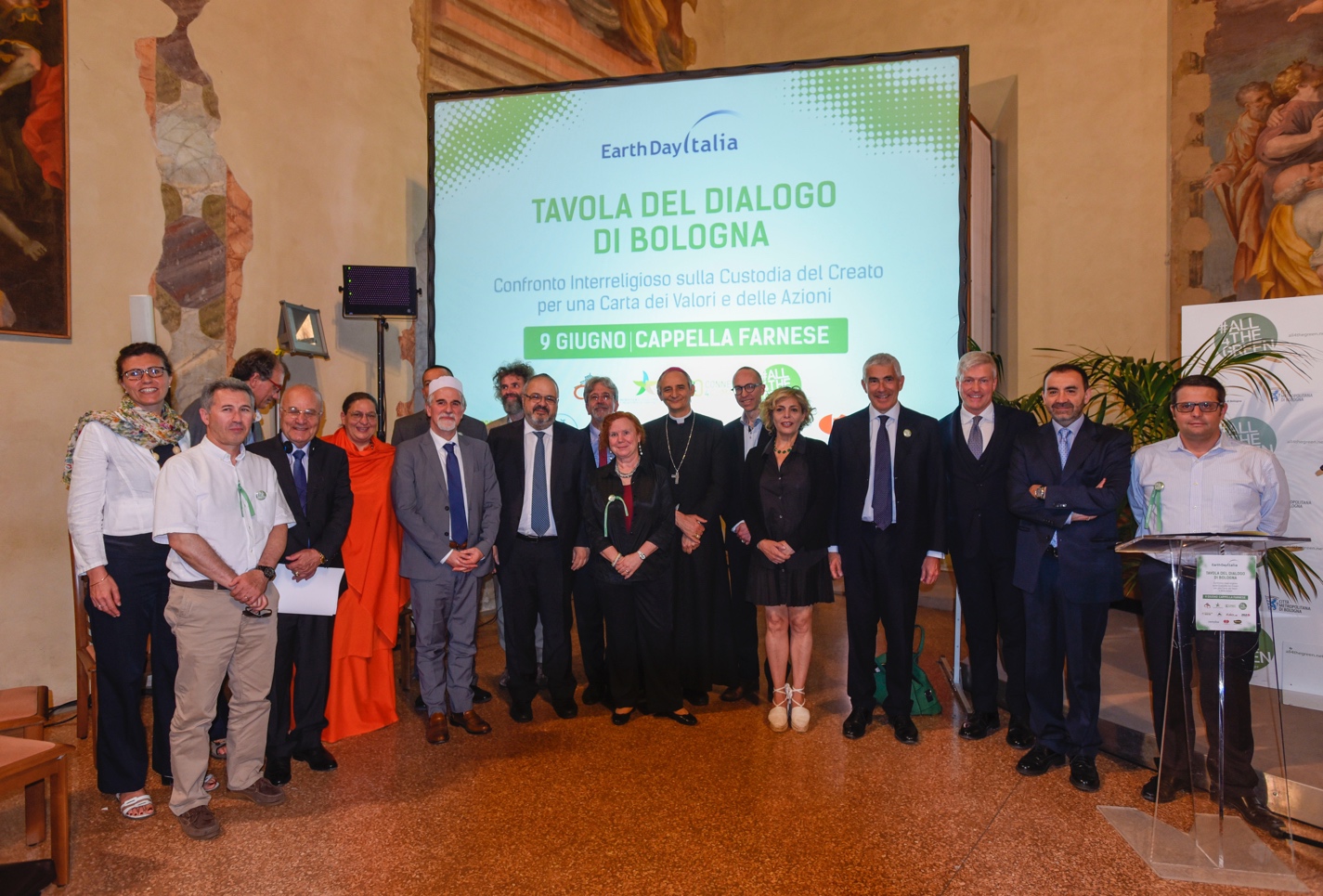
Christians, Muslims, Jews, and Hindus have the same goal at heart: protecting our environment and common home. We live in a world made up of diverse religions and it’s beautiful to see how we can all work together and overcome conflicts in the name of a common will. This was the starting point for the
Christians, Muslims, Jews, and Hindus have the same goal at heart: protecting our environment and common home. We live in a world made up of diverse religions and it’s beautiful to see how we can all work together and overcome conflicts in the name of a common will. This was the starting point for the interfaith dialogue held in Bologna, Italy, organized by Connect4Climate in preparation for the G7 Environment.
As part of the All4TheGreen week, religious leaders gathered to urge the G7 Environment Ministers to boldly act on climate change and environmental protection. Faith representatives engaged in dialogue about how their faith traditions call for environmental protection and to express the importance of protecting our Earth, our Our Common Home, and to highlight the important role religions can take in tackling climate change. “Never stop looking for consensus among governments to protect Our Common Home,” said Mons. Matteo Maria Zuppi, Archbishop of Greater Bologna, during the interfaith dialogue.
In a letter sent to the interfaith dialogue, H.H. Bartholomew I, Ecumenical Patriarch of Constantinople, wrote: “Let us remind our nations that the Earth is not a possession but a partner on our journey.” His words were shared with the leaders present in Cappela Farnese where a message from Pope Francis was also delivered. “Action is the key word in order to transform this desert into a forest”, reminded the Holy Father.
During the interfaith dialogue, the multi-religious leaders, in a call for world leaders to act on climate change, emphasized the urgency of developing a global green economy and building a more efficient, conscious and mindful society in order to end poverty. As Reverend Russel emphasized, “we cannot address poverty without addressing environmental protection and climate change.”
The faith representatives also underlined the imperative for humanity to moderate its consumption and conserve a healthy environment for all living beings. “Mankind has an obligation to make the planet a better home for all”, stressed Alfonso Arbib, President of the Assemblea Rabbinica dell’Unione delle Comunità Ebraiche Italiane.
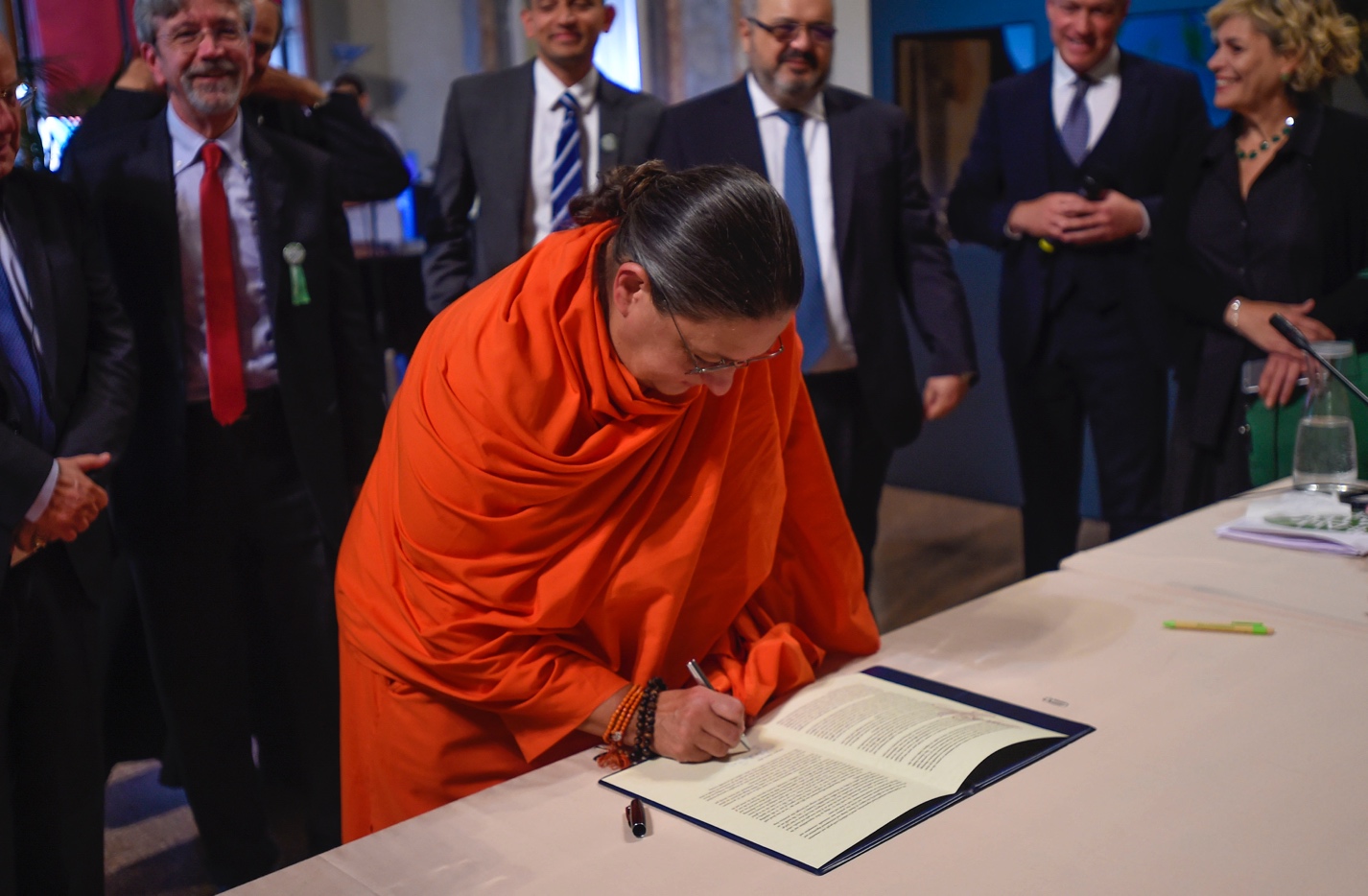
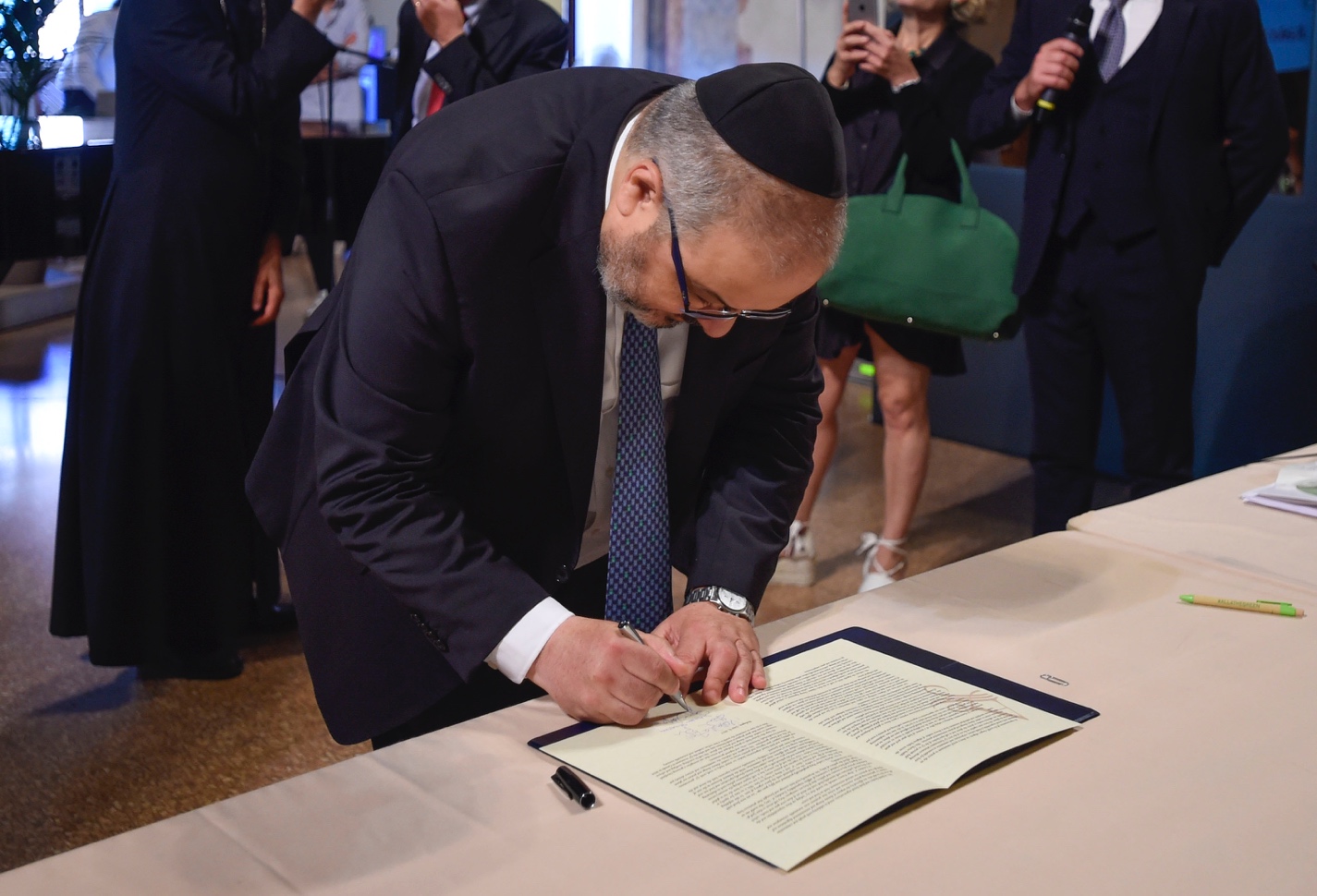
As a result of this meeting, the religious representatives signed the “Bologna Interfaith Charter: Living Our Values, Acting for Our Common Home”, which was delivered to the G7 Environment Ministers on the opening day of their meeting. The Charter states that “The Bologna G7 Environment Meeting is taking place at a moment of both great peril and great promise. With the Paris Agreement in danger, we must do everything possible to ensure its successful implementation. Due to the scale and pace of harm that has already been inflicted upon our planet, we are the last generation who can turn this crisis around before it is too late. At the same time, implementing climate change solutions creates new opportunities to improve human well-being and promote a more just economy.”
Siamo anche su WhatsApp. Segui il canale ufficiale LifeGate per restare aggiornata, aggiornato sulle ultime notizie e sulle nostre attività.

Quest'opera è distribuita con Licenza Creative Commons Attribuzione - Non commerciale - Non opere derivate 4.0 Internazionale.
Pescasseroli, in the heart of Italy’s Apennines, will host the IBA conference on bear conservation and human–bear coexistence. LifeGate will be the event’s media partner.
The inflation caused by extreme weather events is known as “climateflation”: prices for many food products are expected to rise sharply.
The toll is still provisional, but data collected across several European countries indicate that tens of thousands of people have died as a result of extreme heat.
Last February, Malaysia imposed a total ban on electronic waste imports. Yet toxic e-waste continues to arrive from the United States and other countries through illegal trafficking networks.
Although Earth Overshoot Day falls six days later than in 2025, this does not represent an improvement. The shift is the result of revised estimates of the oceans’ carbon absorption capacity, while humanity’s actual ecological footprint continues to grow.
Gigantic wildfires in France’s Gironde region and near Madrid, Spain, have devastated tens of thousands of hectares of vegetation.
Greece has launched a wildfire management system based on nanosatellites and artificial intelligence. A model that other countries are now looking to replicate.
According to analysts, the emergence of a “super” El Niño could trigger a global food price shock, adding to inflationary pressures already fuelled by the conflict with Iran.
Residents of Kanseche, Malawi, accuse ABF of contributing to the devastating 2022 floods through its subsidiary, Illovo Sugar.


