



A report by the NGO network Climate Action Network proposes a series of concrete changes to revitalise the UN Climate Change Conferences.
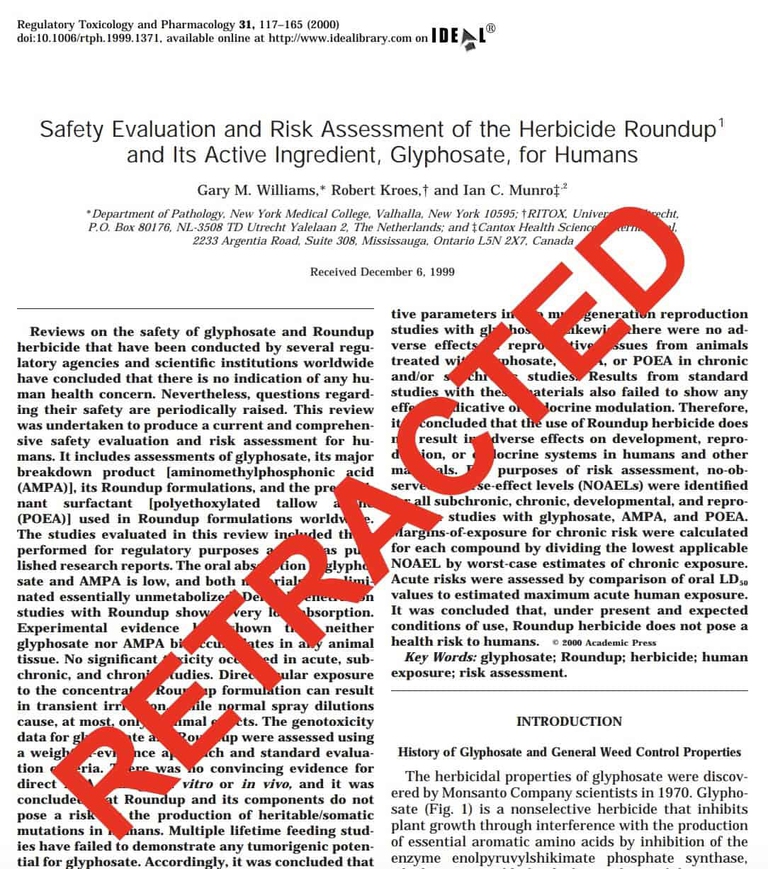
Undeclared conflicts of interest, paid authors, lack of transparency: one of the most cited studies on glyphosate, published in 2000, has been retracted.
“Safety evaluation and risk assessment of the herbicide Roundup and its active ingredient, glyphosate, for humans.” is the title of a study published in 2000 in the scientific journal Regulatory Toxicology and Pharmacology. While it may mean little to most people, for countless governments, lawmakers, and industry stakeholders who have defended the herbicide glyphosate over decades, it is an extremely well-known text.
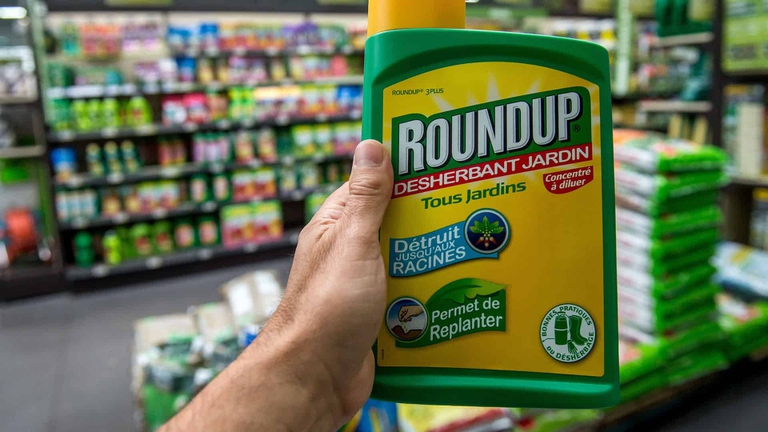
Those 49 pages formed the basis of much of the reasoning used to grant and renew approvals for the commercial use of one of the most controversial agricultural chemicals ever. The analysis concluded that the use of Roundup—Monsanto’s flagship product, now owned by Bayer—posed no risk to human health.
Now, on each of those 49 pages, a huge word appears in red, uppercase letters: “RETRACTED.” The study in question is in fact suspected of having been written by individuals with clear, undeclared conflicts of interest.
Over the past 25 years, the scientific article has been one of the most frequently cited studies on glyphosate, particularly by government authorities and regulatory bodies that have relied on it to regulate and authorise the herbicide’s use. Today, however, a note published by the journal’s editor lists a series of “critical” shortcomings.
These include the failure to incorporate certain studies on cancer risks linked to glyphosate exposure, as well as the lack of transparent disclosure that several Monsanto employees had contributed to drafting the paper. Nor was it revealed that the authors had been paid by Monsanto itself, the multinational later acquired by Germany’s Bayer in 2016.
These are three major flaws that have undermined not only the credibility of the study, but also that of its authors. Such conduct is particularly troubling given that glyphosate toxicity—listed for years by the International Agency for Research on Cancer (Iarc) as probably carcinogenic—has yet to receive a clear and definitive scientific verdict.
The journal’s publisher, Elsevier, has stated that a formal re-examination procedure of the study has been launched. For the sake of accuracy, it must therefore be noted that the outcome of this review is not yet known.
It is known, however, that as early as 2002, a group of around 20 scientists sent a letter to the publisher denouncing “conflicts of interest, lack of transparency, and absence of editorial independence” with regard to the paper. One of the signatories, Lynn Goldman of George Washington University, told AFP that the study’s retraction was justified “for exactly the same reasons we raised at the time.”
Furthermore, in 2017, leaked internal Monsanto documents revealed the role played by company employees in drafting the text. For decades, however, nothing was done. This raises broader questions about the mechanisms used by the scientific community to ‘validate’ research findings.
Incredibilmente, la Monsanto da parte sua non si è mai scomposta. In passato aveva anzi dichiarato candidamente di essere a conoscenza della partecipazione diretta alla stesura del testo, ma aveva assicurato che essa “non aveva raggiunto un livello tale da dichiararne la paternità”.
Siamo anche su WhatsApp. Segui il canale ufficiale LifeGate per restare aggiornata, aggiornato sulle ultime notizie e sulle nostre attività.

Quest'opera è distribuita con Licenza Creative Commons Attribuzione - Non commerciale - Non opere derivate 4.0 Internazionale.
A report by the NGO network Climate Action Network proposes a series of concrete changes to revitalise the UN Climate Change Conferences.
Pescasseroli, in the heart of Italy’s Apennines, will host the IBA conference on bear conservation and human–bear coexistence. LifeGate will be the event’s media partner.
The inflation caused by extreme weather events is known as “climateflation”: prices for many food products are expected to rise sharply.
The toll is still provisional, but data collected across several European countries indicate that tens of thousands of people have died as a result of extreme heat.
Last February, Malaysia imposed a total ban on electronic waste imports. Yet toxic e-waste continues to arrive from the United States and other countries through illegal trafficking networks.
Although Earth Overshoot Day falls six days later than in 2025, this does not represent an improvement. The shift is the result of revised estimates of the oceans’ carbon absorption capacity, while humanity’s actual ecological footprint continues to grow.
Gigantic wildfires in France’s Gironde region and near Madrid, Spain, have devastated tens of thousands of hectares of vegetation.
Greece has launched a wildfire management system based on nanosatellites and artificial intelligence. A model that other countries are now looking to replicate.
According to analysts, the emergence of a “super” El Niño could trigger a global food price shock, adding to inflationary pressures already fuelled by the conflict with Iran.


