A Greenpeace report denounces Russia’s political and economic model: a nexus of extractivism, authoritarianism and war that is destroying the environment, with serious repercussions for the global ecosystem.
Russia’s contemporary political-economic model is built on extractivism, authoritarianism, and war. In this model, these elements are interconnected and mutually reinforcing, threatening not only the country’s future but also global environmental stability.
This is the conclusion reached by experts at Greenpeace International, who have published a comprehensive report on environmental conditions in post-invasion Russia and the local and global impacts they entail.
The document—“Fossil Fuel Empire”—examines Russia’s ecological situation, the repression of environmental movements, and the global consequences of the country’s environmental policies. It focuses on a country that, in 2023, banned Greenpeace itself, yet where some people still have the courage to fight for the environment.
Extractivism and war
Extractivism, authoritarianism, and war: these are the key words that, according to the report, underpin modern Russia’s political-economic system. The war in Ukraine, Greenpeace argues, is largely fuelled by fossil-fuel revenues which—rather than being distributed fairly to improve living standards—feed militarism and the interests of elites. Those elites, in turn, depend on the exploitation of natural resources to preserve wealth and power.
In this way, Greenpeace says, a vicious cycle is created—one that destroys nature and threatens social and environmental justice, making a transition toward a fairer, more sustainable, and more peaceful model of development effectively impossible.
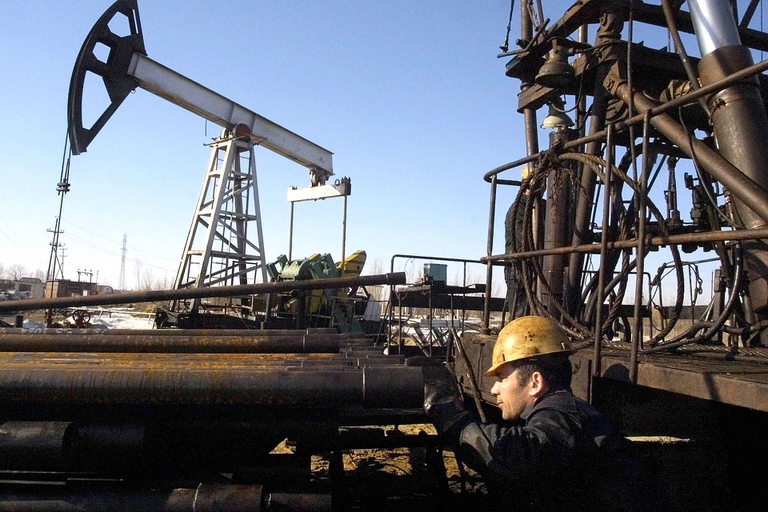
Workers repair an oil well owned by the Yukos company April 24, 2002 in Nefteyugansk, Siberia. Yukos is a fully integrated oil-and-gas company headquartered in Moscow, Russia and is one of the world’s largest non-state oil companies by reserves and market capitalization. (Photo by Oleg Nikishin/Getty Images)
“Vladimir Putin and his inner circle have made extractivism the foundation of a system built on corruption, imperial propaganda, and repression,” the Greenpeace report states. “A system in which a narrow circle of elites profits from the exploitation of people and nature, as well as from the forceful conquest of neighbouring states’ territories.”
According to Greenpeace experts, this model threatens not only Russia’s future but also global stability, because it accelerates the climate crisis and contributes to biodiversity loss in an interconnected world.
Ukraine's environment has become collateral damage in Russia's brutal and unjustified invasion. At least 7.2 million acres of the country's protected areas have been damaged by shelling, oil pollution, and military actions. The ecological and economic toll is extensive, causing… pic.twitter.com/fi931YTPRI
After 2022, one of the most visible changes has been the surge in military and security spending, which now absorbs up to 40 per cent of the federal budget, Greenpeace writes. These funds are diverted away from civilian sectors, environmental protection, and sustainable development.
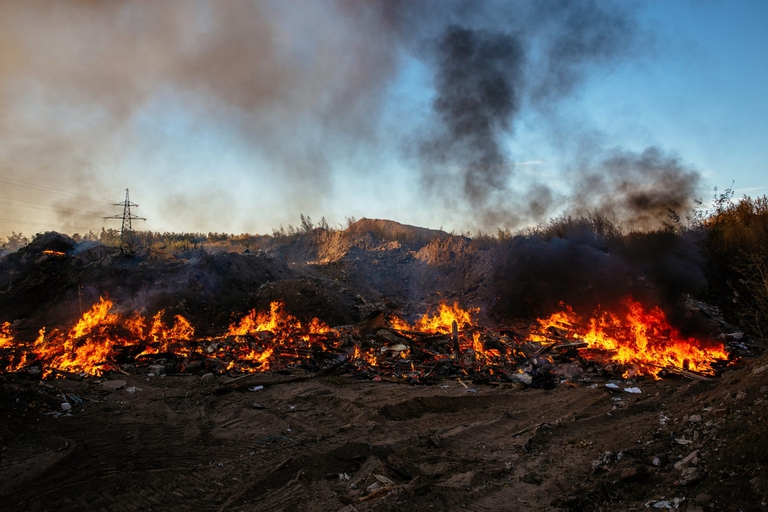
The war-driven restructuring of the economy has also intensified industrial output in highly polluting sectors, such as defence and heavy metallurgy. In addition, the withdrawal of major Western energy companies from the Russian market has deprived the country of technologies that had made resource extraction at least partially more responsible.
The result? Deforestation, water contamination, and increasing land exploitation, with consequences that ripple across the broader ecosystem. “The oligarchic system that supports Russia’s political-military leadership has sacrificed nature to its own interests,” Anton Lementuev, editor at Green Think Tank (a research group analysing Russia’s environmental and energy policies), told LifeGate.
Since 2022, environmental laws have been dismantled, monitoring has been reduced, and public oversight has been eliminated: environmental protection has effectively ceased to be a state priority.
Anton Lementuev
“This is happening alongside a sharp rise in industrial waste, frequent oil spills, and growing secrecy around environmentally dangerous projects, now treated as matters of national security,” he added.
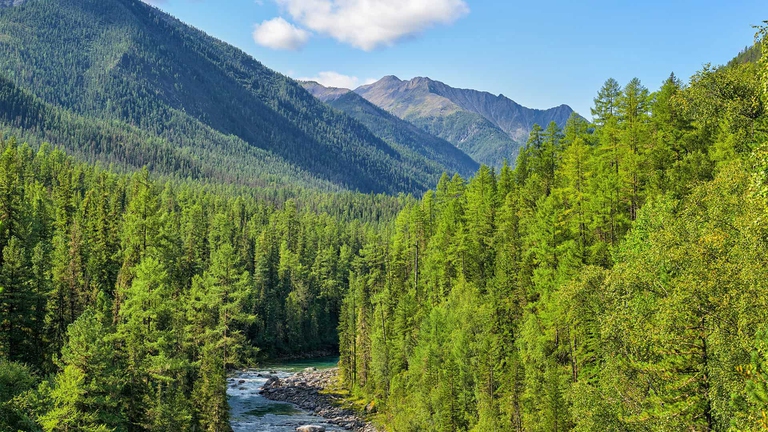
With its immense territory covered by forests, lakes, and rivers, the Russian Federation plays a fundamental role in the balance of the global ecosystem. Its natural areas—from the Arctic seas to the Siberian forests—help regulate the climate, store vast amounts of carbon, and host extraordinary biodiversity.
But Russia is also one of the leading exporters of fossil fuels and a major producer of greenhouse gases. Without a concrete Russian commitment to responsible environmental policy, Greenpeace warns, it will be impossible to effectively tackle the climate crisis and protect biological diversity.
And the consequences of short-sighted political choices—combined with ongoing climate change—are already visible. It is estimated that the area of Russia’s near-surface permafrost (which accounts for more than two-thirds of global permafrost) could shrink by 22–28 per cent by 2050, and by 40–72 per cent by 2100, compared with the 1995–2014 period. Such thawing could further accelerate climate change, with potentially devastating effects worldwide.
As Greenpeace notes, Russia’s resource-based economy has benefited for decades from the support of foreign governments and major transnational corporations seeking stable supplies of oil, gas, coal, metals, and other raw materials.
❗️ Russian actions resulted in a major environmental disaster by blowing up the #Kakhovka reservoir, crucial for cooling the #ZaporizhzhiaNPP. What's next?
According to Greenpeace, Russia’s position in climate politics has changed radically from the 1990s to today. The constructive approach shown immediately after the collapse of the USSR gradually gave way to deliberate obstructionism, backed by domestic industrial lobbies.
As the report states, “during the drafting of the UN Framework Convention on Climate Change (Unfcc) and the Kyoto Protocol, Russia presented itself as a constructive actor. It supported Kyoto’s market mechanisms, such as emissions trading, Joint Implementation (Ji), and the Clean Development Mechanism (Cdm).” In the early 2000s, however, that commitment began to weaken.
Russia’s Low-Emission Development Strategy to 2050, published in 2021, outlines various decarbonisation scenarios, but with long timelines extending beyond 2035. The plan also relies on technologies that remain underdeveloped or unreliable in the Russian context, such as carbon capture and storage (CCS) and CO₂ sequestration through forests—forests that have been severely affected by wildfires and illegal logging.
Even in the most optimistic scenario, Greenpeace writes, Moscow’s priority remains unchanged: continuing to export oil and gas.
The weakening of activists and NGOs
Despite attempts in the 1990s to strengthen institutional environmental protection and expand public participation, environmental legislation has weakened over recent decades—along with the work of activists and NGOs, stifled by the tightening crackdown and the introduction of the new “foreign agents law.” This measure prevents organisations from operating in the country and exposes their members to serious criminal consequences.
“We were forced to close our office in Russia and no longer have staff or volunteers in the country. Greenpeace therefore manages Russia-related activities from abroad,” Anna Jerzak, Greenpeace expert for Central and Eastern Europe, told LifeGate.
We work with a network of environmental protection specialists and ecological activists so that we can monitor environmental crimes taking place in Russia even though we are no longer physically present there.
Anna Jerzak
As of April 2025, the list of so-called “foreign agents” included more than 1,200 organisations and individuals. Greenpeace says that over the past three years Russian authorities have targeted 553 environmental activists and organisations. At least 110 environmental activists have reportedly been persecuted for expressing anti-war views: most received fines or short periods of detention; in other cases, dissent led to criminal proceedings, with sentences of up to six years in prison.
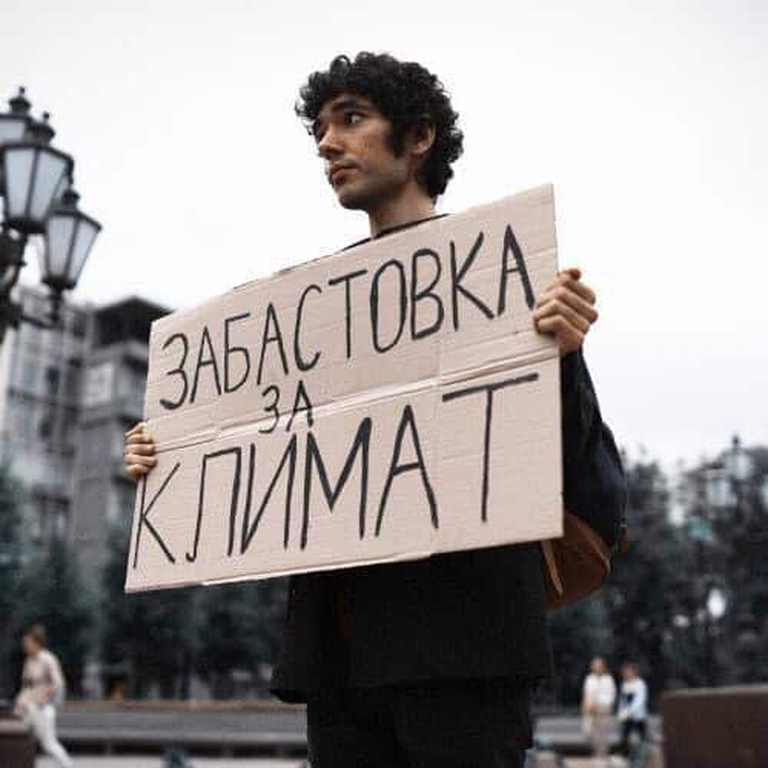
One of the most emblematic cases is that of well-known climate activist Arshak Makichyan, organiser of Fridays for Future demonstrations in Russia, who was stripped of Russian citizenship along with his family and forced into exile.
According to Amnesty International, the purpose of these measures is to isolate politically active people in Russia, creating a climate of fear and uncertainty that limits cooperation between Russian and international organisations.
Ecology as a form of rebellion
Despite repression, environmental activism remains one of the few forms of protest still alive in contemporary Russia.
Even before the war, local movements emerged in peripheral regions to oppose landfills, deforestation, and polluting industrial projects. Today, despite the risks, some activists continue their work through clean-up initiatives, protection of urban green spaces, and recycling projects.
Indeed, between 2023 and 2024, environmental protests were reportedly the most widespread after anti-war protests—an indication that defending the environment remains an important act of rebellion in a country where virtually every other form of dissent has been suffocated.
“Russia has plunged into a bloody war economy, fuelled by fossil fuels and propaganda,” said Mads Christensen, executive director of Greenpeace International. “However, determined journalism can still break the silence. That is precisely why it is essential to keep reporting on Russia: not only to expose the environmental devastation caused by the regime’s violence and corruption, but also to bear witness that Greenpeace, together with millions of people, has no intention of being silenced.”
“The climate crisis can only be contained if Russia—with its high CO₂ emissions and vast reserves—is included in global mitigation efforts,” Anna Jerzak told LifeGate. “Moving away from an extractivist, fossil-fuel-dependent model toward a sustainable and diversified economy is essential not only for Russia’s future, but also for the global fight against the climate crisis.”
The oil giant TotalEnergies must defend itself against accusations of failing to take into account the climate consequences resulting from the use of its products.
From Australia to the United States, from Chile to Mozambique, and from Russia to Argentina, many countries are grappling with extreme weather conditions.