


Pescasseroli, in the heart of Italy’s Apennines, will host the IBA conference on bear conservation and human–bear coexistence. LifeGate will be the event’s media partner.
L’applicazione consente di trovare rapidamente una persona qualificata che porti a spasso il cane al posto tuo quando sei impegnato.
Dogs are an unlimited source of love and joy, but they require attentions. In fact, dogs need to go out, due to evident physical necessities, as well as to vent their energy and socialise with other animals.

However, due to glitches and job responsibilities, it’s not always possible to spend the required time with our four-legged friends. For too busy dog owners there’s Wag!, application that allows another person to walk your dog.
You only need to download the app, fill in a short form with your dog’s profile, write a note about its personality and insert your credit card number. The cost for a 30-minute walk is 20 dollars, whilst for an hour it’s 30 dollars. Owners can also add a second dog with an extra cost of 5 dollars.
The walks can be scheduled in advance, or with a notice of 30 minutes, according to walkers’ availability. The service is operational from 6 a.m. to 11 p.m., 7 days a week.
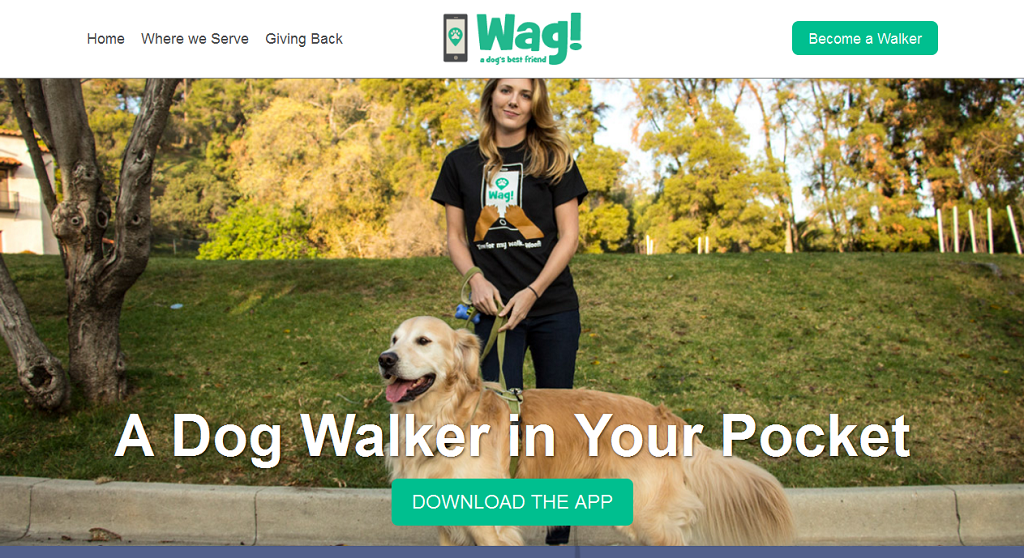
The application’s advantage, like other examples of sharing economy, is represented by other users’ feedbacks, which allow having an idea about walkers and choosing the most reliable ones.
All walkers have their own detailed profile, linked to the evaluations and reviews given by other dog owners. Additionally, you can track your dog’s walks live on the app’s GPS map.
Moreover, walkers are chosen through strict tests, are trained for emergency situations, and people with previous professional experiences with dogs are favoured.

Currently, the service is only available in New York, Los Angeles and San Francisco. However, considered the increasing demand, the app’s co-founders are thinking to bring it to other US cities.
Siamo anche su WhatsApp. Segui il canale ufficiale LifeGate per restare aggiornata, aggiornato sulle ultime notizie e sulle nostre attività.

Quest'opera è distribuita con Licenza Creative Commons Attribuzione - Non commerciale - Non opere derivate 4.0 Internazionale.
Pescasseroli, in the heart of Italy’s Apennines, will host the IBA conference on bear conservation and human–bear coexistence. LifeGate will be the event’s media partner.
The inflation caused by extreme weather events is known as “climateflation”: prices for many food products are expected to rise sharply.
The toll is still provisional, but data collected across several European countries indicate that tens of thousands of people have died as a result of extreme heat.
Last February, Malaysia imposed a total ban on electronic waste imports. Yet toxic e-waste continues to arrive from the United States and other countries through illegal trafficking networks.
Although Earth Overshoot Day falls six days later than in 2025, this does not represent an improvement. The shift is the result of revised estimates of the oceans’ carbon absorption capacity, while humanity’s actual ecological footprint continues to grow.
Gigantic wildfires in France’s Gironde region and near Madrid, Spain, have devastated tens of thousands of hectares of vegetation.
Greece has launched a wildfire management system based on nanosatellites and artificial intelligence. A model that other countries are now looking to replicate.
According to analysts, the emergence of a “super” El Niño could trigger a global food price shock, adding to inflationary pressures already fuelled by the conflict with Iran.
Residents of Kanseche, Malawi, accuse ABF of contributing to the devastating 2022 floods through its subsidiary, Illovo Sugar.


