



Pescasseroli, in the heart of Italy’s Apennines, will host the IBA conference on bear conservation and human–bear coexistence. LifeGate will be the event’s media partner.
There are many examples of carbon capture and sequestration (CCS), a system mainly used in thermoelectric power plants to reduce the emissions of the combustion process. However, the drawback of costs and how to find proper spaces in which storing carbon dioxide while avoiding uncontrollable leakage makes this system difficult to use. For this reason,
There are many examples of carbon capture and sequestration (CCS), a system mainly used in thermoelectric power plants to reduce the emissions of the combustion process.
However, the drawback of costs and how to find proper spaces in which storing carbon dioxide while avoiding uncontrollable leakage makes this system difficult to use. For this reason, a new experiment called Carbfix, conducted by a team of international scientists, could change the future of the carbon capture and sequestration.
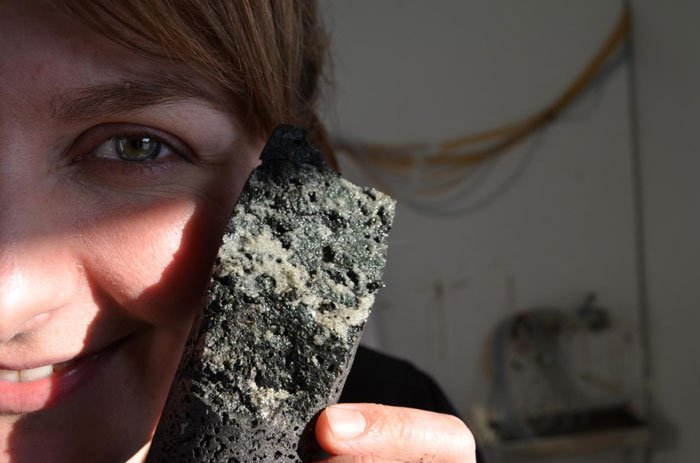
In Iceland, a land rich in basaltic rocks, researchers have demonstrated that pumping CO2 underground is possible and that, in certain physical and chemical conditions, it becomes carbonate rock.
The study, published in Science, shows for the first time ever that storing CO2 in a permanent and stable way is feasible. And what surprises the most is processing time. While rocks take geological eras to become such, Carbfix allows carbon dioxide to become carbonate rock in less than 2 years, a blink of an eye for geology.
Moreover, the researchers have showed that 95 per cent of the CO2 pumped underground to a depth of 400 to 800 metres has been tuned into stone. “Our results demonstrate that the safe long-term storage of anthropogenic CO2 emissions through mineralization can be far faster than previously postulated,” reads the paper.
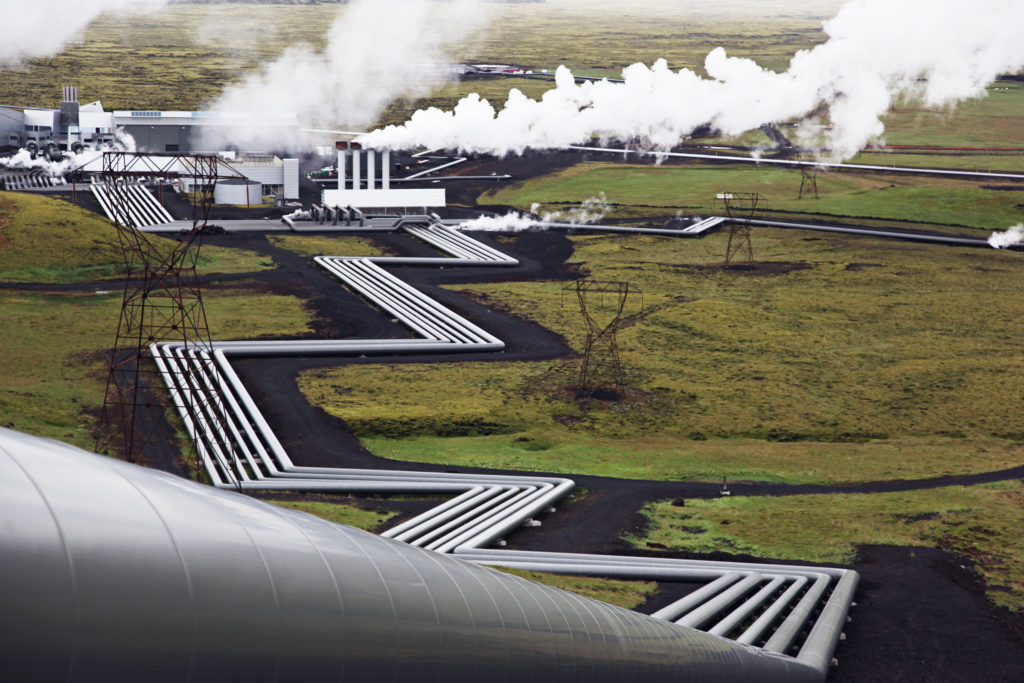
“Carbonate minerals do not leak out of the ground, thus our newly developed method results in permanent and environmentally friendly storage of CO2 emissions,” said Juerge M. Matter, the study’s lead author. “On the other hand, basalt is one of the most common rock types on Earth, potentially providing one of the largest means of CO2 storage capacity.” The experiment has been conducted at the Hellisheidi geothermal power plant outside Reykjavik, where 5,000 tonnes of CO2 are pumped underground every year to be turned into stone.
In order to turn CO2 into rock, huge quantities of water are needed. In fact, carbon dioxide is mixed with water to lower pH and to make it react with basalt. The ratio of water to CO2 is 95 per cent to 5 per cent. And scientists claim that using sea water isn’t feasible and costs to build these kind of plants would be high. In any case, the project represents a step forward for finding a solution to reduce greengouse gas emissions.
Siamo anche su WhatsApp. Segui il canale ufficiale LifeGate per restare aggiornata, aggiornato sulle ultime notizie e sulle nostre attività.

Quest'opera è distribuita con Licenza Creative Commons Attribuzione - Non commerciale - Non opere derivate 4.0 Internazionale.
Pescasseroli, in the heart of Italy’s Apennines, will host the IBA conference on bear conservation and human–bear coexistence. LifeGate will be the event’s media partner.
The inflation caused by extreme weather events is known as “climateflation”: prices for many food products are expected to rise sharply.
The toll is still provisional, but data collected across several European countries indicate that tens of thousands of people have died as a result of extreme heat.
Last February, Malaysia imposed a total ban on electronic waste imports. Yet toxic e-waste continues to arrive from the United States and other countries through illegal trafficking networks.
Although Earth Overshoot Day falls six days later than in 2025, this does not represent an improvement. The shift is the result of revised estimates of the oceans’ carbon absorption capacity, while humanity’s actual ecological footprint continues to grow.
Gigantic wildfires in France’s Gironde region and near Madrid, Spain, have devastated tens of thousands of hectares of vegetation.
Greece has launched a wildfire management system based on nanosatellites and artificial intelligence. A model that other countries are now looking to replicate.
According to analysts, the emergence of a “super” El Niño could trigger a global food price shock, adding to inflationary pressures already fuelled by the conflict with Iran.
Residents of Kanseche, Malawi, accuse ABF of contributing to the devastating 2022 floods through its subsidiary, Illovo Sugar.


