


Pescasseroli, in the heart of Italy’s Apennines, will host the IBA conference on bear conservation and human–bear coexistence. LifeGate will be the event’s media partner.
Launched by a group of students, the GoPro reached 30 kilometres of altitude. It was lost and was found two years after, with these incredible images.
Bryan Chan and his work group, from the Stanford University, may have thought “unsuccessful experiment” after they lost the contact with the weather balloon they launched with a GoPro hung on it.
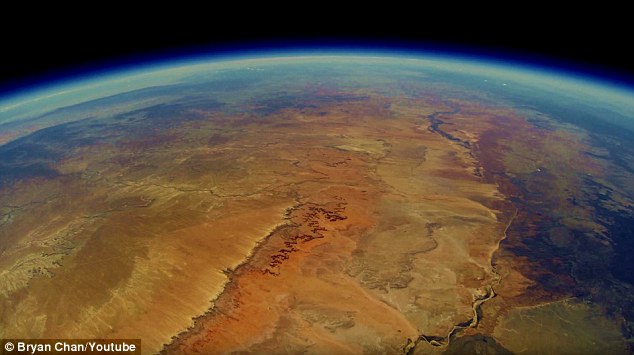
The experiment, started on 8 June 2013 near the Grand Canyon, Arizona, was designed to collect useful data for the student’s thesis. Along with the GoPro, they also hung a smartphone provided with GPS in order to track the balloon’s route.
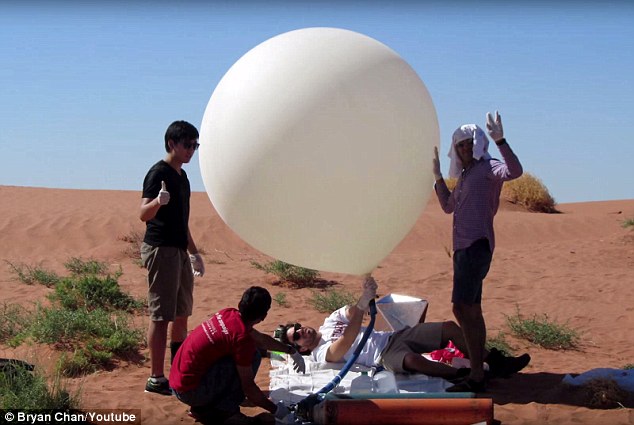
The experiment was supposed to last just a couple of hours, but something went wrong, and the mobile phone and the camera went lost. “The GoPro and phone was projected to land in an area with cell coverage, but the problem was that the cell service coverage maps we relied on weren’t accurate, so the phone didn’t have signal as it came back to Earth,” said Bryan Chan. So they never got the text that was supposed to send them the coordinates of where it landed.
However, in March an Arizona hiker found the camera and the phone, in a Navajo Reservation near the Grand Canyon. Thanks to the sim card she could identify the owner and give footage and data to him. “We couldn’t believe it,” said Chan. The video posted on YouTube had over 3.5 million views in a week.
Siamo anche su WhatsApp. Segui il canale ufficiale LifeGate per restare aggiornata, aggiornato sulle ultime notizie e sulle nostre attività.

Quest'opera è distribuita con Licenza Creative Commons Attribuzione - Non commerciale - Non opere derivate 4.0 Internazionale.
Pescasseroli, in the heart of Italy’s Apennines, will host the IBA conference on bear conservation and human–bear coexistence. LifeGate will be the event’s media partner.
The inflation caused by extreme weather events is known as “climateflation”: prices for many food products are expected to rise sharply.
The toll is still provisional, but data collected across several European countries indicate that tens of thousands of people have died as a result of extreme heat.
Last February, Malaysia imposed a total ban on electronic waste imports. Yet toxic e-waste continues to arrive from the United States and other countries through illegal trafficking networks.
Although Earth Overshoot Day falls six days later than in 2025, this does not represent an improvement. The shift is the result of revised estimates of the oceans’ carbon absorption capacity, while humanity’s actual ecological footprint continues to grow.
Gigantic wildfires in France’s Gironde region and near Madrid, Spain, have devastated tens of thousands of hectares of vegetation.
Greece has launched a wildfire management system based on nanosatellites and artificial intelligence. A model that other countries are now looking to replicate.
According to analysts, the emergence of a “super” El Niño could trigger a global food price shock, adding to inflationary pressures already fuelled by the conflict with Iran.
Residents of Kanseche, Malawi, accuse ABF of contributing to the devastating 2022 floods through its subsidiary, Illovo Sugar.


