


Pescasseroli, in the heart of Italy’s Apennines, will host the IBA conference on bear conservation and human–bear coexistence. LifeGate will be the event’s media partner.
“This is the issue of our times. Climate change is the biggest issue”. Filmmaker Kaia Rose stresses the importance of discussing this global matter on a Connect4Climate Facebook live Q&A held on the 11th of May, with Eric Mann. They’re both behind the production of Climate Countdown: Price on Carbon, the Film4Climate Global Video Competition short-film winner of the Put
“This is the issue of our times. Climate change is the biggest issue”. Filmmaker Kaia Rose stresses the importance of discussing this global matter on a Connect4Climate Facebook live Q&A held on the 11th of May, with Eric Mann. They’re both behind the production of Climate Countdown: Price on Carbon, the Film4Climate Global Video Competition short-film winner of the Put A Price On Carbon Pollution Award.
Rose and Mann’s film explores a climate solution that despite its “complexity”, “brings everyone to the table”. “We need all the solutions, but if you put a price on carbon then you will be addressing the very reason why we are having this crisis. Fossil fuels are cheap, but they have a cost. Health care costs. Cost of storm damages. Cost of water. Ecological cost. All sort of costs. And we are paying for those costs,” explains Rose.
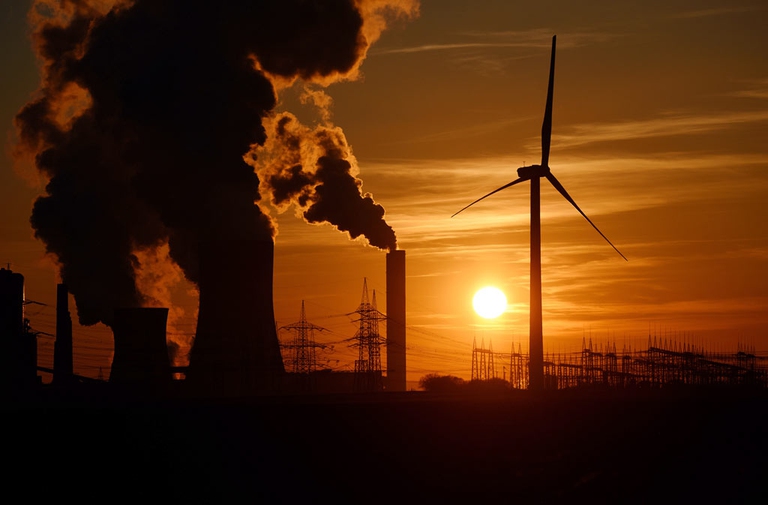
Mann adds: “It is the silver bullet to solve climate change. It is a simple, effective solution”. According to World Bank data currently around 40 countries and more than 20 cities already have carbon pricing mechanisms (emissions trading systems (ETS) and carbon taxes) in place, covering about half of their emissions – 13 per cent of annual global greenhouse gas emissions.
“Carbon pricing is an egoless way of solving climate change. It forces the market to move in a certain direction,” attests Mann. From Rose’s point of view putting a price on carbon “corrects a market failure”. “It shifts the whole system we’ve been living under. It’s about justice. It’s about a new world we want to create,” she underlines.
Rose has a firm and prompt answer: “The money is there. The technology is there. Political will isn’t there”. According to both film directors in order to solve this problem it is essential to put pressure on politicians and put the subject of carbon pricing on the “vernacular”. “Communicating is essential. Keep making it a sexy subject,” Mann advises.
Stressing the importance of also investing in carbon-neutral innovation, the authors of the Climate Countdown series remind the online audience of the necessity to invest in innovative solutions in all sectors to tackle climate change. “A price on carbon is not a one-size fits all solution”, says Mann.
However, solving climate change takes everyone’s commitment. Rose and Mann are certain that every citizen would be able to use their skills to tackle this international issue. “You’re never too old or too young to be part of this process,” Mann declares. On the other hand, Rose trusts young people’s will “because they are not constrained into a box. They have a fresh perspective”.
The results of recent atmospheric research make climate change an urgent subject, determines Rose, aware that “there is a lot of momentum from the Paris Agreement, and that’s exciting, but we need to increase it. We need to act now and we need to boost our efforts”. “It’s such an existential crisis that it is easy to feel overwhelmed. But there is a lot to be hopeful for. There are a lot of great solutions out there,” the filmmaker emphasises.
Mann and Rose are at present working on the Climate Countdown Season Two, whilst will focus on climate finance and on how to communicate climate change.
Siamo anche su WhatsApp. Segui il canale ufficiale LifeGate per restare aggiornata, aggiornato sulle ultime notizie e sulle nostre attività.

Quest'opera è distribuita con Licenza Creative Commons Attribuzione - Non commerciale - Non opere derivate 4.0 Internazionale.
Pescasseroli, in the heart of Italy’s Apennines, will host the IBA conference on bear conservation and human–bear coexistence. LifeGate will be the event’s media partner.
The inflation caused by extreme weather events is known as “climateflation”: prices for many food products are expected to rise sharply.
The toll is still provisional, but data collected across several European countries indicate that tens of thousands of people have died as a result of extreme heat.
Last February, Malaysia imposed a total ban on electronic waste imports. Yet toxic e-waste continues to arrive from the United States and other countries through illegal trafficking networks.
Although Earth Overshoot Day falls six days later than in 2025, this does not represent an improvement. The shift is the result of revised estimates of the oceans’ carbon absorption capacity, while humanity’s actual ecological footprint continues to grow.
Gigantic wildfires in France’s Gironde region and near Madrid, Spain, have devastated tens of thousands of hectares of vegetation.
Greece has launched a wildfire management system based on nanosatellites and artificial intelligence. A model that other countries are now looking to replicate.
According to analysts, the emergence of a “super” El Niño could trigger a global food price shock, adding to inflationary pressures already fuelled by the conflict with Iran.
Residents of Kanseche, Malawi, accuse ABF of contributing to the devastating 2022 floods through its subsidiary, Illovo Sugar.


