



Pescasseroli, in the heart of Italy’s Apennines, will host the IBA conference on bear conservation and human–bear coexistence. LifeGate will be the event’s media partner.
The Zambian government has announced that construction of the open-pit Kangaluwi copper mine in Lower Zambezi National Park won’t proceed, following strong backlash against the project’s prior approval.
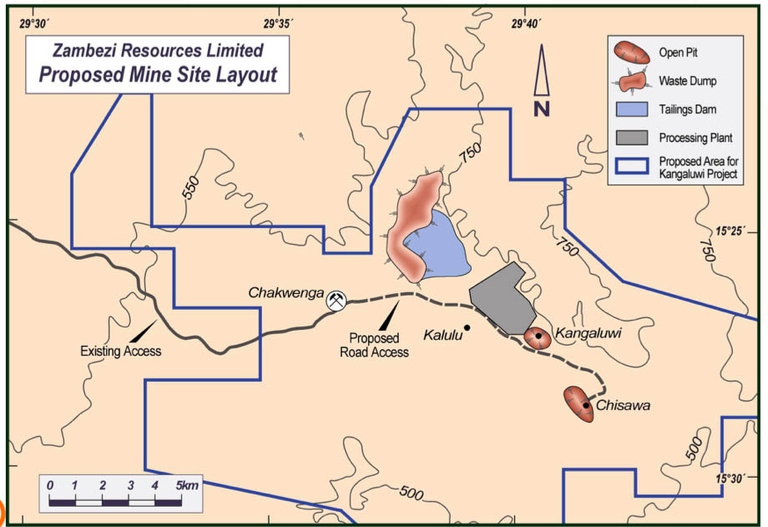
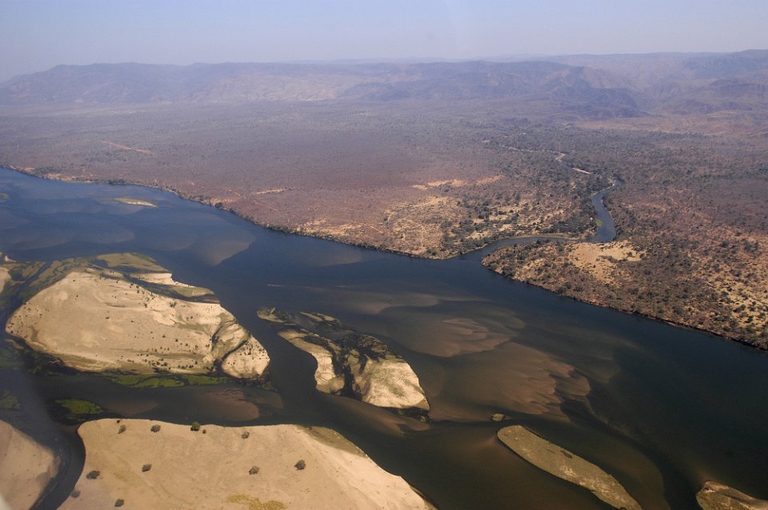
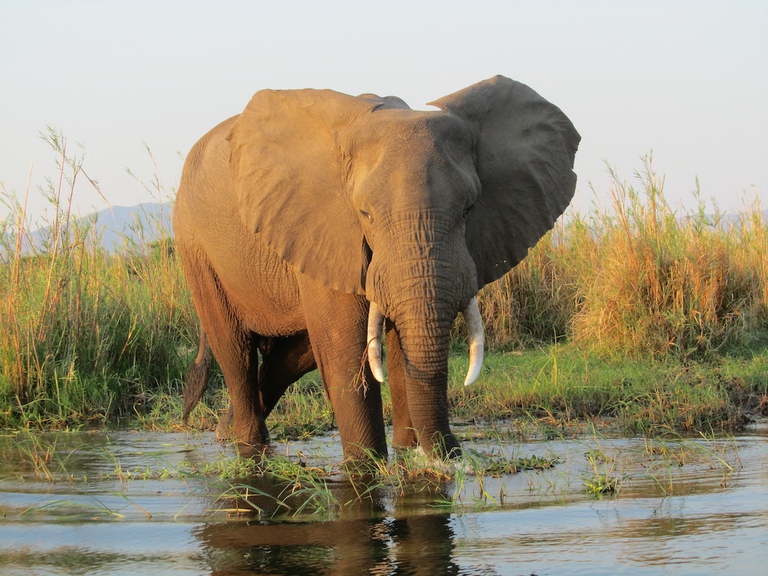
The Zambian government has cancelled plans to build the giant Kangaluwi mine inside one of the country’s most economically important protected areas, the Lower Zambezi National Park, 174 kilometres southeast of the capital Lusaka and a haven for endangered wildlife and other natural resources. Although artisanal and small-scale mining has previously occurred in protected areas in Zambia, this could have been the first project involving large scale extraction, specifically an open-pit copper mine, by a foreign-owned company inside a national park.
Tourism and Arts Minister Ronald Chitotela announced the project won’t go forth because a report that was submitted by the environmental regulator has expired. “If this mining firm wants to go ahead with its project, we can advise them to submit a fresh report which will have to be scrutinised and approved by the government,” he explained in an interview.
In addition, local stakeholders, communities and international experts had raised questions about the viability of the project proposal and the technical quality and transparency of the information being shared by the Australia-listed Mwembeshi Resource Company seeking to develop the mine.
Experts say the current Mines and Mineral Development Act of 2008 doesn’t contain any substantial provisions to guide the implementation of extractive activities in protected areas, adding that the mine licensing system is open to exploitation, particularly by foreign investors who face much more robust legislation in their own countries.
The Zambian legislature requires a prospective company to submit an Environmental Impact Assessment (EIA) for such proposals. In the case of the Kangaluwi mine, the embattled company failed to provide a robust assessment of the project’s potential social, environmental and economic impacts. The EIA dated February 2012 was rejected in September that year by the Zambia Environmental Management Agency (ZEMA) based on technical grounds. But an appeal by the proponents was successful, as then Minister for Lands, Natural Resources and Environmental Protection Harry Kalaba overturned ZEMA’s decision and in February 2014 the environmental agency gave permission for the project to proceed – a decision which shocked the nation.
Kalaba, who is now president of the opposition Democratic Party, admits he stands guilty because he was the responsible minister. “It wasn’t my personal decision to overturn ZEMA’s ruling, it was the collective decision of the cabinet”.
“No mining would have taken place in the park … on account that the Environmental Impact Assessment authorisation granted by Harry Kalaba in 2014 is no longer legally valid and therefore can’t be used as the basis to commence mining in the park,” Green Party president Peter Sinkamba remarked, welcoming the cancellation of the proposed mine. He added that failure to commence operations within three years rendered the authorisation invalid on grounds of lapse of time.
“The proposed mining operation in the middle of the national park poses the biggest threat in history to the wildlife and pristine wilderness that has survived so many centuries of challenges and supported generations of Zambians,” Kenneth Kaunda, who served as the first president of Zambia between 1964 and 1991 stressed. “Friends of the environment all over the world, the Lower Zambezi is a story of resilience. I’m concerned about the people and their natural resources in and around the Lower Zambezi National Park. This rich ecosystem has supported people for time immemorial”. He added that the area is one on Zambia’s most popular destinations for tourists, both local and international, generating significant income for the government and people.
The main political argument in support of the Kangaluwi mine is that the firm would have created employment for local communities, particularly those living around the district capital Luangwa – the town sits at the intersection of the Zambezi and Luangwa rivers, the latter also subject to a large scale project, in this case a hydroelectric dam, that was subsequently cancelled. Yet no guarantees were in place for the mining firm to engage only personnel from local communities.
Chief Mphuka of the Chikunda people in Luangwa district, home to South Luangwa National Park, made a tearful plea to the government to allow mining in the Lower Zambezi. “Those objecting the commencement of mining … should travel to the area before they speak,” he said. “These people are cold-hearted, imagine how they can shun development in preference of wildlife conservation. The same animals they care for end up feeding on the crops that people struggle to cultivate for their families,” he reiterated.
“We don’t have any sound economic activities for our youth here, there’s no hope. We just want the government to allow an investor to open the Kangaluwi mine. Let’s not cheat ourselves about animals. I’m hearing rumours that the mine has been sold by the first owners. They’ve written volumes on how they will protect animals,” he told us. “These so-called lodge owners currently operating in the park are depleting lion and elephant populations. I have information that these people have started mining gold and other minerals illegally,” Mphuka explained, without presenting evidence.
“Help us to get this message to the government so that our youths can get jobs at the mine and see sense, our people have co-existed with wildlife animals for decades,” he stressed.
Read more: Zambia cancels plans to dam the Luangwa, one of Africa’s longest free-flowing rivers
On the other hand, environmental activist James Carlington, who had launched a petition urging the Zambian government to immediately halt plans for the Kangaluwi mine, highlighted Zambia’s obligations under the Convention on Biological Diversity, as well as the agreement of 17 Zambezi chiefs in 2008 to prohibit all mining in the Zambezi Basin. In addition, according to a recent ten-question survey developed and disseminated through tourism operators in the Lower Zambezi and South Luangwa national parks, which together contain the highest number of safari-based tourism operations in Zambia, the vast majority of respondents stated they were either unlikely to visit a national park containing an open-pit mine, or wouldn’t even consider visiting one in the first place.
The Lower Zambezi saga provides great lessons on the challenges currently facing protected area management and coordination among government ministries that play a key role in ensuring that these reserves are well secured.
Siamo anche su WhatsApp. Segui il canale ufficiale LifeGate per restare aggiornata, aggiornato sulle ultime notizie e sulle nostre attività.

Quest'opera è distribuita con Licenza Creative Commons Attribuzione - Non commerciale - Non opere derivate 4.0 Internazionale.
Pescasseroli, in the heart of Italy’s Apennines, will host the IBA conference on bear conservation and human–bear coexistence. LifeGate will be the event’s media partner.
The inflation caused by extreme weather events is known as “climateflation”: prices for many food products are expected to rise sharply.
The toll is still provisional, but data collected across several European countries indicate that tens of thousands of people have died as a result of extreme heat.
Last February, Malaysia imposed a total ban on electronic waste imports. Yet toxic e-waste continues to arrive from the United States and other countries through illegal trafficking networks.
Although Earth Overshoot Day falls six days later than in 2025, this does not represent an improvement. The shift is the result of revised estimates of the oceans’ carbon absorption capacity, while humanity’s actual ecological footprint continues to grow.
Gigantic wildfires in France’s Gironde region and near Madrid, Spain, have devastated tens of thousands of hectares of vegetation.
Greece has launched a wildfire management system based on nanosatellites and artificial intelligence. A model that other countries are now looking to replicate.
According to analysts, the emergence of a “super” El Niño could trigger a global food price shock, adding to inflationary pressures already fuelled by the conflict with Iran.
Residents of Kanseche, Malawi, accuse ABF of contributing to the devastating 2022 floods through its subsidiary, Illovo Sugar.


