


A report by the NGO network Climate Action Network proposes a series of concrete changes to revitalise the UN Climate Change Conferences.
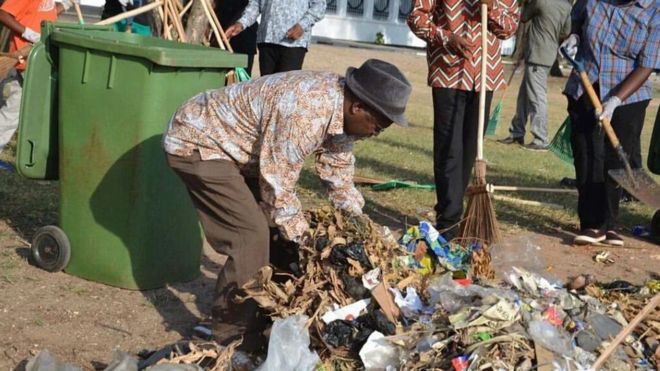
John Magufuli nel giorno dell’indipendenza della Tanzania è uscito dal palazzo presidenziale e ha iniziato a raccogliere i rifiuti lasciati per terra.
“Let us work together to keep our country, cities, homes and workplaces clean, safe and healthy,” said President John Magufuli as he picked up rubbish off the street of Tanzania’s capital city.
Tens of citizens joined Magufuli in collecting waste off the streets outside State House. “Tanzania has changed – this is a new Tanzania,” said one resident, Anyitike Mwakitalima, according to AFP.
The newly elected president of Tanzania launched a strong message. He cancelled The Independence Day celebrations (9 December), as it would be “shameful” spending huge sums whilst the country is undergoing a severe cholera epidemic that caused thousands of new infections and 150 deaths in only a month.
Magufuli, who took office on 25 October, has already been nicknamed “the Bulldozer” across the country, due to his anti-corruption campaigns and cost-cutting measures. For instance, Magufuli has cut the expenses of the Parliament inauguration, from 100,000 dollars to “only” 7,000. There’s more. He declared his will to improve welfare of the poorest and to solve energy problems citizens are forced to face.
Tweet riguardo #WhatWouldMagufuliDo
It seems the president hates the “political correctness” and, thanks to his austerity politics, he has become a social media star, both in Tanzania and other neighbouring countries, according to AFP, so that the hashtag #WhatWouldMagufuliDo went viral.
Siamo anche su WhatsApp. Segui il canale ufficiale LifeGate per restare aggiornata, aggiornato sulle ultime notizie e sulle nostre attività.

Quest'opera è distribuita con Licenza Creative Commons Attribuzione - Non commerciale - Non opere derivate 4.0 Internazionale.
A report by the NGO network Climate Action Network proposes a series of concrete changes to revitalise the UN Climate Change Conferences.
Pescasseroli, in the heart of Italy’s Apennines, will host the IBA conference on bear conservation and human–bear coexistence. LifeGate will be the event’s media partner.
The inflation caused by extreme weather events is known as “climateflation”: prices for many food products are expected to rise sharply.
The toll is still provisional, but data collected across several European countries indicate that tens of thousands of people have died as a result of extreme heat.
Last February, Malaysia imposed a total ban on electronic waste imports. Yet toxic e-waste continues to arrive from the United States and other countries through illegal trafficking networks.
Although Earth Overshoot Day falls six days later than in 2025, this does not represent an improvement. The shift is the result of revised estimates of the oceans’ carbon absorption capacity, while humanity’s actual ecological footprint continues to grow.
Gigantic wildfires in France’s Gironde region and near Madrid, Spain, have devastated tens of thousands of hectares of vegetation.
Greece has launched a wildfire management system based on nanosatellites and artificial intelligence. A model that other countries are now looking to replicate.
According to analysts, the emergence of a “super” El Niño could trigger a global food price shock, adding to inflationary pressures already fuelled by the conflict with Iran.


