



Gigantic wildfires in France’s Gironde region and near Madrid, Spain, have devastated tens of thousands of hectares of vegetation.
L’isola di Jean Charles, a causa dell’aumento dei livelli del mare, è ormai quasi completamente inghiottita dalle acque. La piccola comunità che ci vive è costretta ad abbandonarla.
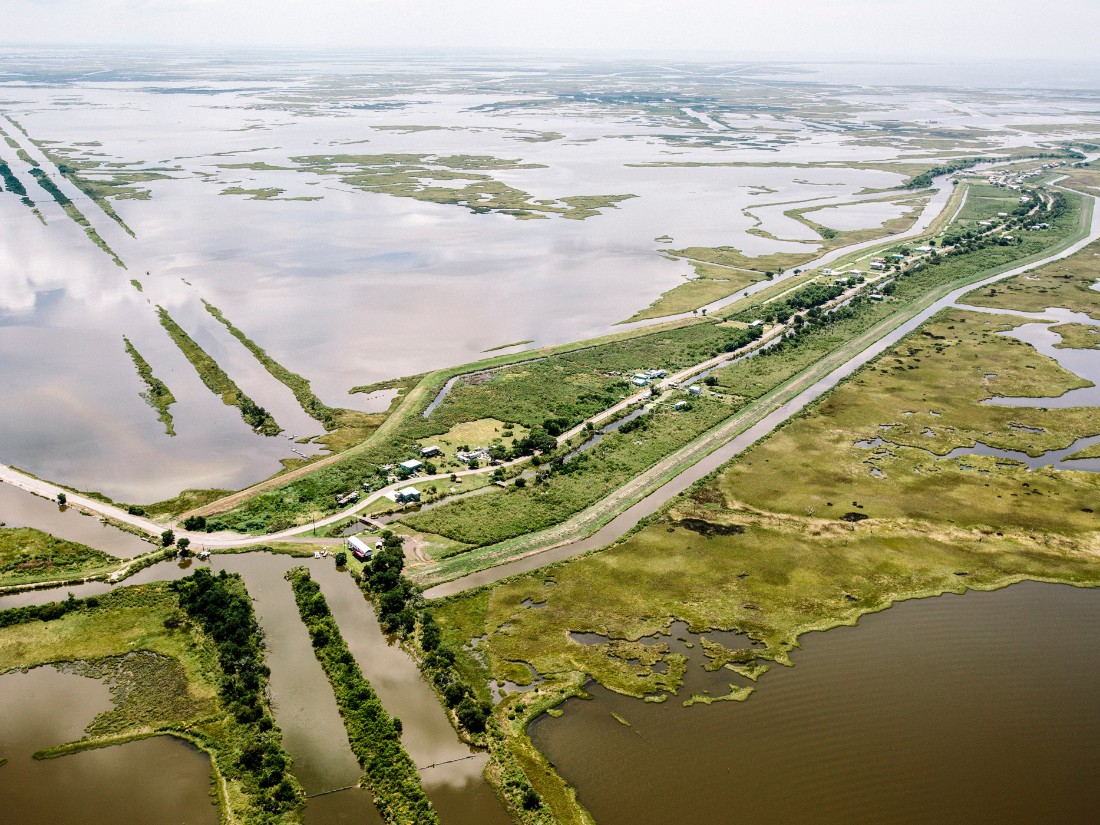
The Isle de Jean Charles, southern Louisiana, United States, is home to a small native community of the Biloxi-Chitimacha-Choctaw tribe. These people are forced to leave their land and homes, becoming the United States’ first climate refugees.
Rising sea levels caused by global warming and erosion have submerged about 98 per cent of the island over the past 60 years. In the 1950s, the isle was 18 kilometres long and 8 kilometres wide, but today it’s only 3 kilometres long and half a kilometre wide. So, the community – which counts 400 people – has been forced to leave. The U.S. Department of Housing and Urban Development (HUD) allocated 48 million dollars to evacuate locals and move them to an island located further north. The operation, euphemistically named “resettling”, will last two years.
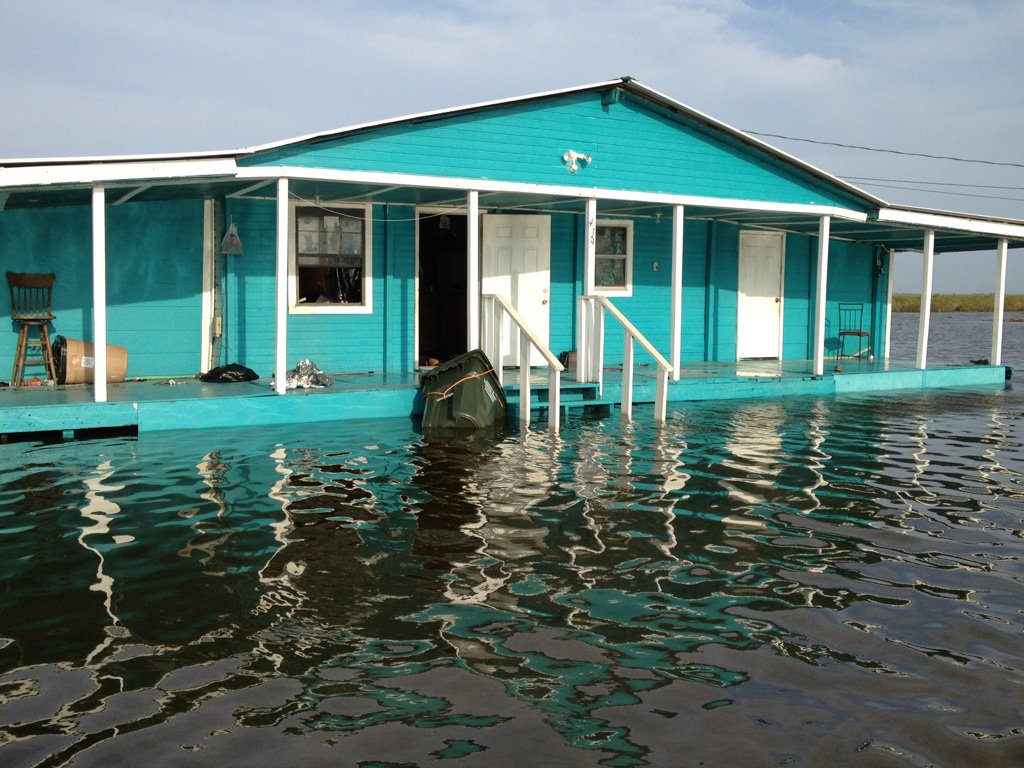
The situation has been further exacerbated by the oil industry, which is particularly active in Louisiana. Continuous extraction activities have led to subsidence, an irreversible phenomenon that causes the surface to shift downward. Louisiana’s lagoons have been altered by the construction of hundreds of canals and pipelines, becoming more vulnerable to climate change and extreme weather events.
According to the National Oceanic and Atmospheric Administration (NOAA), sea levels are rising by 1 centimetre per year. Jean Charles is expected to be wiped out by only 50 years. This will lead not only to the disappearance of the Biloxi-Chitimacha-Choctaw’s homes, but also of marine birds’ important nesting sites.
Leaving behind one’s home and land is anything but easy. In fact, 70 people haven’t left the island yet. “I’ve lived my whole life here, and I’m going to die here,” said Hilton Chaisson, an inhabitant of the island. What is going on in Louisiana is just the tip of the iceberg and this small island inhabited by Native Americans could be an anticipation of what could happen next.
Siamo anche su WhatsApp. Segui il canale ufficiale LifeGate per restare aggiornata, aggiornato sulle ultime notizie e sulle nostre attività.

Quest'opera è distribuita con Licenza Creative Commons Attribuzione - Non commerciale - Non opere derivate 4.0 Internazionale.
Gigantic wildfires in France’s Gironde region and near Madrid, Spain, have devastated tens of thousands of hectares of vegetation.
According to analysts, the emergence of a “super” El Niño could trigger a global food price shock, adding to inflationary pressures already fuelled by the conflict with Iran.
Residents of Kanseche, Malawi, accuse ABF of contributing to the devastating 2022 floods through its subsidiary, Illovo Sugar.
France, Spain, Portugal and Greece are fighting wildfires, some of which are still out of control.
Much of Western Europe is already dealing with temperatures that in many cities are approaching or exceeding 35°C.
After a landslide led to twelve deaths on the island of Ischia, questions have been raised about the impacts of illegal building, tourism, and climate change.
Not much snow, peaks of 19 degrees Celsius in Norway and even 28 degrees in France: official data confirms the anomalously high temperatures of this past winter.
Ocean warming has risen to record highs over the last five years: just in 2019 the heat released into the world’s oceans was equivalent to that of 5-6 atomic bombs per second. The culprit, no doubt, is climate change.
What did Greta Thunberg tell participants at the 2020 World Economic Forum in Davos? Once again, the Swedish activist underlined the total lack of concrete solutions to the climate crisis presented by leaders so far.


