




A report by the NGO network Climate Action Network proposes a series of concrete changes to revitalise the UN Climate Change Conferences.
Salty water flows on slopes on Mars’ surface, when temperatures exceed 23°C. A great discovery, waiting for man’s arrival.
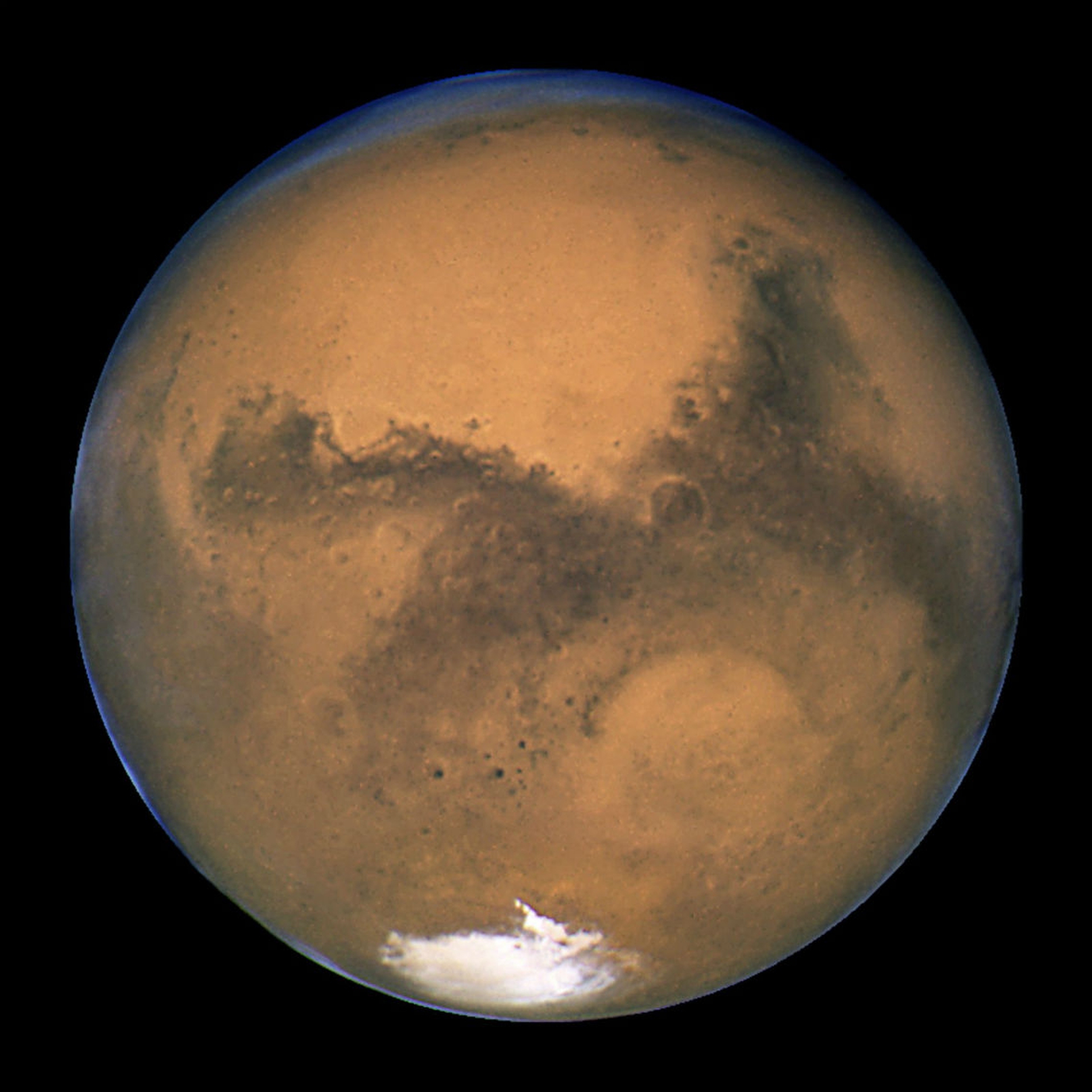
It has been confirmed yesterday. There is water on Mars, alongside the frozen water at the poles of the planet. Liquid and salty water. The discovery has been announced by NASA in a press conference entitled “Mystery solved”.
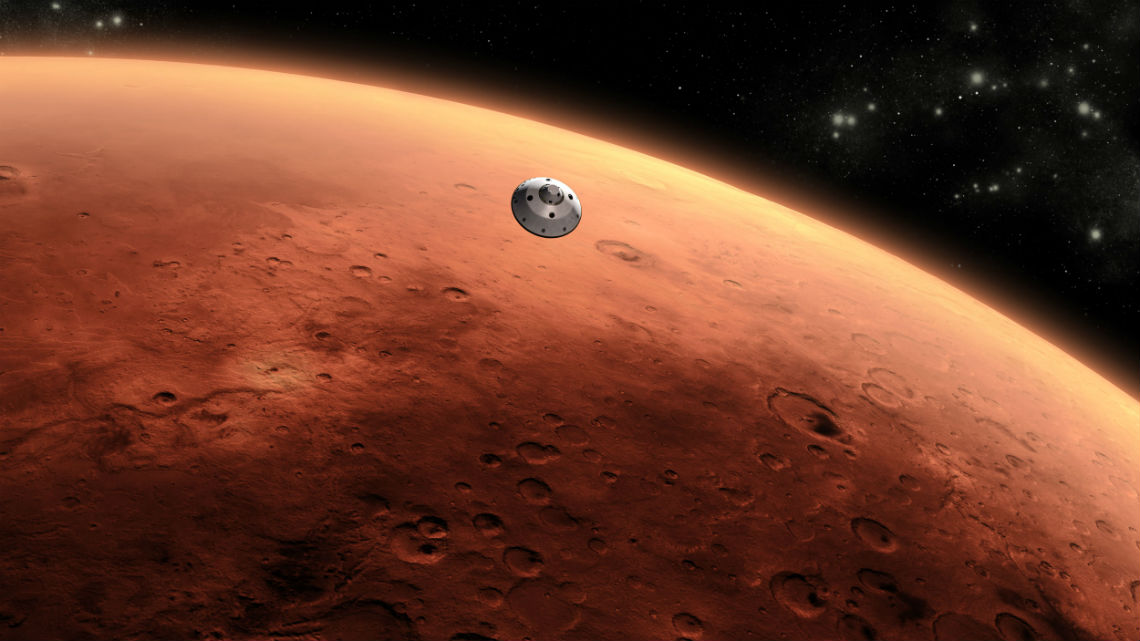
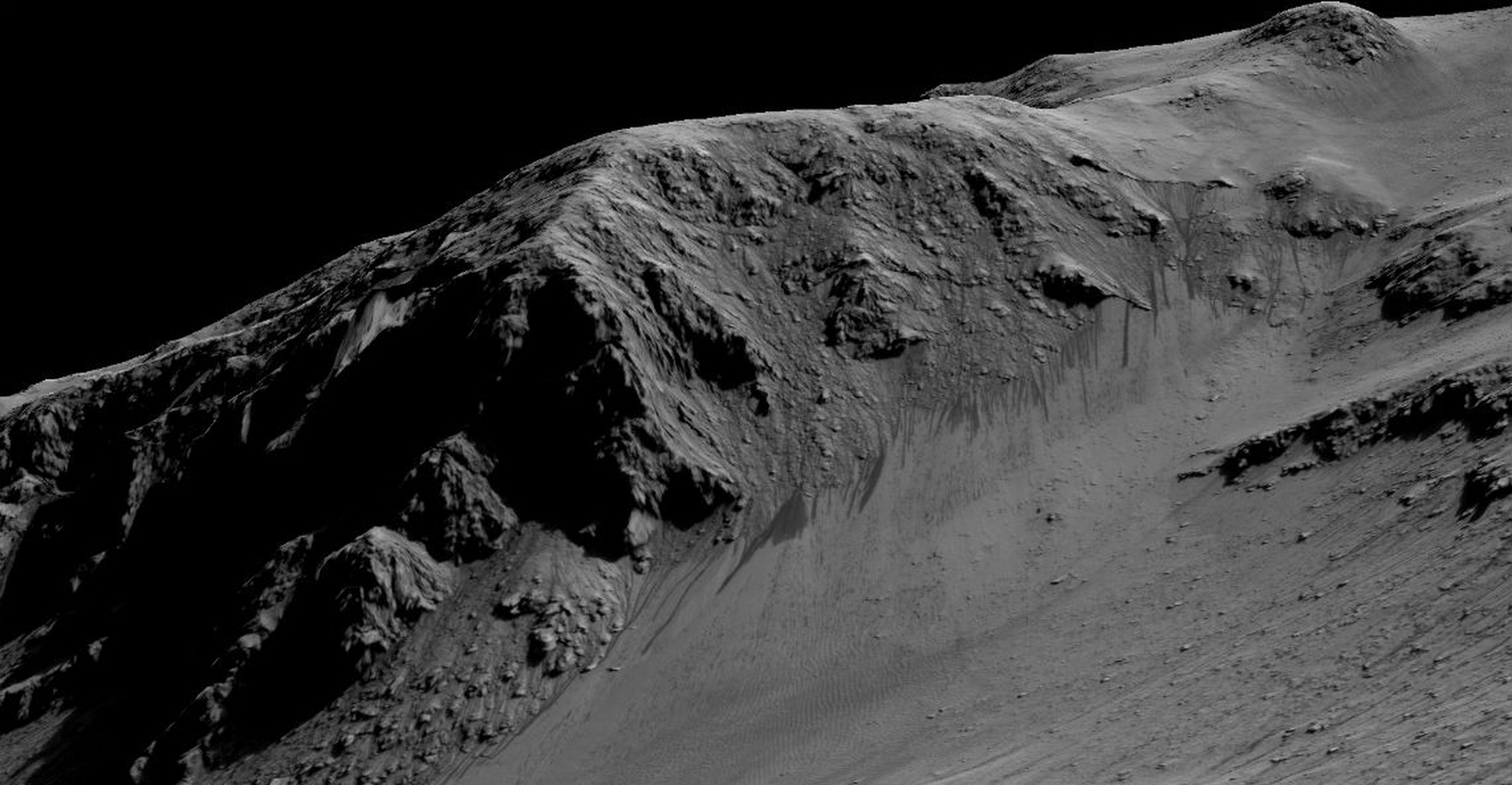
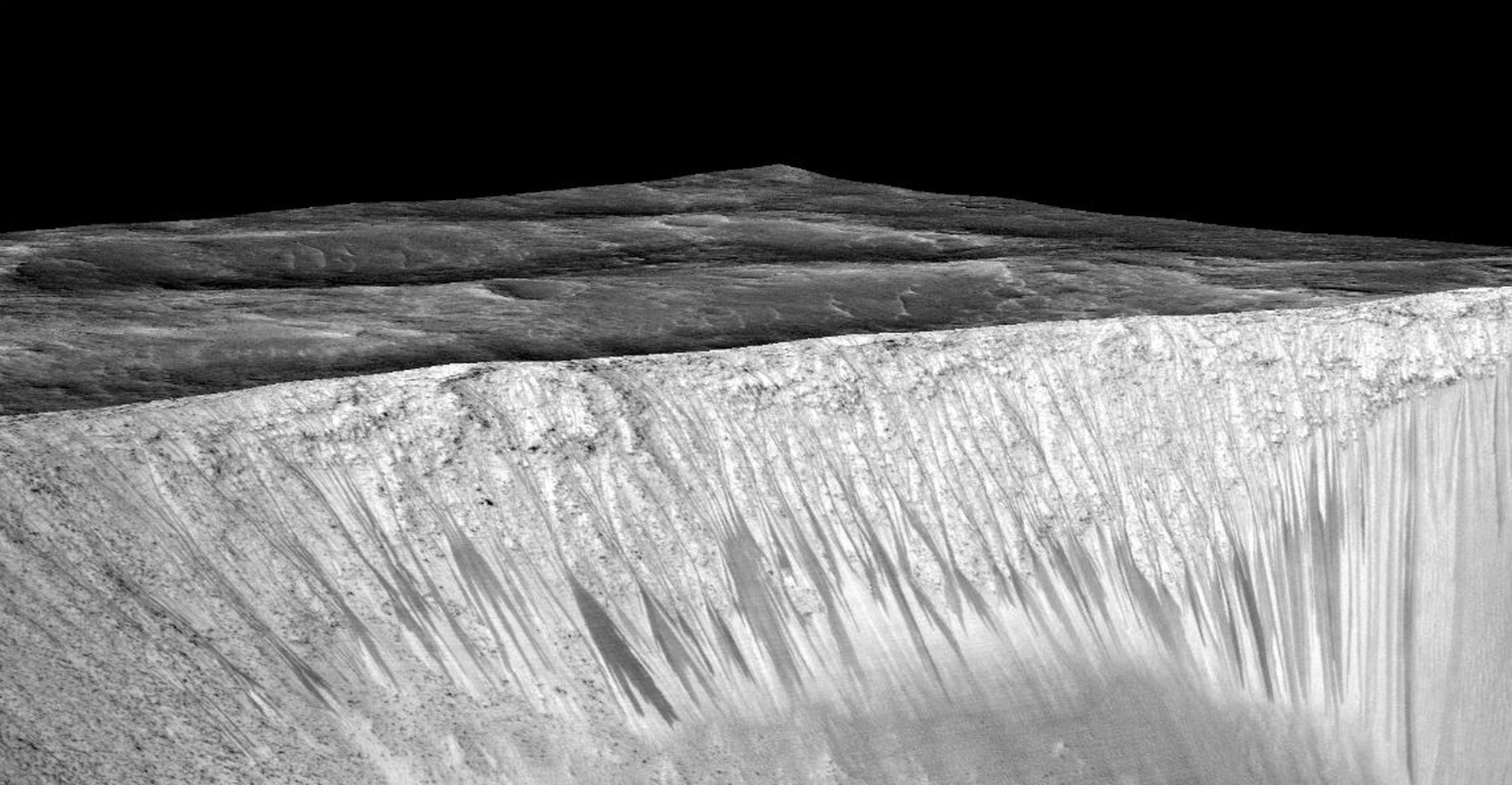
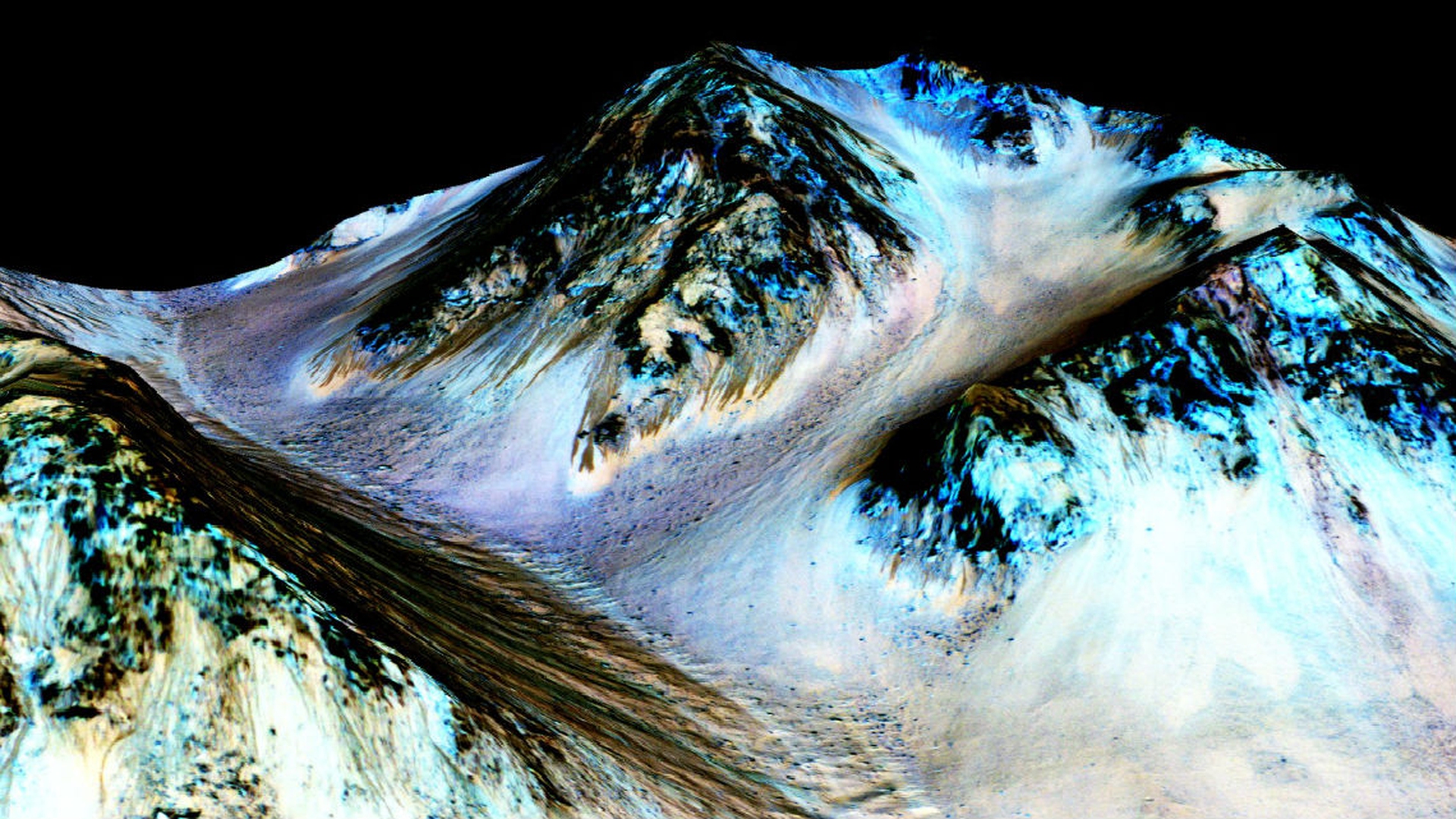
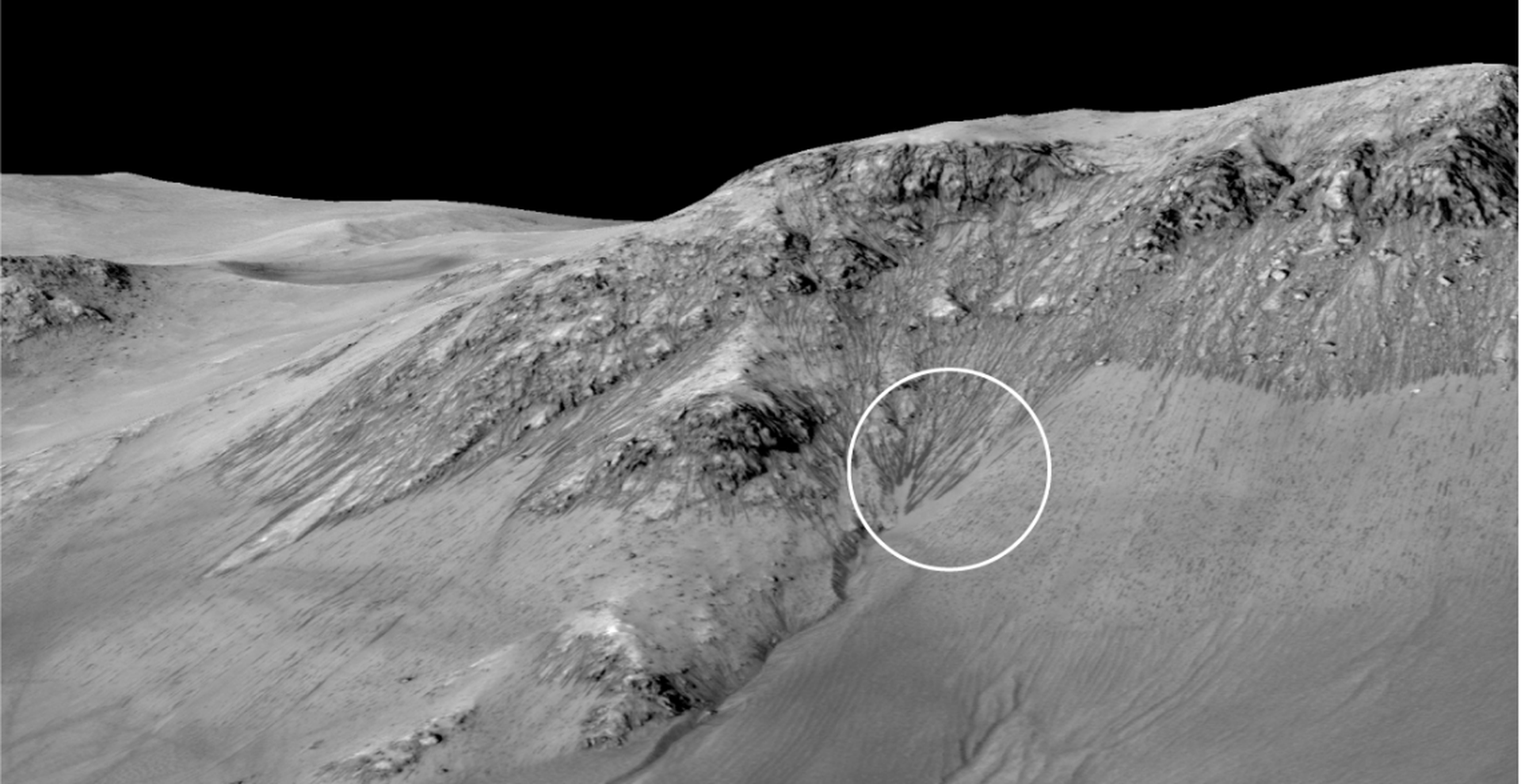
A mystery that turned out to be truth. Data collected by the Mars Reconnaissance Orbiter satellite and the ones published by Nature Geoscience, show dark streaks on Mars’ surface and craters. There are evidences of hydrated salts, which form only in presence of liquid water.
“The detection of hydrated salts on these slopes means that water plays a vital role in the formation of these streaks,” said Lujendra Ojha researcher of the Georgia Institute of Technology (Georgia Tech) in Atlanta, and research’s lead author.
The 100-metre long streaks appear during the Martian summer, when temperatures are higher, whilst disappear during winter. “This is a significant development, as it appears to confirm that water, albeit briny, is flowing today on the surface of Mars, ” said John Grunsfeld, associate administrator for the Science Mission Directorate at NASA.
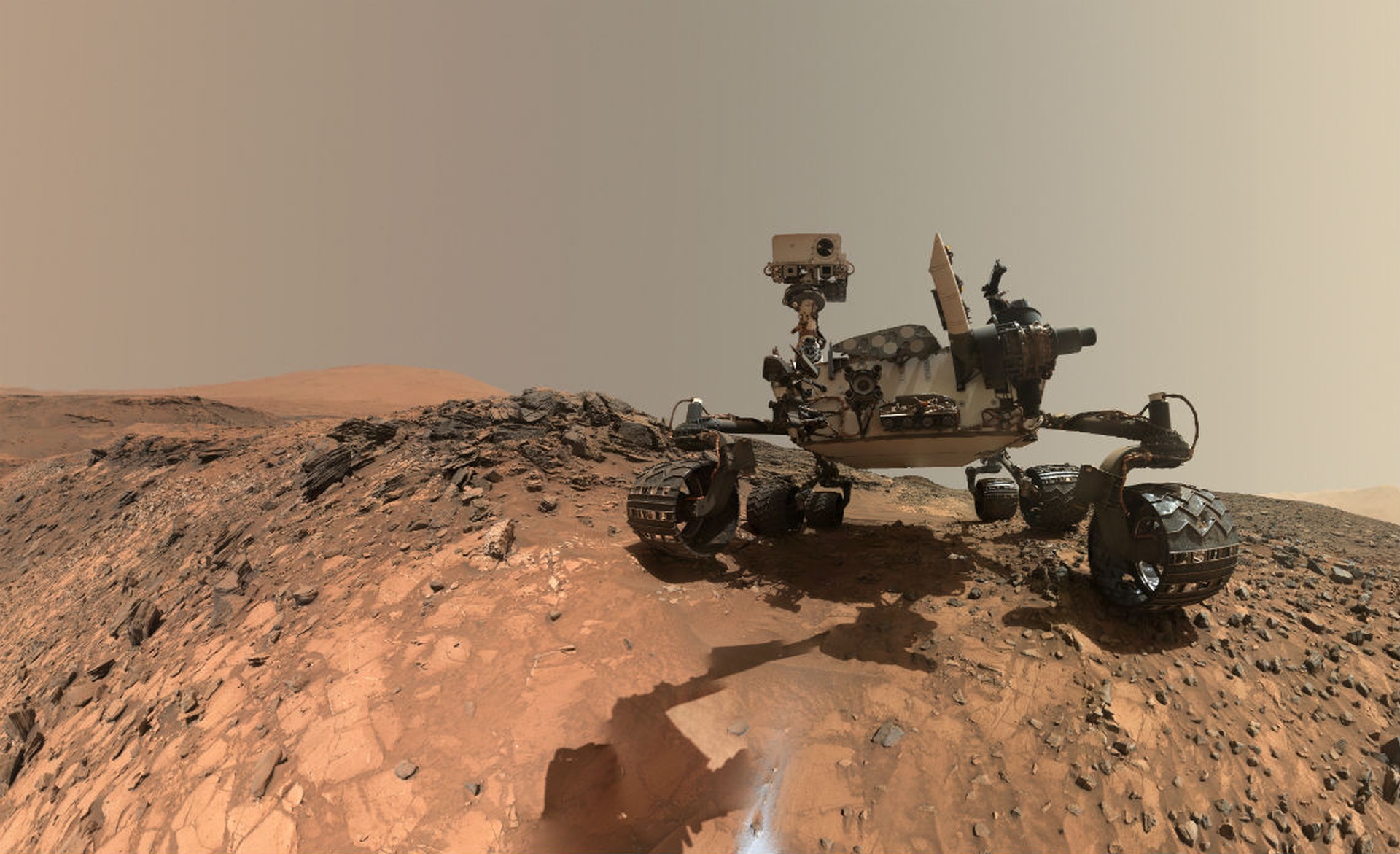
After the desolation images of the Spirit and Opportunity rovers, rendering now confirm what scientists have always hoped for: the presence of one of the fundamental natural elements needed to host life. Probably, once oceans and rivers flew there.
“It took multiple spacecraft over several years to solve this mystery, and now we know there is liquid water on the surface of this cold, desert planet,” said Michael Meyer, lead scientist for NASA’s Mars Exploration Program at the agency’s headquarters in Washington. “It seems that the more we study Mars, the more we learn how life could be supported and where there are resources to support life in the future.”
Siamo anche su WhatsApp. Segui il canale ufficiale LifeGate per restare aggiornata, aggiornato sulle ultime notizie e sulle nostre attività.

Quest'opera è distribuita con Licenza Creative Commons Attribuzione - Non commerciale - Non opere derivate 4.0 Internazionale.
A report by the NGO network Climate Action Network proposes a series of concrete changes to revitalise the UN Climate Change Conferences.
Pescasseroli, in the heart of Italy’s Apennines, will host the IBA conference on bear conservation and human–bear coexistence. LifeGate will be the event’s media partner.
The inflation caused by extreme weather events is known as “climateflation”: prices for many food products are expected to rise sharply.
The toll is still provisional, but data collected across several European countries indicate that tens of thousands of people have died as a result of extreme heat.
Last February, Malaysia imposed a total ban on electronic waste imports. Yet toxic e-waste continues to arrive from the United States and other countries through illegal trafficking networks.
Although Earth Overshoot Day falls six days later than in 2025, this does not represent an improvement. The shift is the result of revised estimates of the oceans’ carbon absorption capacity, while humanity’s actual ecological footprint continues to grow.
Gigantic wildfires in France’s Gironde region and near Madrid, Spain, have devastated tens of thousands of hectares of vegetation.
Greece has launched a wildfire management system based on nanosatellites and artificial intelligence. A model that other countries are now looking to replicate.
According to analysts, the emergence of a “super” El Niño could trigger a global food price shock, adding to inflationary pressures already fuelled by the conflict with Iran.


