Italy will become the first European country to host a facility for recovering rare earth elements: it will be built in Ceccano, central Italy.
Italy is set to build
Europe’s first facility to recover rare earth elements from discarded hard drives and electric motors, allowing them to be reused instead of extracting new ones. In recent days, Italy’s
Ministry of the Environment and Energy Security approved the project, called
Life Inspiree, which will be built in
Ceccano, in the province of Frosinone, at the Itelyum plant. The company is leading the project together with several partners.
The project could play a crucial role in the recovery of rare earth elements, a group of chemical elements that are essential for manufacturing electric motors, wind turbines, smartphones and computers. This is particularly important because Europe produces almost none of these materials itself: it imports nearly all of them, mainly from China, leaving the continent dangerously dependent on foreign suppliers that often compete with the European Union. For this reason, the EU has decided to focus on recycling. Under a 2024 European regulation, the goal is to recover at least 25 per cent of its annual demand for rare earths through recycling by 2030.
What are rare earth elements and where are they found?
Rare earth elements are a group of 17 chemical elements that are essential for industry and modern technology. Despite their name, they are relatively abundant in the Earth’s crust, but they are widely dispersed in nature and require complex and costly extraction processes. The full list includes scandium, yttrium, lanthanum, cerium, praseodymium, neodymium, promethium, samarium, europium, gadolinium, terbium, dysprosium, holmium, erbium, thulium, ytterbium and lutetium. The Italian project is one of 47 initiatives selected by the European Commission as strategic projects to reduce dependence on foreign supplies. Only four of these projects are located in Italy, and all focus on recycling. Inspiree is one of them.
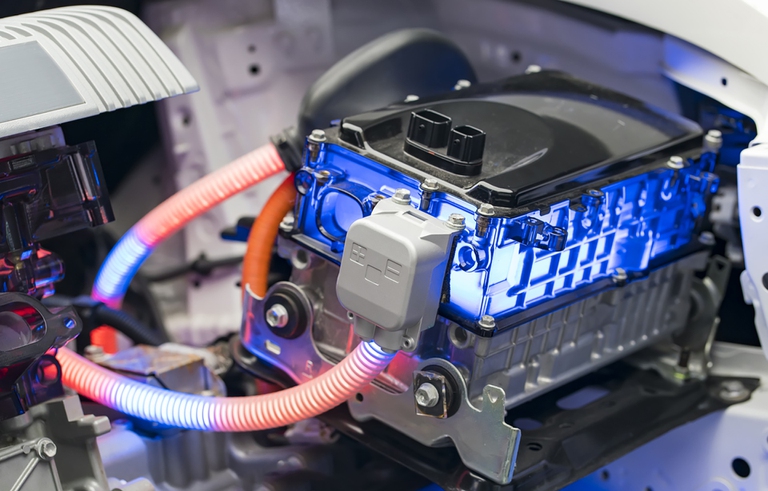
The idea behind the project is simple: powerful magnets inside discarded hard drives and electric motors contain rare earth elements. The first step is to remove these magnets from end-of-life equipment. The second is to process them chemically in order to separate the rare earths and convert them into materials that can be sold and reused by industry.
![tecnologie per l'economia circolare per il recupero di terre rare]()
How the recovery process works
The project is coordinated by Itelyum, which will operate the facility. Four additional partners are involved: Glob Eco, responsible for dismantling magnets from discarded equipment; Erion, the Italian consortium that manages electronic waste collection and will work to maximise the collection of reusable magnets; The University of L’Aquila, which oversees the technical aspects of the project and evaluates its environmental and social impacts; end EIT RawMaterials, a European organisation that will use its network to promote the project’s results. The initiative builds on the experience gained from a smaller pilot plant known as New-RE, previously developed by the same group of partners.
According to Italy’s Deputy Minister for the Environment, Vannia Gava, the authorisation represents an important milestone: “Guaranteeing the supply of critical raw materials today means strengthening our industrial, energy and technological autonomy,” she said, stressing that recovering rare earths from electronic waste is “an environmental challenge, but also an industrial policy choice.” In 2023, Sweden discovered the largest rare earth deposit ever found in Europe, a resource that could become crucial in reducing the European Union’s almost total dependence on China’s dominance of these strategic materials. However, this discovery alone will not be enough to guarantee the EU’s self-sufficiency.
For this reason, the conclusions of the 2021 CEWASTE report—a two-year project funded by the EU under the Horizon 2020 research and innovation programme—remain relevant today. The report called for stricter recycling rules, arguing that recycling should become mandatory, particularly for the critical raw materials contained in printed circuit boards, electric vehicles and fluorescent lamps
Siamo anche su WhatsApp.
Segui il canale ufficiale LifeGate per restare aggiornata, aggiornato sulle ultime notizie e sulle nostre attività.

Quest'opera è distribuita con Licenza Creative Commons Attribuzione - Non commerciale - Non opere derivate 4.0 Internazionale.