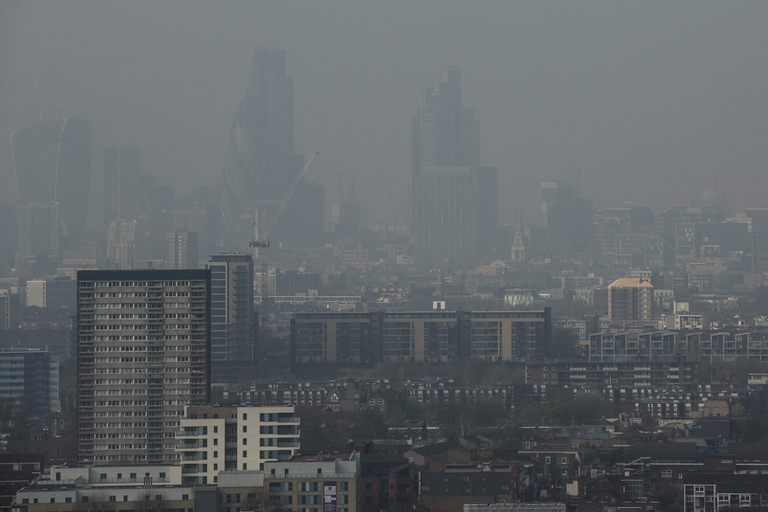
Air pollution “made a material contribution” to the death of a nine-year-old girl in London. It’s the first time ever in the UK that air pollution has been identified as a cause of death as a result of a landmark court ruling based on evidence presented by coroner Philip Barlow. The court reached its decision after several weeks of deliberations which culminated a seven-year-long legal battle.
Décision historique au Royaume-Uni. La pollution a bien contribué à la mort d'une petite fille, Ella Kissi-Debrah. Pour rappel, tous les tribunaux de France ont, pour l'instant, refusé de reconnaitre un lien avec les pathologies des plaignants.https://t.co/AzJWo8ZwZN
On the 15th of February 2013, Ella Adoo-Kissi-Debrah tragically passed away after failing to overcome a severe asthma attack. The illness had already caused her many difficulties throughout her short life, and she had been hospitalised almost thirty times. Ella lived in Lewisham, in a house near the South Circular, one of the busiest roads in the southern part of the UK capital.
One year later, in 2014, a British court found that the child’s death was attributable to acute respiratory failure caused by a severe form of asthma. At this point, no blame was placed on air pollution. It has taken more than five years to overturn this ruling: a number of witness accounts were heard throughout the appeals process, which was requested as new evidence based on scientific advances emerged. A 2018 report drafted by air pollution specialist Stephen Holgate was especially influential in the case.
“Striking association” between pollution and asthma attacks
Holgate found a “striking association” between Ella’s hospitalisations and the presence of high levels of air pollutants recorded at monitoring stations near her home. In other words, when levels of nitrogen oxides and particulates increased, Ella’s breathing difficulties would get worse.
Did London's pollution cause the death of 9-year-old Ella?
Some 400,000 children live in areas of London where pollution exceeds legal limits. pic.twitter.com/YQNFKQlh9V
Holgate, Professor of Immunopharmacology at the University of Southampton, explained that Ella was “living on a knife-edge” and that even small changes in air quality could lead to dramatic consequences for her. And this is what happened, as the UK’s justice system has established.
Pescasseroli, in the heart of Italy’s Apennines, will host the IBA conference on bear conservation and human–bear coexistence. LifeGate will be the event’s media partner.
The toll is still provisional, but data collected across several European countries indicate that tens of thousands of people have died as a result of extreme heat.
Last February, Malaysia imposed a total ban on electronic waste imports. Yet toxic e-waste continues to arrive from the United States and other countries through illegal trafficking networks.
Although Earth Overshoot Day falls six days later than in 2025, this does not represent an improvement. The shift is the result of revised estimates of the oceans’ carbon absorption capacity, while humanity’s actual ecological footprint continues to grow.
Greece has launched a wildfire management system based on nanosatellites and artificial intelligence. A model that other countries are now looking to replicate.
According to analysts, the emergence of a “super” El Niño could trigger a global food price shock, adding to inflationary pressures already fuelled by the conflict with Iran.