



Gigantic wildfires in France’s Gironde region and near Madrid, Spain, have devastated tens of thousands of hectares of vegetation.
Malawi’s President Peter Mutharika has declared a state of national disaster on 13 April. The country has been hit by a dreadful drought, which has been affecting Southern Africa for over a year. “According to our estimates, 2016 total maize production will drop by 12% compared to the previous year,” said the head of state. This
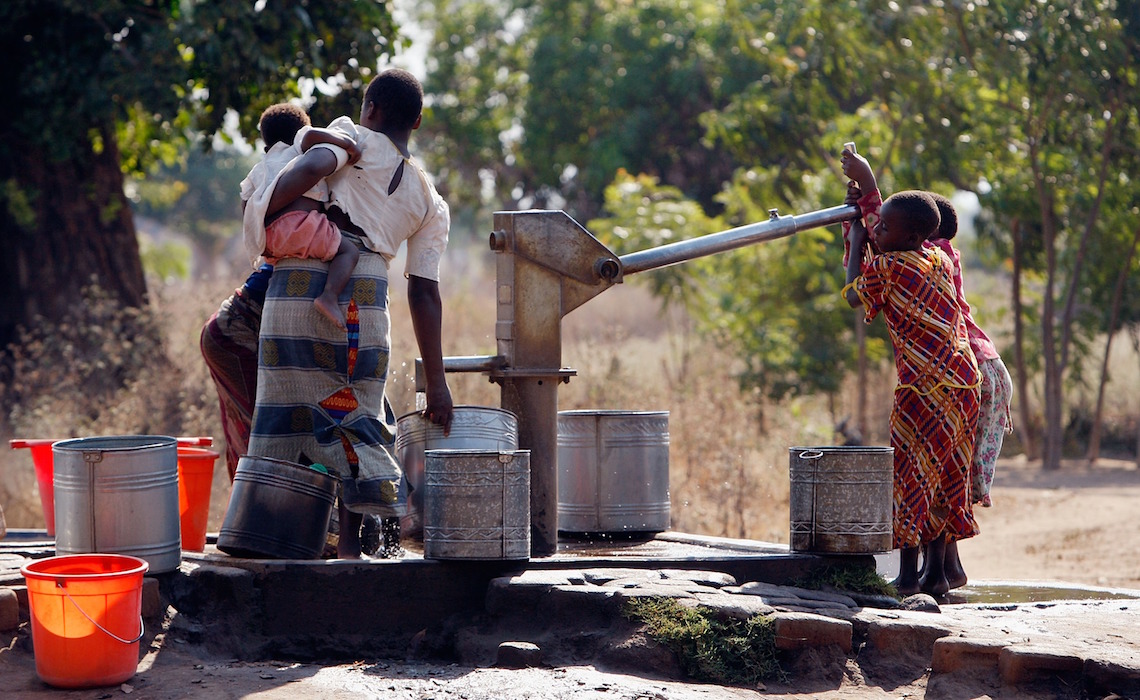
Malawi’s President Peter Mutharika has declared a state of national disaster on 13 April. The country has been hit by a dreadful drought, which has been affecting Southern Africa for over a year. “According to our estimates, 2016 total maize production will drop by 12% compared to the previous year,” said the head of state. This will inevitably have significant consequences on the population: “With the increased maize deficit, it is expected that an increased number of people will be food-insecure and will require humanitarian relief assistance for the whole 2016-17 consumption year,” added Mutharika.
What further worsens the situation is the fact that neighbouring countries – Mozambique, Zambia, and Zimbabwe – have also been affected by extreme drought. For this reason, South Africa – the area’s largest cereal exporter – has been forced to import 6 million tonnes of maize, as a consequence of the lowest rainfall levels in over a century.
Food insecurity is thus threatening a vast region. It’s no coincidence that the United Nations World Food Programme (WFP) will provide aids to 3 million Malawians located in 23 districts (out of a total of 28), which have been particularly hit by drought. According to a WFP spokesman, drought began after a year of reduced harvests due to floods. The situation is distressing and the worst is yet to come. Restoring normality will take time.
The WFP said in February that Malawi is facing one of the worst food insecurity situations in 10 years. This is added to a particularly difficult economic context: Malawi ranks 173rd (out of 187) in the Human Development Index. Moreover, 80 per cent of its inhabitants live on the cultivation of small lands.
Siamo anche su WhatsApp. Segui il canale ufficiale LifeGate per restare aggiornata, aggiornato sulle ultime notizie e sulle nostre attività.

Quest'opera è distribuita con Licenza Creative Commons Attribuzione - Non commerciale - Non opere derivate 4.0 Internazionale.
Gigantic wildfires in France’s Gironde region and near Madrid, Spain, have devastated tens of thousands of hectares of vegetation.
According to analysts, the emergence of a “super” El Niño could trigger a global food price shock, adding to inflationary pressures already fuelled by the conflict with Iran.
Residents of Kanseche, Malawi, accuse ABF of contributing to the devastating 2022 floods through its subsidiary, Illovo Sugar.
France, Spain, Portugal and Greece are fighting wildfires, some of which are still out of control.
Much of Western Europe is already dealing with temperatures that in many cities are approaching or exceeding 35°C.
After a landslide led to twelve deaths on the island of Ischia, questions have been raised about the impacts of illegal building, tourism, and climate change.
Not much snow, peaks of 19 degrees Celsius in Norway and even 28 degrees in France: official data confirms the anomalously high temperatures of this past winter.
Ocean warming has risen to record highs over the last five years: just in 2019 the heat released into the world’s oceans was equivalent to that of 5-6 atomic bombs per second. The culprit, no doubt, is climate change.
What did Greta Thunberg tell participants at the 2020 World Economic Forum in Davos? Once again, the Swedish activist underlined the total lack of concrete solutions to the climate crisis presented by leaders so far.


