



Pescasseroli, in the heart of Italy’s Apennines, will host the IBA conference on bear conservation and human–bear coexistence. LifeGate will be the event’s media partner.
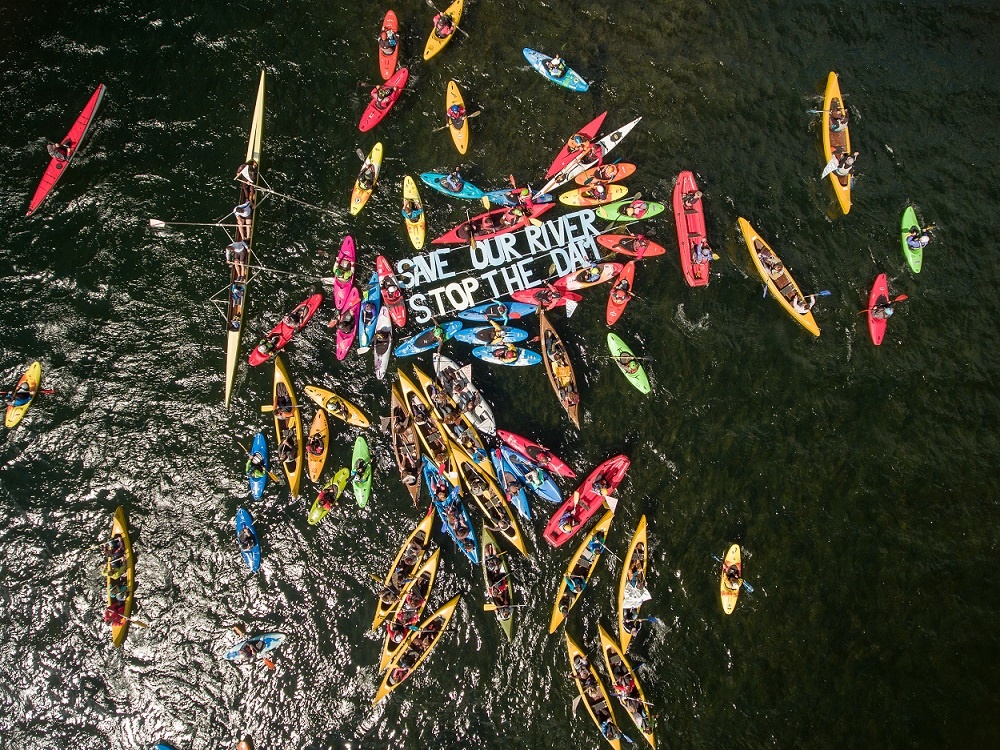
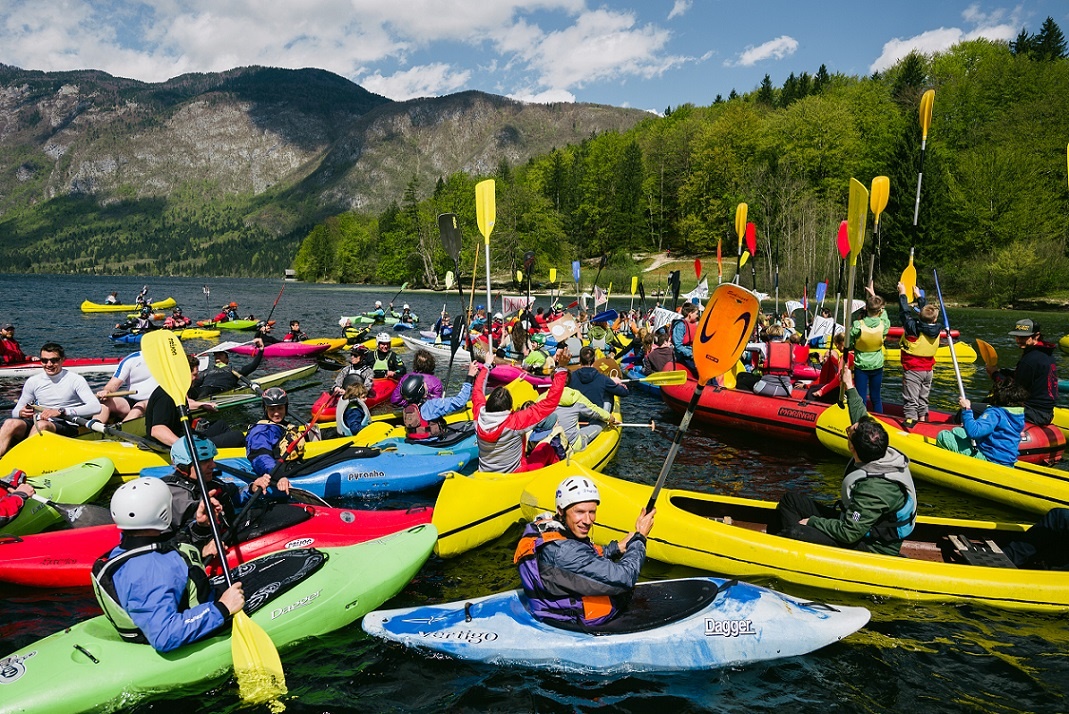
A unique caravan of kayakers departed from Bohinji Lake, Slovenia, on 16 April. The group – made of over 60 activists – aims to paddle 18 rivers over the next 35 days, in order to protest against the construction of thousands of dams in the Balkans. The demonstration is part of the international campaign Save
A unique caravan of kayakers departed from Bohinji Lake, Slovenia, on 16 April. The group – made of over 60 activists – aims to paddle 18 rivers over the next 35 days, in order to protest against the construction of thousands of dams in the Balkans.
The demonstration is part of the international campaign Save the Blue Heart of Europe, aimed to protect Balkan rivers and raise public awareness on the risks linked to the construction of 2,700 new dams between Slovenia and Albania.
The group of paddlers, led by former Slovenian Olympic athlete Rok Rozman, will cross Croatia, Bosnia-Herzegovina, Montenegro, Macedonia, and Albania, under the slogan “Save our rivers”. Numerous events are organised along the shores, in order to support their fight against dams.
“This unique activity shows that the Balkan Rivers are more than just suppliers of megawatt hours,” said Ulrich Eichelmann, coordinator of the Save the Blue Heart of Europe campaign. They are lifelines that provide recreational value to people and habitat for species. We need to defend this European natural heritage against the greed of companies and banks for profit”.
All rivers ot be travelled by the activists are threatened by the construction – over the next few years – of dams in 113 national parks, with severe consequences on rivers, the environment and biodiversity.
“When I was a kid my dream was to win Olympic medal in rowing rivers,” told Rok Rozman. “As a grown-up, my foremost goal is to protect these rivers. I didn’t get the medal but I will do everything I can to help saving the rivers on the Balkans”.
One of the rivers threatened by the hydroelectric projects is the Sana River, a watercourse that crosses Bosnia-Herzegovina and home to one of Europe’s rarest fish, the Danube salmon (Hucho hucho).
The protest tour will end on 20 May in Albania, with the handing over of a petition for the protection of the Vjosa River – considered to be Europe’s last wild river – to Albanian Prime Minister Edi Rama.
Siamo anche su WhatsApp. Segui il canale ufficiale LifeGate per restare aggiornata, aggiornato sulle ultime notizie e sulle nostre attività.

Quest'opera è distribuita con Licenza Creative Commons Attribuzione - Non commerciale - Non opere derivate 4.0 Internazionale.
Pescasseroli, in the heart of Italy’s Apennines, will host the IBA conference on bear conservation and human–bear coexistence. LifeGate will be the event’s media partner.
The inflation caused by extreme weather events is known as “climateflation”: prices for many food products are expected to rise sharply.
Il progetto della società austriaca Kelag potrebbe compromettere un habitat unico e la sopravvivenza del salmone del Danubio.
The toll is still provisional, but data collected across several European countries indicate that tens of thousands of people have died as a result of extreme heat.
Last February, Malaysia imposed a total ban on electronic waste imports. Yet toxic e-waste continues to arrive from the United States and other countries through illegal trafficking networks.
Although Earth Overshoot Day falls six days later than in 2025, this does not represent an improvement. The shift is the result of revised estimates of the oceans’ carbon absorption capacity, while humanity’s actual ecological footprint continues to grow.
Gigantic wildfires in France’s Gironde region and near Madrid, Spain, have devastated tens of thousands of hectares of vegetation.
Greece has launched a wildfire management system based on nanosatellites and artificial intelligence. A model that other countries are now looking to replicate.
According to analysts, the emergence of a “super” El Niño could trigger a global food price shock, adding to inflationary pressures already fuelled by the conflict with Iran.


