


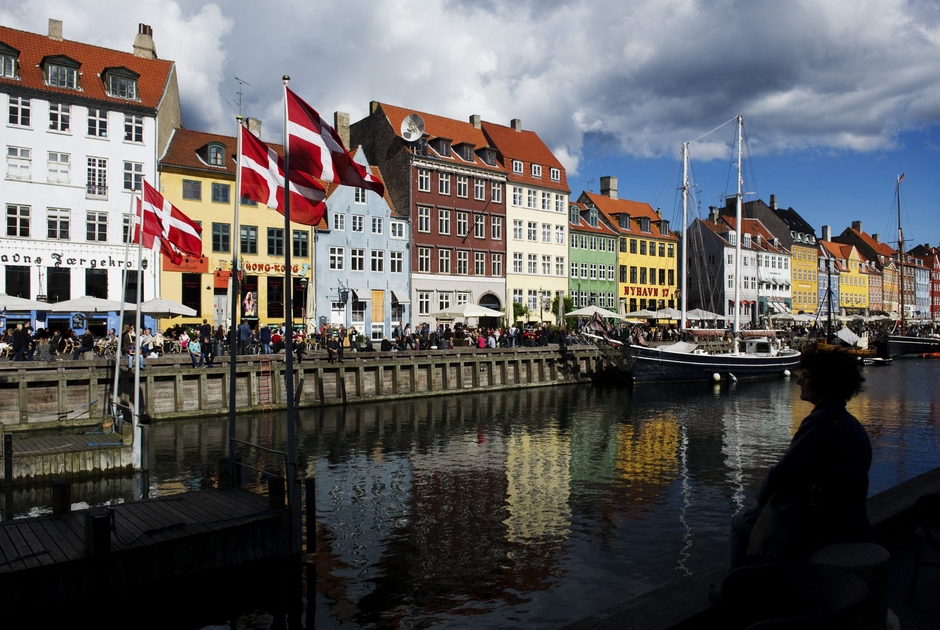
Copenhagen ranks first in the 2026 Global Liveability Index, followed by Vienna and Melbourne. Among the cities recording the greatest improvement in quality of life is New York.
Even Cinema can reduce its ecological footprint, both in technical operations and in storytelling. TorinoFilmLab shows how.
In an era of climate awareness, cinema can – and must – reduce its ecological footprint. Not only from a technical point of view, with lighter sets and more mindful productions, but also in its most creative side, with stories capable of reshaping the collective imagination. This is how sustainability is becoming a structural element of the European audiovisual sector, for both ethical and economical reasons: according to the European audiovisual observatory, adopting sustainable practices can improve production efficiency and, often, can lead to cost savings, especially thanks to a more rational use of both energy and materials. The European commission has decided to include sustainability among the criteria for accessing Media funds, which provide financial support to the audiovisual industry.
Within this context lies the commitment of the TorinoFilmLab, an international laboratory linked to the National museum of cinema in Turin, which since 2008 has been training directors, screenwriters, and producers from all over the world. After supporting more than 250 films and TV series and building a global community of 1.600 professionals, TorinoFilmLab has decided to expand its mission in order to include the ecological transition of the audiovisual sector.
“Stories, in times of crisis, must regain their role as a source of salvation for people. They help us imagine different futures, opening up new horizons. Culture must once again become a source of inspiration, not just entertainment,” explains Mercedes Fernández, managing director of the TorinoFilmLab and guest of a special episode of LifeGate’s podcast News dal Pianeta Terra (News from Planet Earth), hosted by Giovanni Mori.
Sustainability, according to Fernández, is not only a practice to be applied on set but also an opportunity for storytelling: “Stories about climate change today are almost all dystopian. The message has more power when it is positive, when it shows that change can be possible. Even those who aren’t interested in sustainability can find in this topic a source of new stories.”
It is precisely from this awareness that the most recent part of the TorinoFilmLab’s work has emerged: a programme that brings together technical training and climate storytelling, helping those who work on cinema to do so with a renewed perspective.
The first step in TorinoFilmLab’s journey is a symbol: in 2019, the White mirror award honored screenplays focused on environmental themes, followed in 2020 by the Green filming award, which covers the costs of productions committed to really reduce their environmental impact. Training came right after – becoming the core of TorinoFilmLab – and taking on a decisive role. In 2022, the Green Film Lab was launched, a traveling format of intensive workshops dedicated to film and television professionals. Its aim is to spread guidelines and best practices for a more sustainable production.
During three years, nine workshops held in seven countries have trained 239 professionals and supported 53 film projects on their path toward sustainability. In 2025, Green Film Lab stopped in Budapest and will land in Lisbon in November. In 2026, the Green Film Lab Torino will return to its home city, with a three-day workshop planned in April and opening applications in December 2025. The programme includes three online modules (March, April, and June).
TorinoFilmLab has expanded its approach with the Green Production Lab, launched in 2024 to build a bridge between sustainability experts and audiovisual industry. The first workshop was held in Spain, involving 18 participants including environmental professionals and film teams. The goal is to train experts capable of developing comprehensive sustainability plans for all stages of film production.
In December, the Lab will also cross the Atlantic ocean with the Green Latam Lab, aimed at Latin American film professionals: twelve participants will work on three films in pre-production, developing strategies ready for implementation.
Visualizza questo post su Instagram
On a creative level, TorinoFilmLab is working in integrating sustainability into content as well. With Tfl Next – Green Narratives, an online workshop launched in 2024, screenwriters and directors are guided in developing stories capable of raising audience awareness without sacrificing their artistic freedom.
“We never impose a specific theme,” Fernández specifies. “We only ask for being open to explore it. Even those who don’t feel “green” can find a narrative ground in environmental transformation. All stories, after all, are about metamorphosis. And this is also a transformation, and it can become a powerful creative tool.” The next call will be open from 11 November 2025 to 19 January 2026 and includes three online modules which will be running from March to June 2026.
At the same time, the TorinoFilmLab has undertaken an internal path toward environmental improvement. Since 2023, it has been working toward Iso 20121 certification, the international standard for sustainable event management, applied to the Tfl Meeting Event, the co-production forum that brings partners and talents together in Turin every November. It has also developed a CO₂ calculator to measure and reduce the impact of its activities, drawn up green guidelines shared with partners, and introduced the role of the Green Development Manager, who coordinates all environmental initiatives.
Sustainability, then, as the language of the future. “Cinema is a powerful instrument of change, but also an industry that must change,” Fernández points out. “It’s a gradual process, as it requires dialogue and compromise. But every small step – even just two days without consuming meat on set – can become a revolution, if shared.” Not only as a moral duty in a critical moment, but as a catalyst of innovation and competitiveness.
Siamo anche su WhatsApp. Segui il canale ufficiale LifeGate per restare aggiornata, aggiornato sulle ultime notizie e sulle nostre attività.

Quest'opera è distribuita con Licenza Creative Commons Attribuzione - Non commerciale - Non opere derivate 4.0 Internazionale.
Copenhagen ranks first in the 2026 Global Liveability Index, followed by Vienna and Melbourne. Among the cities recording the greatest improvement in quality of life is New York.
From April 17 to 19, in Turin, the workshop brought together 24 industry professionals to promote an ethical approach to film production.
Kyoto’s premier photography festival, Kyotographie, grows in stature with the launch of a new music festival, Kyotophonie, held in the spring and autumn.
The small state of Mizoram in northeast India has a thriving handicraft industry, with artisans making a living by selling products made from bamboo.
Many British cultural institutions have ended their relationship with oil giant BP in recent years, thanks to pressure from activists and the public.
Communities across India are celebrating Durga Puja, a festival that stands as an example of the communal unity which is under threat in the country .
Through stories of encounters between humans and animals, Our Wild Calling offers a way out of an age of solitude. We speak to author Richard Louv.
Survival, multiculturalism, plastic islands. Musician Grey Filastine recounts his adventure aboard the Arka Kinari, which set sail in 2019 and spent much of last year adrift in the Pacific because of the pandemic.
Chinese filmmaker Chloé Zhao made history, becoming the first Asian woman to win an Academy Award as well as a Golden Globe for Best Director for Nomadland.


